Blog / Vehicles

Blog

All Vehicles Sales About Us Makes and Models Features Dealership Local Review Company Culture SUV Vehicle Review Community Blog Vehicle Comparison News News and Events Directions EV Service and Maintenance Industry Trends Financing Truck Big C Near the Big E Charitable Participation Electric Vehicles Service Tips Buying customer service Leasing 811 Detailing Opinion Parts Safety Tips How-to Bodyshop Corvette Club of Western Mass Finance Departments Equinox Silverado Testimonials Trax MobileService+ Sedan
Corvette 2026

2026 Corvette: A Bold New Interior, Smarter Tech, and Even More Customization!

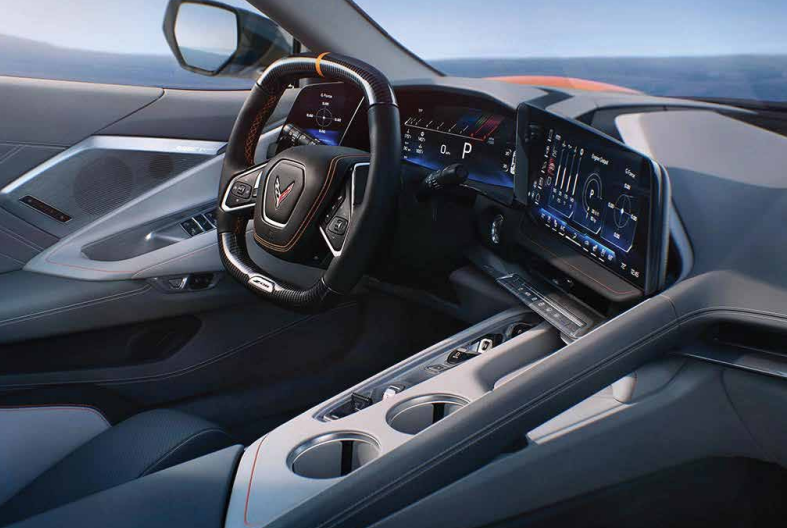
Chevrolet is leveling up the 2026 Corvette lineup with a complete cabin redesign, new “PTM” mode, and expanded personalization options across the Stingray, E-Ray, Z06, and ZR1. These updates continue to push the Corvette’s legacy as America’s leading performance sports car. Inside the New Corvette: Where Form Meets Function The most noticeable change is a totally reimagined interior. Every 2026 Corvette now features a sleek, three-screen layout: a 14-inch driver display, a 12.7-inch infotainment screen, and a 6.6-inch auxiliary touchscreen by the steering wheel. The center console has also been redesigned with more intuitive control placement, a larger volume knob, a new wireless charging pad, and repositioned AC buttons for a more open feel. Craftsmanship is front and center with new materials, lighting, and four bold interior color schemes — including asymmetrical designs like Jet Black and Adrenaline Red. Drivers can even mix and match seat types and colors for a one-of-a-kind look. Performance and Tech Go Even Further The Corvette’s performance tech also gets a boost. A new PTM Pro mode gives skilled drivers more control by turning off traction and stability control while keeping ABS active. The Performance App now spans the full lineup, showing live power flow, G-forces, and vital temps for engine and transmission systems. An upgraded Performance Data Recorder offers HD video, real-time speed analysis, and automated tips — all viewable through the center screen. Google Built-in is standard across all models, supporting voice controls, apps like Chrome and HBO Max, and full connectivity. Apple CarPlay and Android Auto are also supported. Top 3 Updates for 2026 Fully Redesigned Interior: Larger, driver-focused displays and a cleaner, modern layout. New Performance Tools: PTM Pro driving mode and enhanced performance telemetry through the revamped Performance App and Data Recorder. Expanded Customization: Four new interior colors, asymmetrical seating, electrochromic roof, new paint options, and even blue brake calipers. Production starts August 4, 2025, with orders opening on June 26. With these updates, the 2026 Corvette isn’t just faster — it’s smarter, sleeker, and more personal than ever.

Why Is The Trax So Popular?

The Resounding Success of the 2024 Chevrolet Trax Redesign

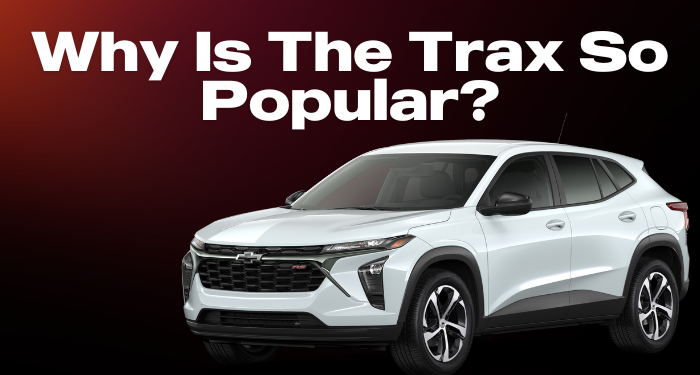
In the ever-evolving automotive landscape, the 2024 Chevrolet Trax has emerged as a standout success story. With its comprehensive redesign, Chevrolet has crafted a vehicle that seamlessly blends affordability, reliability, and widespread public appeal. A Redesign Rooted in Affordability In an era where the average new vehicle price exceeds $47,000, the 2024 Trax offers a refreshing alternative. Starting at just $20,400, it provides exceptional value without compromising on quality or features. This competitive pricing has resonated with a broad spectrum of consumers, from budget-conscious buyers to those simply seeking a prudent investment. Reliability That Inspires Confidence Chevrolet's commitment to reliability is evident in the Trax's performance. Owners have lauded its consistent performance and low maintenance requirements. One long-term review highlighted the Trax's ability to "rack up miles and earn respect with consistent performance and great value". Such testimonials underscore the vehicle's dependability, making it a trusted choice for daily commutes and long journeys alike. Embraced by the Public The 2024 Trax's redesign has not only captured attention but also hearts. Its sleek exterior, combined with a spacious and tech-forward interior, has garnered widespread acclaim. Consumer reviews frequently praise its smooth handling, modern aesthetics, and feature-rich offerings. As one satisfied owner shared, "This 2024 Trax drives so smooth and handles so well... The interior is absolutely gorgeous too" This positive reception is reflected in impressive sales figures. In 2024, Trax sales surged by 130%, positioning it as the nation's top-selling subcompact SUV. Such growth signifies a strong market response and a deepening trust in the Chevrolet brand. Experience the 2024 Chevrolet Trax at Central Chevrolet At Central Chevrolet, located at 675 Memorial Avenue, West Springfield, MA 01080, we invite you to experience the 2024 Trax firsthand. Our team is dedicated to helping you explore the features that have made this vehicle a standout success. Visit our showroom or call us at (413) 781-3400 to schedule a test drive today. View Trax Inventory Frequently Asked Questions Q: What are the key features of the 2024 Chevrolet Trax? A: The 2024 Trax boasts a modern design, spacious interior, advanced infotainment system with wireless Apple CarPlay and Android Auto, and a suite of safety features including forward collision warning and adaptive cruise control. Q: How does the 2024 Trax compare in terms of fuel efficiency? A: The Trax offers competitive fuel efficiency, making it an economical choice for both city and highway driving. Q: Is the 2024 Trax available in all-wheel drive? A: The 2024 Trax is available exclusively in front-wheel drive. For those seeking all-wheel drive, the Chevrolet Trailblazer is a comparable option. Q: What trim levels are available for the 2024 Trax? A: The 2024 Trax is offered in several trims, including LS, 1RS, LT, 2RS, and Activ, each catering to different preferences and needs. Q: How does the 2024 Trax ensure reliability? A: Chevrolet's rigorous engineering and quality control processes, combined with positive long-term owner reviews, attest to the Trax's reliability and durability.

Unlock Big Savings with a Quality Used Vehicle from Central Chevrolet

More Car, Less Cost – Find Your Perfect Ride Today! When it comes to buying a car, value matters. That’s why savvy shoppers in West Springfield, MA, turn to Central Chevrolet’s used vehicle selection —where you can drive off in a high-quality, reliable, and budget-friendly ride without compromising on features, safety, or performance. Whether you're looking for a dependable daily driver, a family-friendly SUV, or a powerful Chevy truck, our used inventory offers something for everyone. The best part? You get more car for your money! Let’s take a closer look at why buying used at Central Chevrolet is a smart move and how we make the process easy, transparent, and enjoyable. Why Buy a Used Car at Central Chevrolet? 1. Huge Selection of Quality Vehicles At Central Chevrolet, we carry an extensive lineup of pre-owned cars, trucks, and SUVs, including: 🚗 Chevrolet favorites – Like the Silverado, Equinox, Traverse, and Malibu 🚙 Other trusted brands – Because we accept quality trade-ins from all manufacturers 🚘 Certified Pre-Owned (CPO) Chevys – Low-mileage, factory-backed vehicles with extra perks 2. Certified Pre-Owned (CPO) – The Best of Both Worlds If you love the idea of a used car but want extra peace of mind, a Certified Pre-Owned Chevrolet is the way to go. Every CPO Chevy: ✔ Undergoes a 172-point inspection ✔ Comes with an extended factory-backed warranty ✔ Includes 24/7 roadside assistance ✔ Offers a vehicle history report CPO vehicles are a smart choice if you want the perks of a new car at a lower price! 3. The Perks of Buying Used Why do more and more drivers choose used vehicles over new? Here’s what makes pre-owned cars a great option: 💰 Lower Prices – Get more car for your budget 🚀 Less Depreciation – Avoid the instant value drop of new cars 💳 Lower Insurance Costs – Save on monthly premiums 🔄 More Options – A wider variety of trims, features, and models Fun Fact: A new car loses 10-15% of its value the moment you drive it off the lot. With a used car, that depreciation hit is already taken care of! Hand-Picked, Inspected, and Ready for the Road Buying used doesn’t mean sacrificing quality —at Central Chevrolet, every used car undergoes a thorough inspection by our certified technicians to ensure it meets our high standards. ✔ Multi-point safety & performance inspection ✔ Comprehensive vehicle history reports ✔ Reconditioned for reliability & longevity When you shop at Central Chevrolet, you’re not just getting a used car —you’re getting a trustworthy vehicle that’s ready for the road. Financing Made Easy – Get Approved Today! Worried about financing? We make it simple! Our finance experts work with all credit types to find the best loan options for you. 🔹 Competitive rates on used car financing 🔹 Flexible loan terms to fit your budget 🔹 Trade-in assistance to help lower your payment Pro Tip: Get pre-approved online before visiting to speed up the buying process! Visit Central Chevrolet & Find Your Perfect Used Car! Whether you need a rugged truck, a fuel-efficient sedan, or an SUV for the family, we have your next car waiting at Central Chevrolet! 📍 Stop by our dealership in West Springfield, MA 📞 Call us today to schedule a test drive 💻 Browse our used inventory online anytime! Get the car you want at the price you love— only at Central Chevrolet! FAQs About Buying a Used Car at Central Chevrolet Q: What’s the difference between a used car and a Certified Pre-Owned Chevy? A: CPO Chevys go through a detailed 172-point inspection, come with a factory-backed warranty, and include roadside assistance, making them the highest quality used cars available. Q: Do you accept trade-ins? A: Yes! We offer top-dollar trade-in appraisals and can apply your trade value to your next purchase. Q: Can I finance a used car? A: Absolutely! We offer competitive financing options for all credit levels. Q: How do I know if a used car is reliable? A: Every used car at Central Chevrolet is inspected and reconditioned by our factory-trained technicians to ensure quality and reliability.

Silverado EV vs. Cybertruck

2025 Chevrolet Silverado EV vs. 2025 Tesla Cybertruck: An In-Depth Comparison

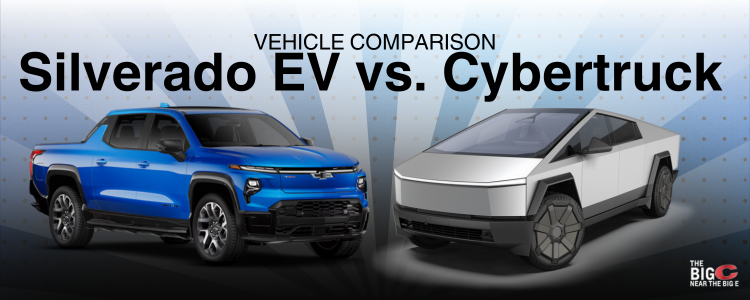
Left Card with "Our Pick" Our Pick CHEVROLET SILVERADO EV VS Circle vs Right Card TESLA CYBERTRUCK The electric pickup truck market is heating up, and two of the most anticipated vehicles in this segment are the 2025 Chevrolet Silverado EV and the 2025 Tesla Cybertruck. Each truck brings its own strengths to the table, appealing to different types of buyers. Whether you prioritize range and practicality or bold design and performance, this comparison will help you make an informed decision. Pricing For budget-conscious buyers, the 2025 Chevrolet Silverado EV offers a clear advantage. Starting at an MSRP of $55,000, it provides a more accessible entry point into the electric truck market. Even its top-tier trims, which can reach up to $74,900, remain competitively priced. In contrast, the Tesla Cybertruck starts at a significantly higher MSRP of $79,990, with premium models like the Cyberbeast AWD climbing to $101,985. This price difference makes the Silverado EV a more appealing option for those looking to maximize value without sacrificing performance. Performance Both trucks deliver impressive performance, but they cater to different needs. The Silverado EV offers up to 754 horsepower and 785 lb-ft of torque, enabling it to accelerate from 0 to 60 mph in approximately 4.5 seconds. With a towing capacity of up to 12,500 pounds and a payload capacity of 1,440 pounds, the Silverado EV is designed to handle demanding workloads with ease. The Cybertruck, on the other hand, takes performance to another level, particularly in its higher-end configurations. With horsepower ranging from 600 hp to 845 hp and acceleration as quick as 2.6 seconds from 0 to 60 mph, the Cybertruck is a powerhouse on the road. However, its towing capacity peaks at 11,000 pounds, falling short of the Silverado EV. The Cybertruck’s payload capacity of 2,500 pounds is higher, making it a strong choice for carrying heavier loads. Range and Charging When it comes to range, the Silverado EV takes the lead with an estimated 460 miles on a full charge, thanks to its 205-244 kWh battery capacity. Charging is also convenient, with Level 2 charging taking approximately 11 to 12 hours, and DC fast charging providing a significant range boost in just 35 minutes. The Cybertruck, while capable, offers a shorter range of 318 to 340 miles, depending on the configuration. Its 123 kWh battery supports Tesla’s Supercharging network, but charging times vary depending on the available infrastructure. For drivers who prioritize long-distance driving with fewer stops, the Silverado EV is the more practical choice. Dimensions and Design The Silverado EV embraces a modern yet familiar design, appealing to traditional truck buyers. It measures 233.1 inches in length and 83.8 inches in width, offering a spacious cabin and a versatile bed that extends from 5 feet 11 inches to 10 feet 10 inches with the Multi-Flex Midgate and Tailgate. The truck also includes a generous 10.7 cubic feet of front trunk (eTrunk) space. The Cybertruck, with its futuristic and polarizing design, is slightly smaller at 223.7 inches in length and 80 inches in width. Its bed measures 6 feet, and the front trunk provides 7.1 cubic feet of storage. While its bold aesthetic will undoubtedly turn heads, it may not suit those who prefer a more conventional truck appearance. Interior and Technology The Silverado EV combines cutting-edge technology with user-friendly functionality. It features a 17.7-inch touchscreen display and an 11-inch digital instrument cluster, along with premium options like a Bose seven-speaker audio system, 14-inch head-up display, and Google built-in integration. For added convenience, the Silverado EV includes wireless charging and a Wi-Fi hotspot. The Cybertruck focuses on a tech-heavy interior, highlighted by an 18.5-inch touchscreen and an additional 9.4-inch rear touchscreen for passengers. While it offers features like satellite radio and a Wi-Fi hotspot, it lacks some of the Silverado’s practical amenities, such as the head-up display. Off-Road Capability Both trucks have off-road capabilities, but they are designed with different priorities in mind. The Silverado EV comes equipped with adaptive air suspension and all-wheel drive, providing stability and comfort on uneven terrain. However, its 24-inch wheels and road-oriented tires suggest it’s more suited for on-road driving. The Cybertruck, with its rugged features like 17 inches of ground clearance, 35-inch mud tires, and locking differentials, is built for more aggressive off-road adventures. That said, its large size and unconventional design may limit maneuverability in tight spaces. Conclusion The 2025 Chevrolet Silverado EV and the 2025 Tesla Cybertruck cater to distinct audiences. The Silverado EV is the ideal choice for buyers who value practicality, longer driving range, and greater towing capacity. Its traditional design and competitive pricing make it a strong contender for those who need a reliable and versatile electric truck. The Cybertruck, on the other hand, is perfect for those who prioritize unique design, unparalleled acceleration, and off-road performance. Its futuristic aesthetic and high-tech features appeal to drivers looking for something truly distinctive. Ultimately, the decision between these two trucks will depend on your specific needs. If range, practicality, and affordability are your priorities, the 2025 Chevrolet Silverado EV is the clear winner. View Silverado EV Inventory FAQ Section 1. Which truck has a longer range, the Silverado EV or the Cybertruck? The Chevrolet Silverado EV offers up to 460 miles of range, significantly more than the Tesla Cybertruck’s maximum range of 340 miles. 2. Which truck is more affordable? The Silverado EV starts at $55,000, making it more budget-friendly than the Cybertruck, which begins at $79,990. 3. What are the towing capacities of these trucks? The Silverado EV can tow up to 12,500 pounds, while the Cybertruck has a maximum towing capacity of 11,000 pounds. 4. Which truck has better off-road capabilities? The Tesla Cybertruck offers better off-road features, including 17 inches of ground clearance, locking differentials, and mud tires. However, the Silverado EV provides solid on-road performance with optional off-road enhancements. 5. What interior technology do these trucks offer? The Silverado EV includes a 17.7-inch touchscreen, wireless charging, and a head-up display, while the Cybertruck features an 18.5-inch touchscreen and a rear passenger display. Both offer Wi-Fi hotspots and premium sound systems. 6. Who should buy the Chevrolet Silverado EV? The Silverado EV is perfect for buyers looking for a practical, affordable, and long-range electric truck with high towing capacity and a traditional design.


Equinox EV vs. Solterra

2025 Chevrolet Equinox EV vs. 2025 Subaru Solterra: A Detailed Comparison for EV Buyers

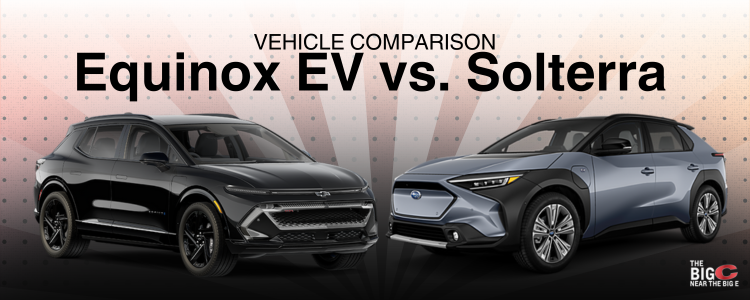
Left Card with "Our Pick" Our Pick CHEVROLET EQUINOX EV VS Circle vs Right Card SUBARU SOLTERRA As the electric SUV market continues to grow, buyers are presented with more choices than ever. Among the most compelling options for 2025 are the Chevrolet Equinox EV and the Subaru Solterra. While both vehicles bring unique strengths to the table, the Chevrolet Equinox EV stands out as the superior choice for buyers seeking a blend of affordability, advanced technology, and exceptional range. Here’s a deep dive into how these two EVs compare across key metrics. Performance and Range The 2025 Chevrolet Equinox EV sets a strong benchmark in terms of performance and efficiency. With its 220-horsepower electric motor and 243 lb-ft of torque, this SUV delivers smooth, responsive acceleration while maintaining an efficient drive. Front-Wheel Drive (FWD) is standard, but Chevrolet also offers an optional All-Wheel Drive (AWD) system for those who need enhanced traction and capability. What truly sets the Equinox EV apart is its driving range of up to 319 miles (FWD) on a full charge—far superior to the Solterra’s 228-mile range. Charging is another area where the Equinox EV excels. With Level 2 charging, the Equinox can achieve a full charge in about 7 hours, while DC fast charging allows for a 10-80% charge in just 36 to 45 minutes. In contrast, the Solterra’s 11-hour Level 2 charging time and slower DC fast charging times (up to 60 minutes) make it less convenient for on-the-go drivers. For those who value efficiency and range, the Equinox EV clearly leads the way. The 2025 Subaru Solterra, while offering 215 horsepower and 249 lb-ft of torque, emphasizes its standard AWD system, making it ideal for rugged conditions and off-road adventures. However, its range of 222 to 228 miles falls significantly behind the Equinox EV, which makes the Chevrolet model a better choice for long-distance commuters or drivers looking to minimize charging stops. Dimensions and Cargo Space When it comes to size and space, the Equinox EV provides a more versatile and comfortable experience. Measuring 190.55 inches in length and 76.94 inches in width, it offers a spacious interior that comfortably seats five passengers. Cargo capacity is also generous, with 26 cubic feet of space behind the rear seats and 57 cubic feet when the seats are folded flat. The Subaru Solterra, while slightly more compact at 184.6 inches in length, makes good use of its space, providing 24 cubic feet of cargo room behind the seats and 64 cubic feet with the seats folded. However, the extra storage capacity comes at the expense of overall passenger comfort, particularly in terms of legroom and cabin width. For families or road trippers, the Equinox EV’s larger footprint and thoughtful design offer greater practicality. Interior and Technology The 2025 Chevrolet Equinox EV boasts a modern and tech-forward interior. The standard 11-inch infotainment touchscreen is easy to use and supports wireless Apple CarPlay and Android Auto. Higher trims offer additional features such as a panoramic sunroof and advanced driver-assistance systems. One of the Equinox EV’s standout features is Super Cruise, GM’s hands-free driving technology, which enables drivers to navigate compatible highways with ease. The Subaru Solterra, on the other hand, emphasizes sustainability and eco-friendly materials in its cabin design. While the base models feature an 8-inch touchscreen, higher trims upgrade to a 12.3-inch display. The Solterra also includes a fixed panoramic roof, wireless charging, and premium audio options in its upper trims. However, it lacks the cutting-edge hands-free technology of the Equinox EV, making it a less advanced option for tech-savvy buyers. Safety Features Both vehicles prioritize safety, but the Equinox EV once again takes the lead with Chevy Safety Assist as standard, which includes features like Automatic Emergency Braking, Lane Keep Assist, and Forward Collision Alert. Additionally, the availability of Super Cruise enhances driver confidence and reduces fatigue during long trips. The 2025 Subaru Solterra is equipped with Subaru’s EyeSight Driver Assist Technology, offering Pre-Collision Braking, Adaptive Cruise Control, and Lane Departure Warning. It also includes a 360-degree Surround View Monitor for added visibility, but these features are more focused on traditional driver-assist functions rather than innovative systems like Super Cruise. Pricing and Value One of the most compelling advantages of the 2025 Chevrolet Equinox EV is its affordability. Starting at just $33,600, it is significantly less expensive than the Solterra, which begins at $38,495. Even higher trims of the Equinox EV, such as the 3RS AWD at approximately $44,000, remain competitive against the Solterra’s top-tier Touring trim, which can cost upwards of $45,000. For buyers looking to maximize value without sacrificing performance or features, the Equinox EV offers a clear edge. Conclusion The 2025 Chevrolet Equinox EV emerges as the superior choice for a wide range of drivers. Its longer driving range, faster charging times, lower starting price, and advanced technology features like Super Cruise make it an exceptional option for those seeking a modern and practical electric SUV. While the 2025 Subaru Solterra shines with its standard AWD and rugged styling, it falls short in critical areas such as range, efficiency, and affordability. For budget-conscious buyers who value cutting-edge technology, longer trips without frequent charging, and a comfortable interior, the Chevrolet Equinox EV is the ultimate winner in this comparison. View Equinox EV Inventory FAQ Section 1. What is the range difference between the Chevrolet Equinox EV and the Subaru Solterra? The Chevrolet Equinox EV offers a range of up to 319 miles, significantly outperforming the Subaru Solterra’s maximum range of 228 miles. 2. Which vehicle is more affordable? The Equinox EV starts at $33,600, making it more budget-friendly than the Solterra, which begins at $38,495. 3. Does the Equinox EV offer AWD? Yes, the Chevrolet Equinox EV offers an optional All-Wheel Drive system for enhanced traction and performance, while AWD is standard on the Subaru Solterra. 4. How do the charging times compare? The Equinox EV charges faster, with DC fast charging recovering 10-80% of the battery in just 36 to 45 minutes, compared to the Solterra’s 35 to 60 minutes. 5. Which vehicle has more cargo space? The Equinox EV offers 26 cubic feet of cargo space behind the rear seats and 57 cubic feet with the seats folded. The Solterra provides slightly more with 24 cubic feet behind the seats and 64 cubic feet when folded. 6. What makes the Chevrolet Equinox EV stand out? The Equinox EV stands out with its superior range, faster charging times, advanced Super Cruise technology, and competitive pricing, making it an excellent choice for modern EV buyers.

Equinox EV vs. BZ4X

2025 Chevrolet Equinox EV vs. 2024 Toyota bZ4X: A Comprehensive Comparison

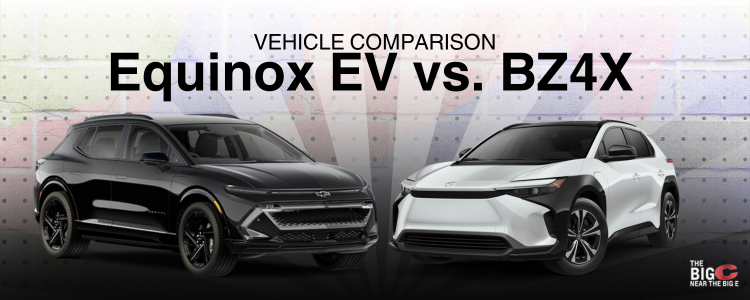
Left Card with "Our Pick" Our Pick CHEVROLET EQUINOX EV VS Circle vs Right Card TOYOTA BZ4X The electric vehicle (EV) market is expanding rapidly, offering consumers a growing selection of cutting-edge models to suit their needs. Among the most anticipated entries in this space are the 2025 Chevrolet Equinox EV and the 2024 Toyota bZ4X, two electric SUVs that appeal to environmentally conscious buyers. While both vehicles boast impressive credentials, the Equinox EV emerges as the superior choice with its combination of affordability, range, performance, and advanced technology. Let’s dive into a detailed comparison to understand why the Equinox EV is the standout option. Performance and Power The Chevrolet Equinox EV offers a choice of two powertrains to suit a variety of driving preferences. The Front-Wheel Drive (FWD) model delivers an impressive 220 horsepower and 242 lb-ft of torque, while the All-Wheel Drive (AWD) variant ups the ante with 300 horsepower and 348 lb-ft of torque. This robust performance ensures that the Equinox EV can handle everything from daily commutes to weekend adventures with confidence. Though Chevrolet has not officially disclosed 0-60 mph times, the higher output of the AWD model suggests a quicker acceleration compared to its FWD counterpart. In contrast, the Toyota bZ4X falls short in this category. Its FWD model provides 201 horsepower and 196 lb-ft of torque, while the AWD version manages a combined 214 horsepower and 248 lb-ft of torque. Although its AWD variant achieves respectable acceleration, with a 0-60 mph time of about 6.5 seconds, the power disparity between the bZ4X and the Equinox EV is clear. For drivers seeking a more dynamic and responsive driving experience, the Equinox EV offers a noticeable advantage. Battery, Range, and Efficiency One of the most critical aspects of any EV is its range, and the Chevrolet Equinox EV sets a high standard. Powered by GM’s revolutionary Ultium battery platform, the FWD model achieves an impressive EPA-estimated range of 326 miles, while the AWD version offers a range of 307 miles. These figures make the Equinox EV a more practical choice for long-distance driving and reduce the need for frequent charging stops. Additionally, the Equinox EV delivers excellent efficiency, with up to 117 MPGe city / 108 MPGe combined for the FWD model. The Toyota bZ4X, while respectable, falls behind in this category. Its FWD model offers an EPA-estimated range of 252 miles, and the AWD version provides only 228 miles. Although sufficient for daily use, these ranges pale in comparison to the Equinox EV’s capabilities. Furthermore, the bZ4X’s efficiency ratings of 119 MPGe combined for FWD and 104 MPGe combined for AWD are slightly less competitive when considering the overall package. Charging Capabilities Charging is another area where the Equinox EV shines. With DC fast charging capabilities of up to 150 kW, it can recover significant range in a short period—ideal for road trips or busy schedules. The Equinox EV also supports 11.5 kW Level 2 charging as standard, with an available 19.2 kW charger on the RS trim for even faster home charging. In comparison, the bZ4X offers DC fast charging that can reach 80% capacity in approximately 30 minutes under optimal conditions, but it doesn’t match the flexibility and speed offered by the Equinox EV. Interior Space and Features Inside, the Chevrolet Equinox EV offers a spacious and modern cabin with premium features that elevate the driving experience. With 41.6 inches of front legroom, 38.0 inches of rear legroom, and a cargo capacity of 57.2 cubic feet with the rear seats folded, the Equinox EV is perfect for families and adventurers alike. The technology is equally impressive, highlighted by a 17.7-inch diagonal infotainment display that supports wireless Apple CarPlay and Android Auto. Additionally, Chevrolet’s Super Cruise technology enables hands-free driving on compatible highways, making long trips more convenient and less stressful. While the Toyota bZ4X offers a futuristic and minimalist interior design, it doesn’t quite match the Equinox EV in practicality or innovation. The bZ4X’s cargo space maxes out at 56.9 cubic feet, slightly less than the Equinox EV. Its smaller 12.3-inch touchscreen, while functional, lacks the bold presence of Chevrolet’s infotainment system. Toyota’s Safety Sense 3.0 suite is robust, but it doesn’t include the same advanced hands-free capabilities as Super Cruise. Pricing and Value Perhaps the most compelling argument for the Chevrolet Equinox EV is its affordability. Starting at just $33,600, it undercuts the bZ4X significantly, whose base model starts at $42,000. Even with the AWD upgrade, which adds $3,300 to the Equinox EV, it remains a more budget-friendly option compared to the bZ4X AWD at $44,500. Chevrolet also offers a range of packages, such as the Comfort Package ($1,455) and Illumination Package ($995), allowing buyers to customize their vehicle without breaking the bank. Toyota’s bZ4X, while well-equipped, comes with a higher price tag that may deter budget-conscious shoppers. Conclusion The 2025 Chevrolet Equinox EV excels in every major category, from performance and range to interior features and value. Its superior power output, class-leading range, advanced technology, and accessible pricing make it the clear winner in this comparison. While the 2024 Toyota bZ4X is a capable competitor, it doesn’t quite match the Equinox EV’s blend of practicality, innovation, and affordability. For drivers seeking a reliable and feature-rich electric SUV, the Chevrolet Equinox EV is the smarter choice. View Equinox EV Inventory FAQ Section 1. What is the range difference between the Chevrolet Equinox EV and the Toyota bZ4X? The Chevrolet Equinox EV offers an EPA-estimated range of 326 miles (FWD) and 307 miles (AWD), while the Toyota bZ4X provides a range of 252 miles (FWD) and 228 miles (AWD). The Equinox EV offers significantly more range in both configurations. 2. Which vehicle has better charging capabilities? The Chevrolet Equinox EV supports DC fast charging up to 150 kW, allowing for rapid range recovery. It also offers 11.5 kW Level 2 charging as standard, with an optional 19.2 kW charger. The Toyota bZ4X supports DC fast charging that can reach 80% charge in approximately 30 minutes but doesn’t match the flexibility and speed of the Equinox EV. 3. How does the pricing compare between the two models? The Chevrolet Equinox EV starts at $33,600, significantly lower than the Toyota bZ4X, which begins at $42,000. Even with upgrades, the Equinox EV remains the more affordable choice. 4. Which vehicle offers more interior space? The Chevrolet Equinox EV provides 57.2 cubic feet of cargo space with the rear seats folded, slightly more than the Toyota bZ4X’s 56.9 cubic feet. Additionally, the Equinox EV boasts more legroom in both the front and rear seats. 5. What makes the Equinox EV a better choice overall? The Equinox EV stands out with its superior range, performance, advanced technology like Super Cruise, and lower pricing, making it a more practical and feature-rich option compared to the Toyota bZ4X.

Equinox EV vs. ID.4

2025 Chevrolet Equinox EV vs. 2024 Volkswagen ID.4: Who's The Clear Winner.

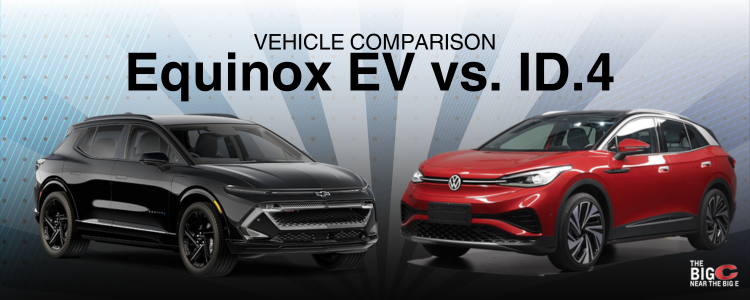
Left Card with "Our Pick" Our Pick CHEVROLET EQUINOX EV VS Circle vs Right Card VOLKSWAGEN ID.4 The electric SUV market is heating up, and two strong contenders in this space are the 2025 Chevrolet Equinox EV and the 2024 Volkswagen ID.4. While both vehicles cater to the growing demand for eco-friendly and versatile transportation, the Equinox EV stands out as a superior option in several key areas. Let’s dive into a detailed comparison of these two electric SUVs to help you understand why the Equinox EV is the better choice for drivers seeking an exceptional blend of value, performance, and technology. Pricing and Value One of the most striking differences between the Equinox EV and the ID.4 is their starting prices. The Chevrolet Equinox EV begins at an incredibly competitive $33,600, making it one of the most affordable options in its class. In contrast, the Volkswagen ID.4 starts at $39,735, which reflects its established position but puts it out of reach for more budget-conscious buyers. For drivers entering the electric market for the first time, the Equinox EV’s lower price point provides an excellent opportunity to embrace electric mobility without breaking the bank. Performance and Driving Dynamics Both the Equinox EV and the ID.4 offer impressive powertrain options, but their execution differs. The Equinox EV’s front-wheel-drive model delivers 220 horsepower and 243 lb-ft of torque, while its all-wheel-drive variant ups the ante with 288 horsepower and 333 lb-ft of torque. These numbers translate to a smooth, comfortable ride that’s ideal for daily commutes and long road trips alike. Meanwhile, the ID.4’s rear-wheel-drive base model produces 201 horsepower and 229 lb-ft of torque, with its all-wheel-drive configuration pushing up to 335 horsepower. While the ID.4’s AWD trim offers slightly more power, the Equinox EV delivers a balanced approach that prioritizes both efficiency and practicality—key factors for most SUV buyers. Range and Charging Capabilities Range anxiety remains a concern for many electric vehicle buyers, and here the Equinox EV shines. Depending on the trim, it offers an EPA-estimated range of 285 to 319 miles on a single charge, making it a class leader. The ID.4, in comparison, has an EPA-estimated range of 206 to 275 miles, depending on the configuration. The longer range of the Equinox EV makes it a more practical choice for drivers who frequently travel longer distances. When it comes to charging, the Equinox EV and ID.4 are closely matched. The Equinox EV’s DC fast-charging capabilities allow it to go from 10% to 80% in about 36 to 45 minutes, while the ID.4 achieves the same feat in approximately 30 minutes. Although the ID.4 has a slight edge in charging speed, the Equinox EV’s longer range ensures fewer charging stops overall. Interior Comfort and Technology Step inside the Chevrolet Equinox EV, and you’ll be greeted by a modern, spacious interior. With an available 17.7-inch infotainment display and generous legroom—42 inches in the front and 39 inches in the rear—the Equinox EV prioritizes comfort and connectivity. Features like wireless Apple CarPlay and Android Auto, heated and ventilated seats, and ambient lighting elevate the driving experience to a new level. The Volkswagen ID.4, while stylish, falls short in some areas. Its 12.9-inch infotainment screen, although functional, feels less cutting-edge compared to the Equinox EV. Additionally, rear legroom in the ID.4 measures 37.6 inches, making it slightly less accommodating for taller passengers. For families or those who frequently travel with passengers, the Equinox EV offers a more comfortable and versatile cabin. Advanced Driver Assistance and Safety Features Safety is a top priority for any vehicle, and both the Equinox EV and ID.4 come equipped with advanced driver-assistance systems. However, the Equinox EV takes it a step further with the availability of GM’s Super Cruise technology. This hands-free driving system is compatible with thousands of miles of highways, providing unmatched convenience and safety. The ID.4 features Volkswagen’s IQ.Drive system, which includes adaptive cruise control and lane-keeping assist but lacks the hands-free capability of Super Cruise. Final Thoughts The 2025 Chevrolet Equinox EV emerges as the clear winner when compared to the 2024 Volkswagen ID.4. From its lower starting price to its longer range, advanced technology, and spacious interior, the Equinox EV offers an unbeatable combination of value and innovation. Whether you’re new to the world of electric vehicles or looking to upgrade your current ride, the Equinox EV delivers on all fronts. View Equinox EV Inventory FAQ 1. How does the Chevrolet Equinox EV compare to the Volkswagen ID.4 in terms of price? The Equinox EV starts at $33,600, making it significantly more affordable than the ID.4, which starts at $39,735. 2. Which vehicle has a better range? The Equinox EV offers an EPA-estimated range of up to 319 miles, while the ID.4’s range tops out at 275 miles. 3. Does the Equinox EV have hands-free driving capabilities? Yes, the Equinox EV offers GM’s Super Cruise technology for hands-free driving on compatible highways, a feature not available in the ID.4. 4. Which SUV has more interior space? The Equinox EV provides more rear legroom and a spacious cabin overall, making it the better choice for passenger comfort. 5. What about cargo space? While the ID.4 offers slightly more cargo space at 64 cubic feet compared to the Equinox EV’s 57 cubic feet, the Equinox EV’s versatile interior layout ensures ample storage for most needs. Experience the future of driving with the 2025 Chevrolet Equinox EV. Visit Central Chevrolet in West Springfield, MA, to learn more and schedule a test drive today!

Equinox EV vs. EV6

2025 Chevrolet Equinox EV vs. 2024 Kia EV6: A Comprehensive Comparison

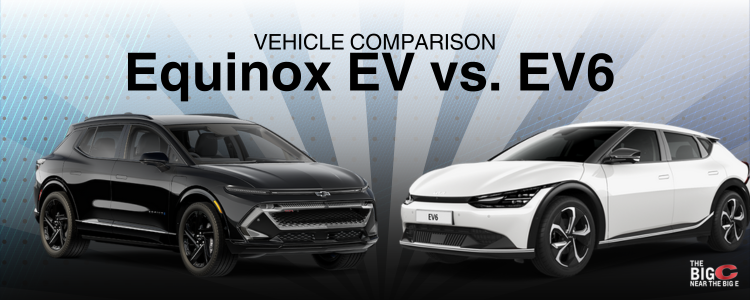
Left Card with "Our Pick" Our Pick CHEVROLET EQUINOX EV VS Circle vs Right Card KIA EV6 Introduction The electric vehicle (EV) market continues to evolve, offering a wide range of options for eco-conscious buyers. Two standout contenders in the electric SUV segment are the 2025 Chevrolet Equinox EV and the 2024 Kia EV6. Both vehicles bring unique strengths to the table, catering to different buyer preferences. In this detailed comparison, we’ll explore key aspects such as pricing, performance, range, charging, and more to help you decide which EV suits your needs best. Pricing and Value Chevrolet Equinox EV The 2025 Chevrolet Equinox EV sets itself apart with an accessible starting price of $33,600, making it one of the most affordable options in the electric SUV category. This pricing strategy makes it particularly appealing to first-time EV buyers or budget-conscious families. For those seeking more premium features, trims like the RS and 3LT offer advanced technology and upgraded interiors without breaking the bank. Kia EV6 In contrast, the 2024 Kia EV6 starts at $42,600, positioning itself as a more premium offering. While it boasts advanced features and a more luxurious feel, the higher price point may deter budget-conscious buyers. The EV6 targets those who prioritize performance and upscale amenities over affordability. Key Takeaway The Chevrolet Equinox EV’s competitive pricing makes it a standout choice for buyers seeking value without compromising on essential features. Performance Chevrolet Equinox EV The E quinox EV delivers dependable performance tailored to daily driving needs. The base front-wheel-drive (FWD) model offers 210 horsepower and 243 lb-ft of torque, providing smooth and predictable driving dynamics. For those needing enhanced traction and power, the all-wheel-drive (AWD) version boosts output to 290 horsepower, making it an excellent choice for small families and urban commuters alike. Kia EV6 The Kia EV6, on the other hand, emphasizes sportier performance. Its base model delivers 167 horsepower and 258 lb-ft of torque with rear-wheel drive (RWD). For those seeking more excitement, higher trims feature a dual-motor AWD setup producing up to 320 horsepower. This configuration ensures a sharper, more dynamic driving experience, catering to enthusiasts who prioritize performance. Key Takeaway While the Kia EV6 offers more power and sporty handling, the Chevrolet Equinox EV provides sufficient performance for everyday use at a lower cost. Battery, Range, and Efficiency Chevrolet Equinox EV The Equinox EV offers impressive range options, depending on the trim and configuration. Buyers can expect between 285 and 319 miles of range on a full charge. With an efficiency rating of 96–108 MPGe combined, the Equinox EV ensures economical operation without sacrificing range. Kia EV6 The Kia EV6 also delivers competitive range options, ranging from 232 to 310 miles depending on battery size and drivetrain configuration. Its efficiency is slightly higher, rated at 109–117 MPGe combined. These figures make the EV6 a viable option for long-distance travelers. Key Takeaway While both vehicles offer strong range capabilities, the Equinox EV’s extended range in its higher trims provides better affordability per mile. Charging Capabilities Chevrolet Equinox EV The Equinox EV offers practical and efficient charging options. With a Level 2 (240V) charger, it can fully recharge in approximately 7 hours. For those on the go, DC fast charging adds up to 70 miles of range in just 10 minutes and can charge the battery from 10–80% in 36–45 minutes. Kia EV6 The Kia EV6 excels in fast-charging capabilities. It can charge from 10–80% in just 18–25 minutes with DC fast charging, making it one of the fastest-charging EVs in its class. Level 2 charging takes 6 to 8 hours for a full charge. Key Takeaway The Kia EV6 leads in fast charging, making it a better option for frequent long-distance drivers. However, the Equinox EV’s charging times remain competitive for most everyday scenarios. Interior and Comfort Chevrolet Equinox EV Inside the Equinox EV, you’ll find a modern and tech-focused cabin designed for practicality and comfort. A standard 11-inch infotainment screen provides an intuitive user experience, while higher trims feature an expansive 17.7-inch display. Other highlights include heated front seats, an optional panoramic sunroof, and premium materials in the sporty RS trim. Kia EV6 The Kia EV6 takes a more premium approach to interior design, featuring high-quality materials such as vegan leather seating. Its curved dual-screen layout emphasizes a driver-centric aesthetic, and higher trims include ventilated seats and a Meridian premium sound system. While luxurious, these features contribute to the EV6’s higher price. Key Takeaway The Kia EV6 offers a more upscale interior, but the Equinox EV focuses on practicality and user-friendly technology at a more accessible price. Technology and Safety Chevrolet Equinox EV The Equinox EV is equipped with GM’s cutting-edge Super Cruise technology, a hands-free driver-assistance system available on select trims. Standard safety features include automatic emergency braking, lane-keeping assist, and adaptive cruise control, ensuring a secure driving experience. Kia EV6 The EV6 features Kia’s Drive Wise suite, which includes highway driving assist, blind-spot monitoring, and smart cruise control. For tech enthusiasts, higher trims offer an optional augmented reality (AR) head-up display. Key Takeaway While both vehicles provide advanced safety and technology, the Equinox EV’s Super Cruise system gives it an edge in driver assistance innovation. Warranty and Reliability Chevrolet Equinox EV Chevrolet offers a basic warranty of 3 years/36,000 miles and an 8-year/100,000-mile battery warranty. These terms ensure peace of mind for buyers entering the EV market. Kia EV6 Kia’s warranty coverage is slightly more generous, with a 5-year/60,000-mile basic warranty and a 10-year/100,000-mile battery warranty, appealing to buyers focused on long-term reliability. Key Takeaway Kia’s longer basic warranty is a strong selling point, but the Equinox EV’s competitive pricing balances the equation for budget-minded buyers. Styling and Design Chevrolet Equinox EV The Equinox EV boasts a sleek, modern design with athletic lines and LED lighting. The RS trim adds sporty accents, creating a visually appealing yet practical aesthetic. Kia EV6 The Kia EV6 adopts a bold, futuristic design with a coupe-like silhouette and an aggressive front fascia. Its styling is ideal for those seeking a standout look. Key Takeaway The Equinox EV’s design strikes a balance between modernity and practicality, while the EV6’s bold styling appeals to buyers with a taste for the unconventional. Verdict Both the 2025 Chevrolet Equinox EV and the 2024 Kia EV6 are excellent choices in the electric SUV market, but they cater to different audiences: Choose the Chevrolet Equinox EV if you value affordability, long range, and practicality. It’s a perfect fit for families and first-time EV buyers. Choose the Kia EV6 if you prioritize performance, luxury, and fast charging, despite the higher price. The 2025 Chevrolet Equinox EV ultimately stands out as a value-packed, family-friendly option, offering a compelling combination of features, range, and affordability. View Equinox EV Inventory FAQs 1. What is the starting price of the 2025 Chevrolet Equinox EV? The Equinox EV starts at $33,600, making it one of the most affordable electric SUVs on the market. 2. Which SUV has a better driving range? The Chevrolet Equinox EV offers a higher range of up to 319 miles in select trims, compared to the Kia EV6’s maximum of 310 miles. 3. How does the charging time compare between these two EVs? While the Kia EV6 has faster DC fast-charging times, the Equinox EV’s charging performance is competitive and sufficient for most drivers. 4. Which EV is better for families? The Chevrolet Equinox EV is more practical and budget-friendly, making it a better option for families. 5. What sets the Equinox EV apart from the Kia EV6? The Equinox EV’s affordability, extended range, and advanced Super Cruise technology make it a standout choice for buyers seeking value and innovation.

ultium cells

GM's Ultium Battery Technology: A New Generation of Power

General Motors (GM) has consistently demonstrated its leadership in electric vehicle (EV) innovation, and its Ultium battery technology platform is a prime example of this forward-thinking approach. Designed to deliver unmatched flexibility, scalability, and efficiency, Ultium batteries are setting a new standard in the EV industry. Let’s explore the numerous advantages of this groundbreaking technology. 1. Advanced Cell Chemistry for Efficiency and Cost Reduction Nickel-Cobalt-Manganese-Aluminum (NCMA) Chemistry: Ultium batteries feature an NCMA chemistry that reduces cobalt content by 70% compared to previous designs. This innovation not only cuts costs but also mitigates ethical and supply chain concerns associated with cobalt mining. Environmental and Economic Benefits: By reducing reliance on expensive and environmentally contentious materials, GM has made significant strides toward producing sustainable and cost-efficient batteries. 2. Flexible and Modular Design for Diverse Applications Horizontal and Vertical Stacking: The large-format pouch cells can be stacked horizontally or vertically, enabling them to fit a wide range of vehicle designs—from compact cars to large trucks. Scalability: Ultium battery packs can range from 50 kWh to 200 kWh, making them adaptable for different vehicle types and driving ranges. 3. Impressive Energy Density and Capacity High Energy Density: With each pouch cell measuring approximately 23.0 x 4.0 x 0.4 inches and weighing about 3 pounds, the batteries achieve a capacity of 0.37 kWh per cell. This compact yet powerful design optimizes space and performance. Long Driving Range: Ultium battery packs can support GM-estimated driving ranges of up to 400 miles on a full charge, depending on the vehicle configuration. This range is among the best in the industry, addressing consumer concerns about EV practicality. 4. Industry-Leading Cost Efficiency Affordable Production: GM’s advancements in cell chemistry, combined with economies of scale and manufacturing efficiencies, aim to reduce battery costs to around $100 per kWh. Achieving this threshold brings EVs closer to cost parity with internal combustion engine vehicles. Mass Adoption Potential: Lower production costs mean more affordable EVs, making them accessible to a broader audience and accelerating the transition to electric mobility. 5. Wireless Battery Management System (wBMS) Innovation in Simplicity: Ultium batteries feature a wireless battery management system, a first in the automotive industry. Developed in collaboration with Analog Devices, this system eliminates up to 90% of the wiring within the battery pack. Enhanced Reliability: Fewer wires mean reduced complexity, improved reliability, and easier assembly, contributing to streamlined production and maintenance. 6. Robust Manufacturing and Strategic Partnerships Ultium Cells LLC: GM’s partnership with LG Energy Solution through Ultium Cells LLC has led to the establishment of high-capacity battery plants in Ohio, Tennessee, and Michigan. These facilities ensure a steady supply of advanced batteries to meet growing EV demand. Expanding Capabilities: A joint venture with Samsung SDI, announced in 2023, marks GM’s commitment to diversifying its battery cell formats and boosting domestic production of prismatic and cylindrical cells. 7. Sustainability and Environmental Responsibility Reduced Environmental Footprint: By using less cobalt and developing manufacturing processes that emphasize efficiency, Ultium technology supports GM’s broader sustainability goals. Commitment to a Zero-Emissions Future: The Ultium platform aligns with GM’s vision of an all-electric future, contributing to reduced greenhouse gas emissions and a cleaner environment. 8. Adaptability to Future Innovations Forward Compatibility: GM’s decision to retire the Ultium branding in 2024 underscores its commitment to evolving its battery strategy. By integrating new chemistries and formats, the company is ensuring its technology remains competitive in the rapidly changing EV market. Partnerships for Advancement: Collaborations with companies like Forge Nano highlight GM’s focus on pursuing next-generation batteries with lower costs and higher performance. 9. Consumer-Centric Benefits Enhanced Range Confidence: With a maximum range of 400 miles, Ultium technology addresses one of the primary concerns of EV buyers—range anxiety. Versatility Across Models: From compact SUVs to full-size trucks like the GMC Hummer EV, Ultium batteries cater to a wide array of consumer preferences and needs. 10. Supporting the Broader EV Ecosystem U.S.-Based Manufacturing: By building multiple battery plants in the United States, GM is contributing to local economies, creating jobs, and strengthening the domestic EV supply chain. Accelerating the EV Transition: With scalable and affordable battery technology, GM is helping to make EVs mainstream, supporting global efforts to combat climate change. Conclusion: Driving the Future with Ultium GM’s Ultium battery platform represents a monumental leap forward in electric vehicle technology. By prioritizing flexibility, efficiency, and cost-effectiveness, GM is not only enhancing the appeal of EVs but also paving the way for a more sustainable future. As the company continues to innovate and adapt, the Ultium platform will undoubtedly remain a cornerstone of its efforts to lead the EV revolution. FAQs 1. What makes Ultium batteries unique? Ultium batteries feature NCMA chemistry, a modular design, and industry-first wireless battery management, making them efficient, scalable, and cost-effective. 2. How far can a vehicle with Ultium batteries travel on a single charge? Depending on the configuration, Ultium battery packs can support ranges of up to 400 miles on a full charge. 3. Are Ultium batteries environmentally friendly? Yes, Ultium batteries use 70% less cobalt, a step towards sustainable and ethical battery production. 4. Where are Ultium batteries manufactured? GM manufactures Ultium batteries at facilities in Ohio, Tennessee, and Michigan, with plans for additional plants in partnership with Samsung SDI. 5. How does the wireless battery management system benefit Ultium batteries? The wireless system reduces wiring by up to 90%, enhancing reliability, simplifying assembly, and reducing production costs.

Blazer EV vs. Q4 e-tron

Chevrolet Blazer EV vs. Audi Q4 e-tron: A Comprehensive Comparison

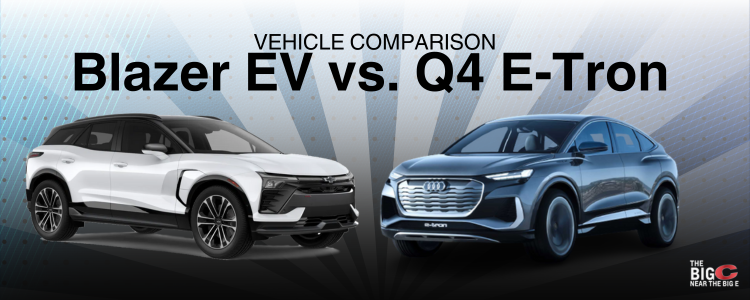
Left Card with "Our Pick" Our Pick CHEVROLET BLAZER EV VS Circle vs Right Card AUDI Q4 E-TRON The electric vehicle (EV) market continues to expand with innovative options, and two contenders making waves are the Chevrolet Blazer EV and the Audi Q4 e-tron. While both vehicles offer excellent features, the Chevrolet Blazer EV stands out for its affordability, performance versatility, and cutting-edge technology. Let’s explore how these two EVs compare across key categories to help you make an informed choice. Pricing Chevrolet Blazer EV: Starts at $44,600. Audi Q4 e-tron: Starts at $49,800. The Blazer EV is significantly more budget-friendly, providing an excellent entry point into the electric SUV segment without compromising on performance or features. Performance Chevrolet Blazer EV Drivetrain Options: Available in FWD, RWD, and AWD. Horsepower: 288 horsepower in the LT FWD trim. Torque: 333 lb-ft of torque in the LT FWD trim. Towing Capacity: Up to 3,500 lbs (RS RWD variant) and 1,500 lbs for other trims. Audi Q4 e-tron Drivetrain Options: Available in RWD and AWD. Horsepower: Up to 335 horsepower (55 Prestige trim). Torque: Up to 339 lb-ft (AWD models). Towing Capacity: Up to 2,646 lbs (AWD models) and 2,204 lbs (RWD models). The Blazer EV offers greater drivetrain flexibility and a higher towing capacity in its RS RWD variant, making it a better option for drivers seeking both versatility and utility. Battery and Range Chevrolet Blazer EV Battery Technology: Utilizes GM’s advanced Ultium battery system. Range: Up to 334 miles on a full charge. Audi Q4 e-tron Battery Capacity: Features a 77 kWh battery. Range: Up to 288 miles (45 Premium Plus trim). With its superior range and cutting-edge Ultium battery technology, the Chevrolet Blazer EV ensures fewer stops on long journeys, making it ideal for road trips and daily commutes alike. Charging Chevrolet Blazer EV Level 2 Charging: Full charge in approximately 9 to 12 hours. DC Fast Charging: Replenishes up to 80% in about 36 minutes. Audi Q4 e-tron Level 2 Charging: Similar charging times to the Blazer EV. DC Fast Charging: Reaches 80% charge in approximately 36 minutes. Both vehicles offer competitive charging times, but the Blazer EV’s affordability and range give it a slight edge. Interior and Cargo Space Chevrolet Blazer EV Seating: Comfortably accommodates five passengers. Cargo Capacity: 25.5 cubic feet behind the rear seats and up to 59.1 cubic feet with the seats folded. Audi Q4 e-tron Seating: Seats five passengers with luxurious touches. Cargo Capacity: 24.8 cubic feet behind the rear seats and 53.1 cubic feet with the seats folded. While the Audi offers a slightly more premium interior, the Blazer EV provides more cargo space, making it the practical choice for families and adventurers. Dimensions Chevrolet Blazer EV: 192.2" L x 78.0" W x 65.0" H, with 7.9" ground clearance. Audi Q4 e-tron: 180.7" L x 73.4" W x 64.7" H, with a 108.7" wheelbase. The larger dimensions of the Blazer EV translate to a more commanding road presence and additional interior space. Warranty Chevrolet Blazer EV: 3-year/36,000-mile basic warranty and 8-year/100,000-mile battery warranty. Audi Q4 e-tron: 4-year/50,000-mile basic warranty and 8-year/100,000-mile battery warranty. Audi provides a longer basic warranty, but the Blazer EV’s coverage aligns with industry standards and is complemented by its competitive pricing. Safety and Driver Assistance Chevrolet Blazer EV Standard Features: Automatic emergency braking, lane-keeping assist, forward collision warning. Available Features: Super Cruise hands-free driving technology. Audi Q4 e-tron Standard Features: Audi pre sense® front, adaptive cruise assist, lane guidance. Optional Features: Traffic sign recognition, 360-degree camera system. Both vehicles excel in safety, but the Blazer EV’s Super Cruise technology offers a unique advantage for hands-free driving on compatible highways. Conclusion: Why Choose the Chevrolet Blazer EV? The Chevrolet Blazer EV shines with its affordability, impressive range, versatile performance, and cutting-edge features like Super Cruise. While the Audi Q4 e-tron offers premium touches and slightly higher performance in its top trims, the Blazer EV delivers exceptional value, making it the smarter choice for budget-conscious buyers seeking a practical yet powerful electric SUV. FAQs 1. Which EV has a better range, the Chevrolet Blazer EV or Audi Q4 e-tron? The Chevrolet Blazer EV offers a maximum range of up to 334 miles, outperforming the Audi Q4 e-tron’s 288 miles. 2. Which vehicle charges faster? Both the Blazer EV and Q4 e-tron achieve 80% charge in about 36 minutes with DC fast charging. 3. Which is more affordable, the Blazer EV or the Q4 e-tron? The Chevrolet Blazer EV starts at $44,600, significantly lower than the Audi Q4 e-tron’s $49,800 starting price. 4. What’s the towing capacity of the Blazer EV compared to the Q4 e-tron? The Blazer EV’s RS RWD trim can tow up to 3,500 lbs, surpassing the Q4 e-tron’s maximum towing capacity of 2,646 lbs. 5. Where can I test drive the Chevrolet Blazer EV? Visit Central Chevrolet in West Springfield, MA, to explore and test drive the Chevrolet Blazer EV today.

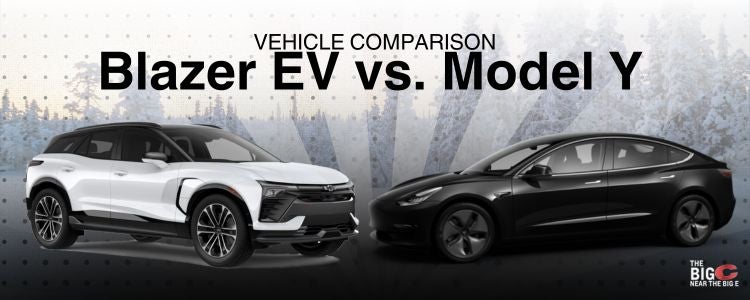
Blazer EV vs. Model Y

2025 Chevrolet Blazer EV vs. Tesla Model Y: A Comprehensive Comparison

Left Card with "Our Pick" Our Pick CHEVROLET BLAZER EV VS Circle vs Right Card TESLA MODEL Y As the electric vehicle (EV) market continues to expand in 2025, buyers face a tough choice between cutting-edge options like the Chevrolet Blazer EV and the Tesla Model Y. Both vehicles boast impressive features, but the Blazer EV emerges as a strong contender for its affordability, versatility, and innovation. Let’s dive into the details to see how these two EVs compare and why the Chevrolet Blazer EV is an excellent choice for modern drivers. Pricing: Value for Money The Chevrolet Blazer EV starts at $44,600 for its base LT FWD trim and goes up to $52,900 for the AWD RS trim. This pricing structure offers a range of affordable and feature-rich options to suit various budgets. In contrast, the Tesla Model Y Long Range RWD starts at $44,990, with the Performance AWD model priced at $51,490. While competitive, the Model Y's pricing lacks the variety and affordability of the Blazer EV lineup. With its more accessible entry points and better-equipped higher trims, the Blazer EV provides superior value for money. Performance and Powertrain Options The Chevrolet Blazer EV offers diverse powertrain options to cater to different driving needs: LT FWD: A single motor producing 288 horsepower and 333 lb-ft of torque. RS RWD: A more powerful single motor for enhanced performance. RS AWD: Dual motors for added power and traction. Meanwhile, the Tesla Model Y Long Range RWD produces 291 horsepower and reaches 0-60 mph in 6.5 seconds, while its Performance AWD model accelerates in just 3.5 seconds. Chevrolet's "Wide Open Watts" (WOW) mode on the SS trim delivers exhilarating acceleration of under 4 seconds, offering thrills comparable to Tesla's best. The Blazer EV combines versatility and performance, making it a standout choice. Range and Battery Efficiency Powered by GM’s Ultium lithium-ion batteries, the Chevrolet Blazer EV offers an EPA-estimated range of up to 320 miles on the RS RWD trim. These batteries provide excellent capacity and efficiency across trims. The Tesla Model Y also boasts a range of approximately 320 miles for its Long Range models. However, the Performance AWD variant sacrifices range for speed, offering around 303 miles. Both vehicles excel in range, but Chevrolet’s innovative Ultium battery technology sets a strong foundation for reliable and efficient driving. Charging Capabilities The Chevrolet Blazer EV supports AC charging up to 11.5 kW and DC fast charging up to 195 kW. With this capability, drivers can add approximately 78 miles of range in just 10 minutes. Tesla Model Y's Supercharger network allows faster DC charging speeds of up to 250 kW. However, Chevrolet’s growing fast-charging infrastructure ensures convenience for its drivers at a competitive rate. Chevrolet offers practical charging speeds, ensuring that Blazer EV owners are always ready to hit the road. Towing Capacity The Chevrolet Blazer EV shines with a towing capacity of up to 3,500 lbs on the RS RWD trim, making it an excellent option for light towing. Other trims offer 1,500 lbs of towing capability with the right package, while towing is not recommended on the SS AWD trim. The Tesla Model Y matches the Blazer EV’s 3,500 lbs towing capacity when equipped with its Towing Package. However, Chevrolet’s trailering features enhance its practicality for everyday use. Cargo Space and Dimensions The Chevrolet Blazer EV provides 25.5 cubic feet of cargo space behind the second row, expanding to 59.1 cubic feet with the rear seats folded. Its dimensions also reflect a larger, more spacious design: Length: 192.2 inches Width: 78.0 inches Height: 65.0 inches By comparison, the Tesla Model Y offers more cargo room—30.2 cubic feet behind the second row and 76 cubic feet with the seats folded. However, the Model Y's smaller dimensions result in less overall cabin space, while the Blazer EV delivers a roomy and practical interior for families and adventurers alike. Safety Features Chevrolet equips the Blazer EV with advanced safety features like Automatic Emergency Braking, Lane Keep Assist with Lane Departure Warning, and Forward Collision Alert. Buyers can also opt for Super Cruise, Chevrolet’s hands-free driver assistance technology. Tesla Model Y includes similar features like Automatic Emergency Braking and Lane Departure Avoidance, but Full Self-Driving Capability is an expensive add-on. Chevrolet provides robust safety features standard across trims, ensuring peace of mind for all drivers. Conclusion: Why Choose the Chevrolet Blazer EV? While both the 2025 Chevrolet Blazer EV and Tesla Model Y offer excellent performance, range, and technology, the Blazer EV stands out for its affordability, versatility, and thoughtful design. With innovative features like Super Cruise, WOW mode, and GM’s Ultium batteries, the Blazer EV proves to be a practical and exciting choice for EV enthusiasts. Visit Central Chevrolet today to experience the Blazer EV firsthand and discover why it’s the perfect fit for your lifestyle. View Blazer EV Inventory FAQs How does the Chevrolet Blazer EV compare in range to the Tesla Model Y? The Blazer EV matches the Tesla Model Y with an EPA-estimated range of up to 320 miles on select trims. What makes Chevrolet’s Super Cruise different from Tesla’s Autopilot? Super Cruise allows hands-free driving on compatible roads, while Tesla’s Autopilot requires hands on the wheel in most conditions. Can the Chevrolet Blazer EV be charged at Tesla Superchargers? Currently, Chevrolet vehicles use a CCS charging standard, making Tesla Superchargers incompatible without an adapter. Which vehicle offers better cargo space, the Chevrolet Blazer EV or Tesla Model Y? While the Tesla Model Y has more total cargo space, the Blazer EV offers a more spacious and comfortable cabin. Is the Chevrolet Blazer EV a good choice for towing? Yes, the Blazer EV offers up to 3,500 lbs of towing capacity on the RS RWD trim, making it practical for light towing.

Colorado vs. 2025 RAM 1500 (1)

2025 Chevrolet Colorado vs. 2025 RAM 1500: A Detailed Pickup Truck Comparison

Left Card with "Our Pick" Our Pick CHEVROLET COLORADO VS Circle vs Right Card RAM 1500 Introduction The 2025 Chevrolet Colorado and 2025 RAM 1500 are standout models in the pickup truck segment, each catering to specific preferences and needs. The Chevrolet Colorado offers a compact and versatile midsize truck experience, while the RAM 1500 focuses on full-size truck power and comfort. At Central Chevrolet, we’ve analyzed the key features of these two vehicles to help you make an informed choice. Pricing: Chevrolet Colorado’s Competitive Advantage The 2025 Chevrolet Colorado starts at $31,900 for the 2WD Crew Cab WT trim, presenting an affordable entry point for buyers seeking performance and capability. In contrast, the RAM 1500 begins at $40,275 for the Tradesman 4x2 Quad Cab 6'4" Box trim, making it significantly more expensive than the Colorado. For those who value budget-friendly options without sacrificing quality, the Chevrolet Colorado stands out. Performance Comparison The Chevrolet Colorado’s turbocharged 2.7-liter inline-4 engine delivers 310 horsepower and an impressive 430 lb-ft of torque, paired with an 8-speed automatic transmission. This combination ensures strong towing performance, capable of hauling up to 7,700 lbs. With fuel economy ratings of 19 mpg city and 24 mpg highway, the Colorado balances power and efficiency. The RAM 1500 comes equipped with a 3.6-liter V6 engine, producing 305 horsepower and 269 lb-ft of torque. It also features an 8-speed automatic transmission and achieves slightly better fuel economy at 20 mpg city and 25 mpg highway. While its towing capacity peaks at 7,760 lbs, the RAM 1500 falls short of the Colorado’s torque output, which can make a difference in demanding towing scenarios. Dimensions and Design The Chevrolet Colorado is designed with compact versatility in mind, featuring a bed length of approximately 62 inches and an overall length of 213 inches. Its width of 75 inches and height of 79 inches make it easy to maneuver in urban and off-road environments alike. On the other hand, the RAM 1500’s larger dimensions cater to drivers seeking a full-size truck. It offers a 76-inch bed, overall length of 229 inches, width of 82 inches, and height of 78 inches. While its extended size provides more cargo space and passenger room, it may pose challenges in tighter spaces. Interior and Features Inside, the Chevrolet Colorado offers modern amenities, including a standard 11.3-inch touchscreen with Apple CarPlay and Android Auto integration. Safety features like forward collision warning, lane departure warning, and adaptive cruise control ensure a secure driving experience. With seating for up to five passengers, the Colorado strikes a balance between comfort and utility. The RAM 1500, known for its upscale interior, features a standard 8.4-inch touchscreen and optional 12-inch display on higher trims. Its seating capacity accommodates up to six passengers, making it ideal for larger groups. Safety features include blind-spot monitoring, rear cross-traffic alert, and adaptive cruise control. While the RAM 1500’s cabin is spacious and feature-rich, the Colorado’s infotainment system offers a more advanced standard setup. Off-Road Capabilities The Chevrolet Colorado’s ZR2 trim is purpose-built for off-road enthusiasts, equipped with advanced suspension, underbody protection, and specialized tires to handle challenging terrains. Its compact size and robust engineering make it a standout option for adventure seekers. The RAM 1500 Rebel trim caters to off-road needs with its enhanced suspension, skid plates, and all-terrain tires. While it delivers a rugged performance, its larger size can limit maneuverability in certain off-road conditions compared to the Colorado ZR2. Why Choose the 2025 Chevrolet Colorado? The 2025 Chevrolet Colorado emerges as a versatile and affordable choice for those seeking a capable midsize truck. Its powerful engine, superior torque, and advanced infotainment system make it a strong contender in its segment. While the RAM 1500 offers the advantages of larger size and higher seating capacity, its higher starting price may deter budget-conscious buyers. At Central Chevrolet, we are committed to helping you find the perfect truck. Visit us today to explore the 2025 Chevrolet Colorado and experience its exceptional value and performance firsthand. View Silverado Inventory FAQ Section Q1: What is the starting price of the 2025 Chevrolet Colorado? The 2025 Chevrolet Colorado starts at $31,900 for the 2WD Crew Cab WT trim, making it an affordable option in the midsize truck market. Q2: How does the towing capacity of the Chevrolet Colorado compare to the RAM 1500? The Chevrolet Colorado can tow up to 7,700 lbs, slightly less than the RAM 1500’s 7,760 lbs. However, the Colorado’s higher torque ensures robust towing performance. Q3: What off-road features are available on the Chevrolet Colorado? The ZR2 trim includes advanced off-road suspension, underbody protection, and specialized tires, making it an excellent choice for off-road enthusiasts. Q4: Does the Chevrolet Colorado offer modern infotainment features? Yes, the Colorado comes standard with an 11.3-inch touchscreen featuring Apple CarPlay and Android Auto integration. Q5: Why should I choose Central Chevrolet for my truck purchase? At Central Chevrolet, we provide expert guidance, competitive pricing, and a wide selection of vehicles to meet your needs.

Contact Us

Fill out this form below and we'll contact you shortly
*Required Fields