



Blog / Sales

Blog

All Sales About Us Makes and Models Features Dealership Local Review Company Culture SUV Vehicle Review Community Vehicles Blog Vehicle Comparison News News and Events Directions EV Service and Maintenance Industry Trends Financing Truck Big C Near the Big E Charitable Participation Electric Vehicles Service Tips Buying customer service Leasing 811 Detailing Opinion Parts Safety Tips How-to Bodyshop Corvette Club of Western Mass Finance Departments Equinox Silverado Testimonials Trax MobileService+ Sedan
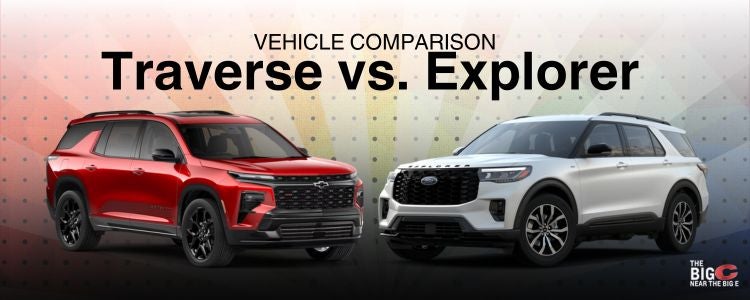
Traverse vs. Explorer

2025 Chevrolet Traverse vs. 2025 Ford Explorer: A Detailed Comparison

Left Card with "Our Pick" Our Pick CHEVROLET TRAVERSE VS Circle vs Right Card FORD EXPLORER Midsize SUVs like the 2025 Chevrolet Traverse and the 2025 Ford Explorer dominate the market by balancing performance, practicality, and cutting-edge technology. While both vehicles cater to diverse needs, they differ in key aspects that can make one better suited to your lifestyle. Here’s a comprehensive breakdown to guide your decision. Performance and Powertrain Chevrolet Traverse The Chevrolet Traverse is powered by a turbocharged 2.5-liter 4-cylinder engine that delivers an impressive 328 horsepower and 326 lb-ft of torque. It’s paired with an 8-speed automatic transmission for smooth shifts and responsive performance. The Traverse comes standard with front-wheel drive (FWD), with all-wheel drive (AWD) available for enhanced traction. Ford Explorer The Explorer features a 2.3-liter turbocharged inline-4 engine generating 300 horsepower and 310 lb-ft of torque. It pairs with a 10-speed automatic transmission, with rear-wheel drive (RWD) as standard and AWD as an option. For those seeking more power, the Explorer ST trim offers a 3.0-liter EcoBoost V6 engine, delivering 400 horsepower and 415 lb-ft of torque, making it a top choice for performance enthusiasts. Verdict: The Traverse provides robust performance in its base engine, while the Explorer caters to drivers who want more performance flexibility with its optional V6 engine. Fuel Efficiency Chevrolet Traverse The Traverse boasts an EPA-estimated fuel economy of 20 MPG city, 27 MPG highway, and 23 MPG combined, offering respectable efficiency for a midsize SUV. Ford Explorer The Explorer provides slightly better efficiency with its 2.3-liter engine, achieving approximately 20 MPG city, 29 MPG highway, and 24 MPG combined. Verdict: The Explorer edges out the Traverse with marginally better highway and combined mileage, though the difference is negligible for many drivers. Interior and Comfort Chevrolet Traverse The Traverse accommodates up to eight passengers in its base LS trim, with second-row captain’s chairs in higher trims reducing capacity to seven. Its spacious interior is especially notable in the third row, offering more room than most competitors. Cargo capacity is a standout feature, with up to 97 cubic feet available when the second and third rows are folded. A 17.7-inch infotainment touchscreen and 11-inch digital instrument cluster enhance the driving experience. Ford Explorer The Explorer seats up to seven passengers, but its third-row space is more suitable for children or short trips due to limited legroom. Cargo capacity maxes out at 87.8 cubic feet, trailing the Traverse. Its 13.2-inch touchscreen with Ford’s Digital Experience software integrates seamlessly with Apple CarPlay and Android Auto, but it doesn’t match the Traverse’s display size or advanced interface. Verdict: The Traverse excels in passenger comfort and cargo space, making it the better choice for larger families or those who prioritize interior room. Safety Features Chevrolet Traverse Safety is a priority for the Traverse, which includes standard features like pedestrian and bicycle detection, auto high-beam headlamps, lane-keeping assist, and hands-free driving mode. Notably, Super Cruise hands-free driving is available on the LT and Z71 trims and standard on the RS trim, providing cutting-edge driving assistance. Ford Explorer The Explorer offers Ford’s Co-Pilot360 suite, featuring forward collision warning, rear cross-traffic alert, blind-spot monitoring, and lane-keeping assist. Self-parking assist is available on higher trims, adding convenience in tight spaces. Verdict: While both SUVs offer advanced safety features, the Traverse’s Super Cruise technology sets it apart for those seeking semi-autonomous driving capability. Towing Capacity Both the Chevrolet Traverse and Ford Explorer are capable of towing up to 5,000 pounds when properly equipped. This capacity makes them suitable for towing small trailers, boats, or recreational equipment. Pricing Chevrolet Traverse The Traverse starts at approximately $37,600 for the base LS trim. Higher trims, like the RS, are priced around $54,200, offering a range of options to suit different budgets. Ford Explorer The Explorer begins at $39,755 for the base Active trim. The high-performance ST trim starts at $55,505, reflecting its more powerful engine and added features. Verdict: The Traverse’s lower starting price makes it more accessible, especially for families seeking an affordable midsize SUV with ample features. Conclusion The 2025 Chevrolet Traverse stands out with its spacious interior, class-leading cargo capacity, and advanced infotainment system, making it an excellent choice for families prioritizing comfort and utility. Its available Super Cruise hands-free driving technology further enhances its appeal for long-distance travel. The 2025 Ford Explorer, on the other hand, shines with its dynamic performance options, particularly in the ST trim. Its slightly better fuel efficiency and robust safety features make it a strong contender for those seeking a balance between power and practicality. Ultimately, your choice depends on your priorities: choose the Traverse for interior space, advanced technology, and family-friendly features, or opt for the Explorer if performance and driving dynamics are at the top of your list. View Traverse Inventory FAQs Which SUV has better cargo space, the Traverse or the Explorer? The Chevrolet Traverse offers up to 97 cubic feet of cargo space, significantly more than the Ford Explorer’s 87.8 cubic feet. Which vehicle is more powerful? While the Ford Explorer’s ST trim delivers up to 400 horsepower with its 3.0-liter V6, the Chevrolet Traverse offers strong performance with 328 horsepower from its base engine. Which SUV is better for families? The Traverse is better suited for families due to its spacious third row, superior cargo capacity, and comfortable seating for up to eight passengers. Does the Traverse or Explorer offer better technology? The Traverse’s 17.7-inch touchscreen and Super Cruise hands-free driving give it an edge in technology over the Explorer’s 13.2-inch screen. What are the starting prices for the Traverse and Explorer? The Chevrolet Traverse starts at $37,600, while the Ford Explorer begins at $39,755.

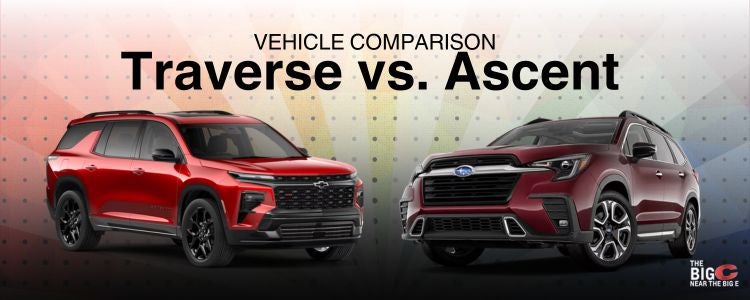
Traverse vs. Ascent

2025 Chevrolet Traverse vs. 2025 Subaru Ascent: Which Midsize SUV Reigns Supreme?

Left Card with "Our Pick" Our Pick CHEVROLET TRAVERSE VS Circle vs Right Card SUBARU ASCENT The midsize SUV market is highly competitive, with families and adventurers looking for performance, comfort, and versatility. The 2025 Chevrolet Traverse and the 2025 Subaru Ascent are two standout options, each offering unique advantages. This in-depth comparison explores pricing, performance, features, and overall value to help you decide which SUV is the right fit. Pricing The 2025 Chevrolet Traverse starts at $40,600 for the FWD LT w/1LT trim. It justifies its higher price point with robust performance, advanced technology, and class-leading interior space. On the other hand, the 2025 Subaru Ascent begins at $38,910 for the Premium 8-Passenger trim. While slightly more affordable, it emphasizes standard safety features and standard AWD. The Ascent’s starting price offers more budget-conscious appeal, but the Traverse provides excellent value for its features, especially in terms of engine power and infotainment technology. Engine and Performance The Chevrolet Traverse is equipped with a 2.5-liter turbocharged four-cylinder engine that delivers a best-in-class 328 horsepower and 326 lb-ft of torque. It pairs with an eight-speed automatic transmission, providing smooth acceleration and responsiveness. The Traverse comes standard with front-wheel drive (FWD), but all-wheel drive (AWD) is available for those seeking enhanced traction. The Subaru Ascent features a 2.4-liter turbocharged flat-four (Boxer) engine that produces 260 horsepower and 277 lb-ft of torque. Mated to a continuously variable transmission (CVT), it emphasizes efficiency and smooth power delivery. AWD is standard across all Ascent trims, making it ideal for diverse driving conditions. While the Ascent focuses on stability and AWD reliability, the Traverse outshines it with significantly more power and a traditional automatic transmission, offering a more engaging driving experience. Fuel Economy The Chevrolet Traverse achieves EPA ratings of 20 mpg city and 27 mpg highway for FWD models, with AWD versions delivering 19 mpg city and 24 mpg highway. These figures are impressive for a midsize SUV with such a powerful engine. The Subaru Ascent’s EPA figures for 2025 are not yet available, but the 2024 model achieved 20 mpg city and 26 mpg highway for base trims. Higher trims slightly reduce these figures due to added weight and features. Both SUVs offer competitive fuel efficiency for their class, but the Traverse’s FWD option provides a slight edge for highway mileage. Interior, Technology, and Seating The Chevrolet Traverse offers a spacious and tech-forward cabin that seats up to eight passengers. It features an 11-inch digital instrument cluster and a class-leading 17.7-inch touchscreen infotainment system with Apple CarPlay and Android Auto integration. Higher trims include leather upholstery, heated and ventilated front seats, and advanced safety features like adaptive cruise control and a 360-degree camera system. The Subaru Ascent also seats up to eight passengers, with the option of second-row captain’s chairs reducing capacity to seven. Its interior includes a responsive touchscreen infotainment system with smartphone integration, tri-zone automatic climate control, and Subaru’s EyeSight Driver Assist Technology. Premium trims add leather seating, premium audio, and heated front seats. The Traverse’s larger touchscreen and advanced infotainment system make it a better choice for those prioritizing technology, while the Ascent’s standard safety suite adds peace of mind. Cargo Space The Chevrolet Traverse leads the segment in cargo capacity, offering 23 cubic feet behind the third row and a massive 98.2 cubic feet with both rear rows folded. This makes it ideal for road trips, sporting gear, or other large cargo needs. The Subaru Ascent provides 17.8 cubic feet of cargo space behind the third row, 47.5 cubic feet behind the second row, and up to 86.5 cubic feet with all seats folded. While practical, it falls short of the Traverse’s class-leading capacity. For drivers who prioritize storage, the Traverse is the clear winner in this category. Towing Capacity Both the Traverse and the Ascent offer a towing capacity of up to 5,000 pounds when properly equipped. This makes them well-suited for towing small trailers, boats, or recreational equipment. The Traverse’s more powerful engine may provide a smoother towing experience, especially on steep grades or with heavier loads. Safety Features The Chevrolet Traverse comes standard with Chevy Safety Assist, which includes automatic emergency braking, forward collision alert, and lane-keeping assist. Available upgrades include adaptive cruise control and a 360-degree camera system, enhancing safety and convenience. The Subaru Ascent features Subaru’s EyeSight Driver Assist Technology as standard, offering adaptive cruise control, pre-collision braking, and lane departure warning. Higher trims add blind-spot monitoring and rear cross-traffic alert. Both SUVs offer comprehensive safety features, but the Traverse’s optional 360-degree camera system provides an extra layer of visibility. Dimensions The Chevrolet Traverse measures 204.49 inches in length, providing an expansive interior and a commanding road presence. Its larger size translates to more passenger and cargo space. The Subaru Ascent is slightly shorter at 196.8 inches, which may make it easier to maneuver in tight spaces. However, this compactness comes at the cost of some interior room. Conclusion The 2025 Chevrolet Traverse excels in power, cargo capacity, and cutting-edge technology, making it a standout option for families and adventurers who prioritize performance and space. The 2025 Subaru Ascent offers standard AWD, excellent safety features, and a lower starting price, appealing to those who value reliability and affordability. Ultimately, the Traverse stands out as the more versatile and feature-rich midsize SUV, delivering exceptional value for drivers seeking a balance of luxury, performance, and utility. View Traverse Inventory FAQs Which SUV has better cargo space, the Traverse or the Ascent? The Chevrolet Traverse offers more cargo space, with up to 98.2 cubic feet compared to the Ascent’s maximum of 86.5 cubic feet. Which SUV is more powerful? The Traverse has a more powerful engine, producing 328 horsepower compared to the Ascent’s 260 horsepower. Which SUV is better for off-road driving? The Subaru Ascent’s standard AWD system makes it more capable for off-road adventures and driving in adverse weather conditions. What are the standout features of the Traverse? The Traverse’s standout features include a class-leading infotainment system, powerful engine, and expansive cargo capacity. What are the standout features of the Ascent? The Ascent’s standout features are its standard AWD system, comprehensive safety suite, and slightly lower starting price.

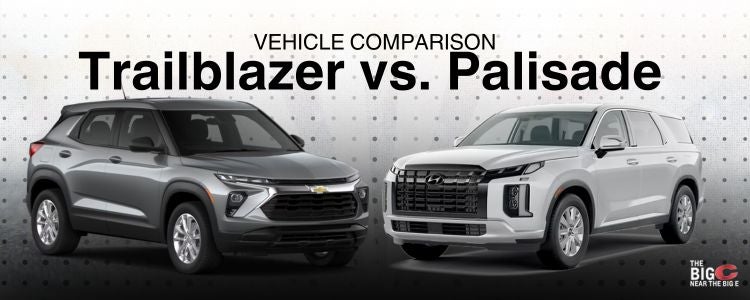
Trailblazer vs. Palisade

2025 Chevrolet Trailblazer vs. 2025 Hyundai Palisade: Compact Versatility Meets Family-Friendly Comfort

Left Card with "Our Pick" Our Pick CHEVROLET TRAILBLAZER VS Circle vs Right Card HYUNDAI PALISADE The 2025 Chevrolet Trailblazer and the 2025 Hyundai Palisade represent two distinct SUV categories, catering to different lifestyles and priorities. While the Trailblazer shines as a compact, fuel-efficient SUV designed for urban settings, the Palisade offers the space, power, and luxury features needed for larger families and extended trips. Here’s an in-depth look at how these two vehicles compare. Pricing and Value The Chevrolet Trailblazer is a budget-friendly choice, with a starting MSRP of $23,100. Its affordability makes it a great option for young professionals, city dwellers, or small families who prioritize value. On the other hand, the Hyundai Palisade starts at $36,800, reflecting its larger size and additional capabilities. While the Palisade comes with a higher price tag, it delivers the power, space, and features that justify the investment for those who need more room and versatility. Engine and Performance The Trailblazer offers two engine options. The base 1.2-liter turbocharged three-cylinder engine produces 137 horsepower and pairs with a continuously variable transmission (CVT), perfect for smooth city driving. The more powerful 1.3-liter engine delivers 155 horsepower and is available with front-wheel drive or all-wheel drive, with AWD models featuring a nine-speed automatic transmission. The Palisade, on the other hand, is equipped with a 3.8-liter V6 engine that generates 291 horsepower and 262 lb-ft of torque. This robust engine, paired with an eight-speed automatic transmission, provides the Palisade with the power to handle heavier loads and more demanding road conditions. For drivers who value high performance and towing capacity, the Palisade stands out. Fuel Efficiency Fuel economy is a strength of the Trailblazer, offering up to 30 mpg city and 31 mpg highway with its 1.2-liter engine. Even the more powerful 1.3-liter engine maintains impressive efficiency, delivering up to 33 mpg on the highway. In contrast, the Palisade provides respectable fuel economy for its size, with FWD models achieving up to 26 mpg on the highway. However, the larger engine and additional weight make the Palisade less efficient overall, with AWD models averaging 20 mpg combined. Interior and Seating The Trailblazer comfortably seats up to five passengers and comes with an 11-inch touchscreen infotainment system featuring wireless Apple CarPlay and Android Auto. Optional features like heated front seats and a power driver’s seat add a touch of comfort and convenience, making the Trailblazer ideal for shorter trips and daily commutes. The Palisade, designed for larger families, accommodates up to eight passengers with its standard second-row bench. Opting for captain’s chairs reduces the seating capacity to seven while enhancing comfort. The Palisade also boasts a 12.3-inch touchscreen, tri-zone automatic climate control, and a range of premium materials in higher trims. Features like a panoramic sunroof and a premium audio system further elevate the driving experience. Cargo Space When it comes to cargo capacity, the Trailblazer provides 25.3 cubic feet of space behind the rear seats, expanding to 54.4 cubic feet with the rear seats folded down. This makes it a practical option for small families or urban drivers with light cargo needs. The Palisade offers significantly more storage, with 18 cubic feet behind the third row, 45.8 cubic feet behind the second row, and up to 86.4 cubic feet with both rows folded. For families with larger storage needs or frequent long trips, the Palisade is the clear choice. Towing and Capability The Trailblazer is designed for light-duty tasks, with a maximum towing capacity of 1,000 pounds. It’s perfect for carrying small loads or recreational gear but isn’t built for heavy-duty towing. The Palisade, on the other hand, excels in towing capabilities, handling up to 5,000 pounds when properly equipped. This makes it ideal for hauling trailers, boats, or other equipment, catering to active families and outdoor enthusiasts. Safety Features Both vehicles offer robust safety systems. The Trailblazer comes with Chevy Safety Assist, which includes automatic emergency braking, lane keep assist, and forward collision alert. These features ensure confidence and security during daily commutes. The Palisade includes Hyundai’s SmartSense safety suite, featuring forward collision-avoidance assist, lane-keeping assist, and driver attention warning. Higher trims add advanced safety technologies such as blind spot monitoring and parking collision avoidance, making it especially appealing to larger families. Conclusion The 2025 Chevrolet Trailblazer and the 2025 Hyundai Palisade cater to different needs, offering distinct advantages. The Trailblazer is an excellent choice for those seeking an affordable, fuel-efficient SUV tailored for urban environments and light travel. Its compact size and advanced technology make it a practical and economical option. In contrast, the Palisade provides a luxurious, spacious driving experience, ideal for larger families and long-distance travel. With its powerful engine, advanced features, and ample towing capacity, the Palisade justifies its higher price for those requiring extra space and capability. At Central Chevrolet in West Springfield, MA, we’re proud to offer the 2025 Chevrolet Trailblazer. Stop by our dealership or explore our inventory online to find the perfect SUV for your lifestyle! View Trailblazer Inventory FAQs Which SUV is more fuel-efficient? The Chevrolet Trailblazer is more fuel-efficient, offering up to 33 mpg on the highway compared to the Palisade’s 26 mpg. Which SUV has more seating capacity? The Hyundai Palisade seats up to eight passengers, while the Chevrolet Trailblazer accommodates five. Is the Trailblazer suitable for towing? The Trailblazer is designed for light towing, with a maximum capacity of 1,000 pounds. The Palisade can tow up to 5,000 pounds. Which SUV is better for city driving? The Trailblazer’s compact size and superior fuel economy make it ideal for urban environments. Which SUV offers more luxury features? The Palisade provides more luxury features, including a larger touchscreen, premium materials, and options like a panoramic sunroof.

Trailblazer vs. Telluride

2025 Chevrolet Trailblazer vs. 2025 Kia Telluride: Compact Meets Mid-Size

Left Card with "Our Pick" Our Pick CHEVROLET TRAILBLAZER VS Circle vs Right Card KIA TELLURIDE The 2025 Chevrolet Trailblazer and the 2025 Kia Telluride are two SUVs designed for very different lifestyles. While the Trailblazer focuses on compact efficiency and urban practicality, the Telluride offers a luxurious, spacious experience suited for larger families and adventurous travels. Here’s a detailed comparison to help you choose the best fit for your needs. Pricing The 2025 Chevrolet Trailblazer stands out as a budget-friendly option with a starting MSRP of $23,100, making it ideal for buyers looking for an affordable and versatile compact SUV. The 2025 Kia Telluride, with a starting MSRP of $36,190, reflects its larger size, increased capabilities, and premium features. It’s designed for those willing to invest in more space, power, and luxury. Engine and Performance Chevrolet Trailblazer The Trailblazer offers two turbocharged three-cylinder engine options: 1.2-liter engine: Produces 137 horsepower and is paired with a CVT and FWD for smooth city driving. 1.3-liter engine: Delivers 155 horsepower and offers both FWD and AWD options. AWD models come with a refined nine-speed automatic transmission for better handling. Kia Telluride The Telluride features a 3.8-liter V-6 engine, generating 291 horsepower and 262 pounds-feet of torque. Paired with an eight-speed automatic transmission, it provides robust performance. Available in both FWD and AWD configurations, the Telluride is built for versatility and power. Fuel Economy Fuel efficiency is a strength for the Chevrolet Trailblazer: 1.2-liter FWD: 30/31/30 mpg (city/highway/combined). 1.3-liter FWD: 29/33/31 mpg. 1.3-liter AWD: 26/29/27 mpg. The Kia Telluride delivers respectable mileage for its size: FWD models: 20/26/22 mpg. AWD models: 18/23/20 mpg. If fuel economy is your top priority, the Trailblazer is the clear winner. Seating and Interior Features The Trailblazer seats up to five passengers comfortably. It includes an 11-inch touchscreen with wireless Apple CarPlay and Android Auto, as well as available options like heated front seats and a power driver’s seat. The Telluride, with room for up to eight passengers, is designed for larger families. It offers a 12.3-inch touchscreen, tri-zone automatic climate control, and premium features such as a panoramic sunroof and a high-end audio system in upper trims. Optional second-row captain’s chairs reduce seating to seven but increase comfort. Cargo Capacity The Trailblazer is practical for everyday needs, providing: 25.3 cubic feet of cargo space behind the rear seats. 54.4 cubic feet with the rear seats folded down. The Telluride excels in cargo capacity: 21 cubic feet behind the third row. 46 cubic feet behind the second row. Up to 87 cubic feet with both rear rows folded. For families requiring maximum storage, the Telluride is the better option. Towing Capacity The Trailblazer has a 1,000-pound towing capacity, suitable for light loads. The Telluride is more robust, offering up to 5,500 pounds of towing capability when properly equipped, making it perfect for towing small trailers, boats, or recreational equipment. Safety Features Both SUVs come equipped with advanced safety technologies: Chevrolet Trailblazer: Features Chevy Safety Assist, including: Automatic emergency braking. Front pedestrian braking. Lane keep assist with lane departure warning. IntelliBeam auto high beam control. Kia Telluride: Offers Kia Drive Wise, which includes: Forward collision warning. Lane-keeping assist. Adaptive cruise control. Blind spot monitoring. Upper trims of the Telluride add advanced features such as a 360-degree camera system and parking collision avoidance. Trim Levels The Trailblazer comes in four trims: LS, LT, Activ, and RS. The Activ trim offers light off-road capabilities with all-terrain tires and off-road suspension. The Telluride offers more trims, including LX, S, EX, SX, and SX-Prestige. Adventure-ready packages like X-Line and X-Pro enhance off-road performance with features such as skid plates and increased ground clearance. Conclusion The 2025 Chevrolet Trailblazer and 2025 Kia Telluride are built for different lifestyles: Choose the Trailblazer if you’re looking for an affordable, fuel-efficient compact SUV with modern technology for urban driving and light travel. Opt for the Telluride if you need a spacious, powerful midsize SUV for large families, towing, or long-distance adventures. Visit Central Chevrolet in West Springfield, MA, to explore the 2025 Chevrolet Trailblazer and discover its versatility firsthand. Our team is here to help you find the perfect SUV for your needs. View Trailblazer Inventory FAQs Q: How many passengers can each SUV accommodate? A: The Trailblazer seats up to five passengers, while the Telluride accommodates up to eight with a second-row bench or seven with captain’s chairs. Q: Which SUV is better for towing? A: The Telluride offers a towing capacity of up to 5,500 pounds, compared to the Trailblazer’s 1,000-pound capacity. Q: Which SUV offers better fuel efficiency? A: The Trailblazer provides significantly better fuel economy, achieving up to 33 mpg on the highway, compared to the Telluride’s 26 mpg. Q: What safety features do these SUVs include? A: Both offer advanced safety systems. The Trailblazer features Chevy Safety Assist, while the Telluride comes with Kia Drive Wise. Q: Which SUV is more affordable? A: The Trailblazer starts at $23,100, making it much more affordable than the Telluride, which starts at $36,190.

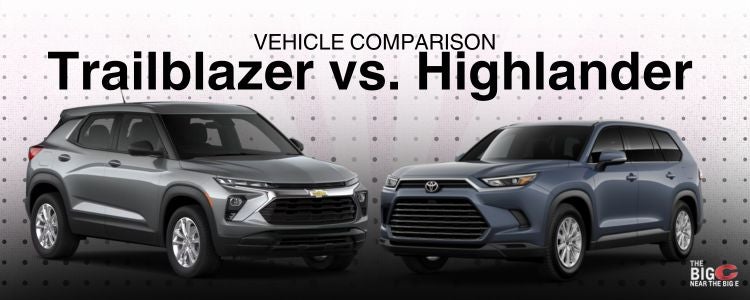
Trailblazer vs. Highlander

2025 Chevrolet Trailblazer vs. 2025 Toyota Highlander: Which SUV Fits Your Needs?

Left Card with "Our Pick" Our Pick CHEVROLET TRAILBLAZER VS Circle vs Right Card TOYOTA HIGHLANDER The 2025 Chevrolet Trailblazer and the 2025 Toyota Highlander represent two distinct segments of the SUV market, catering to different priorities and lifestyles. Whether you're looking for a compact, fuel-efficient commuter or a spacious midsize SUV for family adventures, understanding the key differences between these models will help you make the best choice. Pricing The Chevrolet Trailblazer stands out as an affordable option, starting at $23,100. It’s an excellent choice for budget-conscious buyers seeking a versatile and reliable compact SUV. The Toyota Highlander, starting at $39,520, reflects its midsize stature, offering more power, space, and premium features. While the price is significantly higher, it aligns with the Highlander’s enhanced capabilities and larger target audience. Engine and Performance Chevrolet Trailblazer The Trailblazer is equipped with a 1.2-liter inline-3 engine, generating 137 horsepower and 162 lb-ft of torque. Paired with a continuously variable automatic transmission (CVT) and front-wheel drive (FWD), the Trailblazer delivers smooth performance and optimal efficiency for city driving. Toyota Highlander The Highlander features a robust 2.4-liter turbocharged inline-4 engine, producing 265 horsepower and 310 lb-ft of torque. Its 8-speed automatic transmission ensures responsive handling and control. With front-wheel drive as standard and optional all-wheel drive, the Highlander caters to families needing more power and versatility. Fuel Economy Efficiency is a strong point for the Chevrolet Trailblazer, with EPA ratings of 30 mpg city and 31 mpg highway. Its compact size and smaller engine make it a fuel-efficient option for urban commuting and short trips. The Toyota Highlander, despite its size and power, offers respectable fuel economy for its class, with EPA ratings of 22 mpg city and 29 mpg highway. It’s a balanced choice for families who need more space without sacrificing too much efficiency. Seating and Interior Features The Trailblazer seats up to five passengers and features a user-friendly infotainment system with a touchscreen display, Apple CarPlay, and Android Auto integration. It’s designed for simplicity and practicality, providing comfort for daily drives. The Highlander is built for larger families, accommodating up to eight passengers with a second-row bench or seven with optional captain’s chairs. Standard features include a comprehensive infotainment system, tri-zone automatic climate control, and premium materials in higher trims, making it a more luxurious and versatile choice. Cargo Capacity The Trailblazer offers a practical cargo area suitable for small trips, groceries, and daily use. Its compact dimensions make it easy to load and unload in urban settings. The Highlander, however, excels in cargo capacity. With its second and third rows folded down, it provides ample space for larger families or long-distance travelers who need room for luggage, gear, or outdoor equipment. Towing Capacity The Trailblazer is not designed for towing heavy loads, focusing instead on efficiency and agility. The Highlander, on the other hand, boasts a towing capacity of 5,000 pounds, making it a great option for hauling small trailers, boats, or recreational equipment. Safety Features Safety is a priority for both SUVs: The Chevrolet Trailblazer includes standard features such as a rearview camera, forward collision alert, and lane-keeping assist. The Toyota Highlander is equipped with Toyota Safety Sense, which offers advanced technologies like adaptive cruise control, lane departure alert with steering assist, and a pre-collision system with pedestrian detection. The Highlander’s safety suite is more comprehensive, catering to larger families and long-distance travelers. Dimensions The Trailblazer is compact and maneuverable, ideal for urban environments where parking and tight spaces are common. The Highlander is significantly larger, offering a more spacious interior for passengers and cargo. Its size makes it well-suited for families needing extra room but may feel cumbersome in tight urban areas. Conclusion The 2025 Chevrolet Trailblazer and 2025 Toyota Highlander serve different purposes: Choose the Trailblazer if you value affordability, fuel efficiency, and a compact design tailored for urban driving and light travel. It’s perfect for small families, singles, or commuters on a budget. Opt for the Highlander if you need a midsize SUV with powerful performance, greater towing capacity, and spacious seating for larger families or long-distance travel. Its premium features and advanced safety technology make it an excellent investment for those prioritizing space and versatility. Visit Central Chevrolet in West Springfield, MA, to explore the 2025 Chevrolet Trailblazer and see how it fits your lifestyle. Our team is here to help you make the best decision for your needs! View Trailblazer Inventory FAQs Q: How many passengers can the 2025 Trailblazer and Highlander seat? A: The Trailblazer seats up to five passengers, while the Highlander can accommodate up to eight with a second-row bench or seven with captain’s chairs. Q: Which SUV is more fuel-efficient? A: The Chevrolet Trailblazer offers better fuel economy, achieving up to 31 mpg on the highway compared to the Highlander’s 29 mpg. Q: Is the Trailblazer suitable for towing? A: The Trailblazer is not rated for towing heavy loads, unlike the Highlander, which can tow up to 5,000 pounds. Q: Which SUV has more advanced safety features? A: Both offer robust safety features, but the Highlander’s Toyota Safety Sense provides a more comprehensive suite of technologies. Q: Which SUV is more affordable? A: The Chevrolet Trailblazer is significantly more affordable, starting at $23,100, compared to the Highlander’s starting price of $39,520.

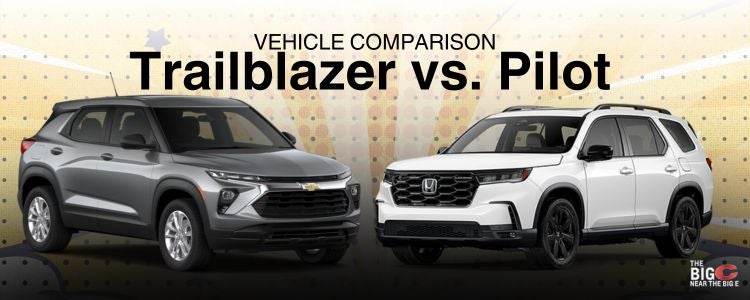
Trailblazer vs. Pilot

Comparing the 2025 Chevrolet Trailblazer and 2025 Honda Pilot: Which SUV Fits Your Needs?

Left Card with "Our Pick" Our Pick CHEVROLET TRAILBLAZER VS Circle vs Right Card HONDA PILOT When it comes to SUVs, the 2025 Chevrolet Trailblazer and the 2025 Honda Pilot cater to different segments of the market. The Trailblazer, a compact SUV, offers affordability, efficiency, and modern features, while the mid-size Pilot provides greater space, power, and towing capabilities for larger families and outdoor enthusiasts. Let’s take a closer look at how these two vehicles stack up. Pricing The 2025 Chevrolet Trailblazer starts at an attractive MSRP of $23,100, making it a budget-friendly option for young professionals, small families, and urban commuters. In contrast, the 2025 Honda Pilot begins at a significantly higher price of $40,200, reflecting its larger size, powerful engine, and additional capabilities. For buyers who need more seating and towing capacity, the Pilot's higher cost may be justified. Engine and Performance Chevrolet Trailblazer The Trailblazer offers two turbocharged three-cylinder engine options: 1.2-liter engine: Produces 137 horsepower and is paired with a CVT and front-wheel drive for smooth and efficient performance. 1.3-liter engine: Delivers 155 horsepower and offers either front-wheel drive or all-wheel drive. AWD models come with a refined nine-speed automatic transmission for better control in challenging conditions. Honda Pilot The Pilot features a robust 3.5-liter V-6 engine, generating 285 horsepower and 262 pounds-feet of torque. Paired with a 10-speed automatic transmission, it offers responsive acceleration and towing power. Both front-wheel and all-wheel-drive configurations are available, with AWD enhancing off-road and towing capabilities. Fuel Economy Efficiency is one of the Trailblazer’s strong suits: 1.2-liter FWD: EPA-rated at 30/31/30 mpg (city/highway/combined). 1.3-liter FWD: Achieves 29/33/31 mpg. 1.3-liter AWD: Offers 26/29/27 mpg. The Pilot, being larger and more powerful, trades some efficiency for capability: FWD models: Rated at 19/27/22 mpg. AWD models: Provide 19/25/21 mpg, with the TrailSport trim achieving 18/23/20 mpg. For drivers prioritizing fuel savings, the Trailblazer is the clear winner. Seating and Interior Features The Chevrolet Trailblazer seats up to five passengers, offering a cozy yet comfortable cabin. Its standout feature is an 11-inch touchscreen with wireless Apple CarPlay and Android Auto. Available amenities include heated front seats and a power driver’s seat for added convenience. The Honda Pilot, with its mid-size dimensions, can accommodate up to eight passengers when equipped with a second-row bench. Opting for second-row captain’s chairs reduces seating to seven. Standard features include a 7-inch touchscreen (upgradable to 9 inches), tri-zone automatic climate control, and smartphone integration. Higher trims add luxury touches like a panoramic sunroof and a premium audio system, catering to larger families and those seeking premium comfort. Cargo Capacity The Trailblazer offers practical storage: 25.3 cubic feet of cargo space behind the rear seats. Expands to 54.4 cubic feet with the rear seats folded. The Pilot, with its larger frame, offers greater versatility: 18.6 cubic feet behind the third row. 48.5 cubic feet behind the second row. Up to 87 cubic feet with both rear rows folded. If you need significant cargo space for long trips or outdoor gear, the Pilot is the better option. However, the Trailblazer’s compact design makes it easier to navigate urban environments. Towing Capacity When it comes to towing, the Honda Pilot excels: 3,500 pounds for FWD models. Up to 5,000 pounds for AWD versions. The Trailblazer, designed for lighter-duty use, offers a towing capacity of 1,000 pounds, suitable for small trailers or recreational gear. Safety Features Both SUVs prioritize safety, but their offerings differ slightly: The Trailblazer comes standard with Chevy Safety Assist, which includes: Automatic emergency braking. Front pedestrian braking. Lane keep assist with lane departure warning. IntelliBeam auto high beam control. The Pilot is equipped with Honda Sensing, which includes: Adaptive cruise control. Traffic jam assist. Traffic sign recognition. Blind spot monitoring with rear cross-traffic alert (standard on all trims). Both vehicles provide robust safety systems, but the Pilot's advanced features cater to families and long-distance travelers. Trim Levels The Chevrolet Trailblazer is available in four trims: LS, LT, Activ, and RS. The Activ trim is tailored for light off-road use with all-terrain tires and off-road suspension tuning. The Honda Pilot offers more trims, including Sport, EX-L, TrailSport, Touring, Elite, and the luxurious Black Edition. The TrailSport trim is particularly suited for off-road enthusiasts with features like skid plates, all-terrain tires, and increased ground clearance. Conclusion The 2025 Chevrolet Trailblazer and 2025 Honda Pilot serve different purposes: The Trailblazer is an excellent choice for budget-conscious buyers, urban drivers, and those seeking a compact SUV with modern features and fuel efficiency. The Pilot is ideal for larger families, outdoor enthusiasts, and anyone requiring greater towing capacity, seating, and interior space. At Central Chevrolet in West Springfield, MA, we proudly offer the 2025 Chevrolet Trailblazer. Stop by today or explore our inventory online to find the perfect SUV for your lifestyle! View Trailblazer Inventory FAQs Q: How many passengers can the 2025 Trailblazer and Pilot accommodate? A: The Trailblazer seats up to five passengers, while the Pilot can accommodate up to eight with a second-row bench or seven with captain’s chairs. Q: Which SUV is better for towing? A: The Honda Pilot outperforms the Trailblazer, offering up to 5,000 pounds of towing capacity with AWD. Q: What is the fuel efficiency difference between the two? A: The Trailblazer offers significantly better fuel economy, with up to 31 mpg combined, compared to the Pilot’s 22 mpg combined for FWD models. Q: Are these SUVs suitable for off-road use? A: Both offer off-road-oriented trims: the Trailblazer Activ for light trails and the Pilot TrailSport for more rugged terrains. Q: Which SUV is more budget-friendly? A: The Trailblazer is the more affordable option, starting at $23,100, compared to the Pilot’s $40,200 base price.

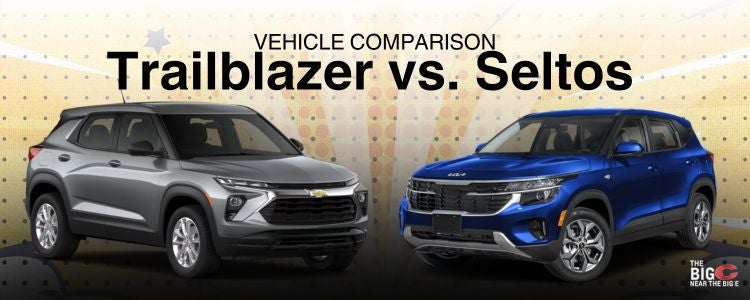
Trailblazer vs. Seltos

2025 Chevrolet Trailblazer vs. 2025 Kia Seltos: Which Subcompact SUV is Right for You?

Left Card with "Our Pick" Our Pick CHEVROLET TRAILBLAZER VS Circle vs Right Card KIA SELTOS The subcompact SUV market is filled with great options, and the 2025 Chevrolet Trailblazer and the 2025 Kia Seltos are two standout choices. Both vehicles offer unique features tailored to different lifestyles and priorities. This detailed comparison will help you decide which one fits your needs best. Pricing The 2025 Chevrolet Trailblazer stands out as the more affordable option, with a starting MSRP of $23,100. Its lower price makes it a strong contender for budget-conscious buyers, allowing flexibility for adding optional features or trims. The 2025 Kia Seltos starts at a higher MSRP of $24,590, r eflecting its standard all-wheel-drive configuration and larger cargo capacity. While the price is slightly higher, the added features may appeal to those who prioritize space and all-weather performance. Performance The Chevrolet Trailblazer features a 1.2-liter turbocharged inline-3 engine, generating 137 horsepower and 162 lb-ft of torque. It uses a continuously variable transmission (CVT) for smooth performance and offers front-wheel drive as standard, with all-wheel drive available as an option. The Trailblazer is fuel-efficient, achieving 30 mpg city and 31 mpg highway, making it ideal for urban and suburban commutes. The Kia Seltos, powered by a 2.0-liter inline-4 engine, delivers 146 horsepower and 132 lb-ft of torque. It also features a CVT and comes standard with all-wheel drive, providing added traction in adverse conditions. Its fuel efficiency is rated at 28 mpg city and 34 mpg highway, making it a strong performer on highway journeys. Interior and Cargo Space The Trailblazer offers a spacious interior with a maximum cargo capacity of 54.4 cubic feet when the rear seats are folded. It comes equipped with an 11-inch touchscreen infotainment system, which supports Apple CarPlay and Android Auto, ensuring a modern and intuitive driving experience. The Seltos, on the other hand, provides a larger cargo capacity of 62.8 cubic feet, making it an excellent choice for drivers who prioritize storage. Its 10.25-inch touchscreen infotainment system also supports Apple CarPlay and Android Auto, offering a slightly smaller screen but ample connectivity options. Safety and Technology Safety is a key priority for both SUVs, and each comes with a comprehensive suite of features: The Chevrolet Trailblazer includes Chevy Safety Assist, offering forward collision alert, automatic emergency braking, lane keep assist, and lane departure warning as standard. The Kia Seltos features Drive Wise, Kia’s safety suite, which includes forward collision-avoidance assist, lane keeping assist, and driver attention warning. Both vehicles provide robust safety technology, ensuring peace of mind on the road. The decision here may depend on your familiarity or preference for each brand’s specific system. Dimensions Size and dimensions influence how these SUVs fit into your lifestyle: The Trailblazer measures 174.1 inches in length, 71.2 inches in width, and 64.2 inches in height, offering a taller, more commanding stance on the road. The Seltos is slightly shorter at 172.6 inches in length, narrower at 70.9 inches, and lower in height at 63.6 inches, giving it a compact and sleek profile. Drivers who prioritize a larger and taller feel may prefer the Trailblazer, while those seeking a more compact design for easier maneuverability might opt for the Seltos. Conclusion Both the 2025 Chevrolet Trailblazer and the 2025 Kia Seltos offer strong advantages, catering to different driving needs and preferences: Choose the Trailblazer if you value affordability, fuel efficiency, and modern technology. Its spacious interior and budget-friendly price make it perfect for city dwellers and daily commuters. Opt for the Seltos if you need additional cargo space, standard all-wheel drive, and a slightly more powerful engine. It’s a great choice for drivers seeking versatility and roominess. Ultimately, your decision will depend on your lifestyle and priorities. For those interested in the 2025 Chevrolet Trailblazer, visit Central Chevrolet in West Springfield, MA. Explore our inventory today to find the perfect SUV for your needs! View Trailblazer Inventory FAQs Q: Does the Chevrolet Trailblazer offer all-wheel drive? A: Yes, all-wheel drive is available as an option on select trims. Q: How does the cargo space compare between the two models? A: The Kia Seltos provides more cargo space at 62.8 cubic feet, compared to the Trailblazer’s 54.4 cubic feet. Q: Which vehicle is better for highway driving? A: The Seltos offers slightly better highway fuel efficiency, while the Trailblazer provides a taller and more spacious feel, ideal for long trips. Q: What safety features come standard on these SUVs? A: Both vehicles offer advanced safety features. The Trailblazer includes Chevy Safety Assist, while the Seltos features Kia’s Drive Wise safety suite. Q: Are these vehicles suitable for families? A: Both models are family-friendly, but the Trailblazer’s affordability and spacious interior may appeal more to budget-conscious families.

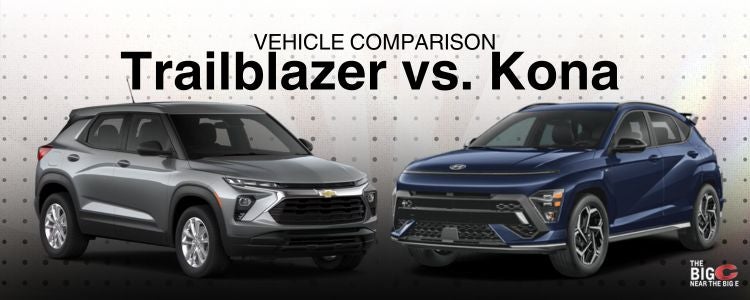
Trailblazer vs. Kona

2025 Chevrolet Trailblazer vs. 2025 Hyundai Kona: Which Subcompact SUV Is Right for You?

Left Card with "Our Pick" Our Pick CHEVROLET TRAILBLAZER VS Circle vs Right Card HYUNDAI KONA The subcompact SUV segment continues to grow, offering drivers versatile, budget-friendly options that fit a variety of lifestyles. The 2025 Chevrolet Trailblazer and the 2025 Hyundai Kona are two strong contenders in this category, each providing distinct advantages. Here's a detailed comparison to help you determine which SUV best suits your needs. Pricing The 2025 Chevrolet Trailblazer starts at an MSRP of $23,100, making it the more affordable choice for budget-conscious buyers. Its lower price point allows drivers to invest in optional upgrades without exceeding their budget. The 2025 Hyundai Kona begins at a higher MSRP of $24,350, reflecting its slightly more powerful engine and advanced technology. While the Kona's price may deter budget-focused buyers, its tech-forward features may appeal to those seeking modern innovation. Performance The Chevrolet Trailblazer is powered by a 1.2-liter turbocharged inline-3 engine, delivering 137 horsepower and 162 lb-ft of torque. Paired with a continuously variable transmission (CVT), it offers smooth, efficient performance. With EPA ratings of 30 mpg city and 31 mpg highway, the Trailblazer is ideal for urban commuting and long-distance drives. Drivers can also opt for all-wheel drive for enhanced traction in challenging conditions. The Hyundai Kona, equipped with a 2.0-liter inline-4 engine, provides a slightly higher 147 horsepower but less torque at 132 lb-ft. Like the Trailblazer, it uses a CVT and offers optional all-wheel drive. The Kona’s EPA ratings of 29 mpg city and 34 mpg highway make it a touch more fuel-efficient on highways but slightly less so in city driving. Interior and Cargo Space The Trailblazer excels in practicality, offering a maximum cargo capacity of 54.4 cubic feet with the rear seats folded. This spacious interior is complemented by a modern 11-inch touchscreen infotainment system with Apple CarPlay and Android Auto integration, ensuring a seamless in-car experience. The Kona, while offering a more tech-forward 12.3-inch touchscreen, falls short on cargo space, providing a maximum of 45.8 cubic feet with the rear seats folded. While its infotainment system is impressive, those who frequently haul gear or luggage might find the smaller cargo area limiting. Safety and Technology Both SUVs prioritize safety with comprehensive driver-assist systems: The Chevrolet Trailblazer comes standard with Chevy Safety Assist, which includes features like forward collision alert, automatic emergency braking, lane keep assist, and lane departure warning. The Hyundai Kona features Hyundai SmartSense, offering similar capabilities such as forward collision-avoidance assist, lane keeping assist, and driver attention warning. While both vehicles provide robust safety features, the decision may come down to personal preference and familiarity with the brands’ respective systems. Dimensions When it comes to size, the two SUVs cater to slightly different preferences: The Trailblazer measures 174.1 inches in length, 71.2 inches in width, and 64.2 inches in height, offering a larger, more commanding presence. The Kona is shorter at 171.5 inches in length, slightly wider at 71.9 inches, and lower at 62.2 inches, giving it a more compact, sporty profile. For those who value a taller driving position and a more spacious feel, the Trailblazer is the better option. However, the Kona’s smaller dimensions make it easier to maneuver in tight spaces. Conclusion The 2025 Chevrolet Trailblazer and the 2025 Hyundai Kona are both strong competitors in the subcompact SUV market, but they cater to different priorities: Choose the Trailblazer if you value affordability, generous cargo space, and excellent fuel efficiency. It’s an ideal option for city dwellers, families, and commuters looking for practicality and versatility. Opt for the Kona if you prioritize a slightly more powerful engine, a cutting-edge infotainment system, and highway fuel efficiency. It’s perfect for tech-savvy drivers and those who enjoy a compact, sporty feel on the road. Ultimately, your choice will depend on your lifestyle and driving needs. For those interested in exploring the 2025 Chevrolet Trailblazer, visit Central Chevrolet in West Springfield, MA. Our team is here to help you find the perfect SUV for your adventures. View Trailblazer Inventory FAQs Q: Does the 2025 Chevrolet Trailblazer offer all-wheel drive? A: Yes, all-wheel drive is available as an option on select trims. Q: Which SUV is better for families? A: The Trailblazer offers more cargo space, making it a better choice for families needing to carry gear or luggage. Q: How do the infotainment systems compare? A: The Trailblazer features an 11-inch touchscreen, while the Kona boasts a larger 12.3-inch display. Both systems support Apple CarPlay and Android Auto. Q: What is the warranty coverage for these vehicles? A: Both the Trailblazer and Kona come with a 3-year/36,000-mile basic warranty and a 5-year/60,000-mile powertrain warranty. Q: Which SUV is better for long-distance highway driving? A: The Kona offers slightly better highway fuel efficiency, but the Trailblazer’s spacious interior and comfortable ride make it equally suitable for long drives.

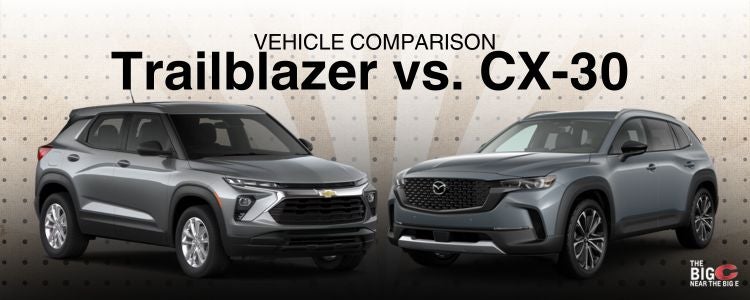
Trailblazer vs. CX-30

2025 Chevrolet Trailblazer vs. 2025 Mazda CX-30: Which Subcompact SUV is Right for You?

Left Card with "Our Pick" Our Pick CHEVROLET TRAILBLAZER VS Circle vs Right Card MAZDA CX-30 The subcompact SUV market continues to grow in popularity, and the 2025 Chevrolet Trailblazer and 2025 Mazda CX-30 stand out as two compelling options. Both vehicles cater to different lifestyles and preferences, offering unique features that may sway your decision. Here's a comprehensive comparison to help you determine which SUV best suits your needs. Pricing The 2025 Chevrolet Trailblazer is the more affordable option, with a starting MSRP of $23,100, making it an attractive choice for budget-conscious buyers. On the other hand, the 2025 Mazda CX-30 begins at a higher MSRP of $24,995, reflecting its premium engine and standard all-wheel drive. For those seeking value, the Trailblazer's lower entry price provides flexibility to add optional features while staying within budget. Meanwhile, the CX-30 justifies its higher price with more robust performance and all-wheel-drive capabilities, appealing to those looking for a sportier edge. Performance Under the hood, the Trailblazer is equipped with a 1.2-liter turbocharged inline-3 engine, producing 137 horsepower and 162 lb-ft of torque. Paired with a continuously variable transmission (CVT), this SUV offers smooth, fuel-efficient performance. Buyers can choose between standard front-wheel drive and optional all-wheel drive. With an EPA-estimated 30 mpg city and 31 mpg highway, the Trailblazer is an excellent choice for urban drivers prioritizing fuel savings. The Mazda CX-30, however, delivers a more powerful driving experience, courtesy of its 2.5-liter inline-4 engine generating 191 horsepower and 186 lb-ft of torque. Its standard 6-speed automatic transmission and all-wheel-drive configuration provide enhanced control and performance in various driving conditions. With EPA ratings of 26 mpg city and 33 mpg highway, the CX-30 strikes a balance between power and efficiency, particularly on longer highway journeys. Interior and Cargo Space The interior of the Trailblazer emphasizes practicality and spaciousness. With up to 54.4 cubic feet of cargo space when the rear seats are folded, it accommodates larger loads with ease. Standard features include a user-friendly 7-inch touchscreen infotainment system, Apple CarPlay, and Android Auto compatibility, ensuring a connected and enjoyable driving experience. While the Mazda CX-30 offers a premium cabin feel, it provides slightly less cargo space, maxing out at 45.2 cubic feet with the rear seats folded. Like the Trailblazer, the CX-30 is equipped with a 7-inch touchscreen that supports Apple CarPlay and Android Auto, offering comparable technology integration. However, its tighter cargo area may be a drawback for those frequently hauling gear or luggage. Safety and Technology Both vehicles excel in safety, boasting a range of advanced features: The Chevrolet Trailblazer comes standard with Chevy Safety Assist, a suite of features including forward collision alert, automatic emergency braking, lane keep assist, and lane departure warning. These systems work together to provide peace of mind on the road. The Mazda CX-30 offers additional safety features like blind-spot monitoring and rear cross-traffic alert, which are standard across all trims. Its lane departure warning system further enhances driver confidence. While both SUVs prioritize safety, the Trailblazer's standard suite covers essential features, whereas the CX-30 provides extra monitoring capabilities that could be beneficial in crowded or high-traffic areas. Dimensions Size can influence how a vehicle fits into your lifestyle: The Trailblazer is slightly longer, with an overall length of 174.1 inches, and offers a higher stance at 64.2 inches, making it feel more spacious on the inside. Its width of 71.2 inches adds to its robust, SUV-like appearance. The CX-30 is shorter at 173 inches, with a height of 61.7 inches, giving it a sportier, more compact profile. Its width of 70.7 inches ensures it remains agile and easy to maneuver, especially in tight spaces. For drivers prioritizing a larger cabin and a more commanding view of the road, the Trailblazer may be the better choice. However, the CX-30's dimensions contribute to its nimble and sporty handling. Conclusion The 2025 Chevrolet Trailblazer and 2025 Mazda CX-30 each cater to distinct buyer preferences: Choose the Trailblazer if you value affordability, excellent fuel efficiency, and generous interior and cargo space. It's an ideal option for city dwellers, commuters, and families looking for practicality without breaking the bank. Opt for the CX-30 if you prioritize performance, standard all-wheel drive, and a premium driving experience. Its more powerful engine and agile handling make it a great fit for drivers seeking excitement and versatility. At Central Chevrolet in West Springfield, MA, we’re proud to offer the 2025 Chevrolet Trailblazer. Visit us today or explore our inventory online to find the perfect Trailblazer for your needs! View Trailblazer Inventory FAQs Q: Does the 2025 Chevrolet Trailblazer have all-wheel drive? A: Yes, all-wheel drive is available as an option on select trims. Q: Is the 2025 Mazda CX-30 suitable for off-road driving? A: While it features standard all-wheel drive, the CX-30 is best suited for light off-road conditions or inclement weather rather than rugged terrain. Q: Which SUV has better fuel efficiency? A: The Chevrolet Trailblazer offers better city mileage, while the Mazda CX-30 excels in highway driving. Q: What are the warranty options for these models? A: Both the Trailblazer and CX-30 include a 3-year/36,000-mile basic warranty and a 5-year/60,000-mile powertrain warranty. Q: Which vehicle is better for families? A: The Trailblazer’s larger cargo capacity and interior space make it a more family-friendly option.

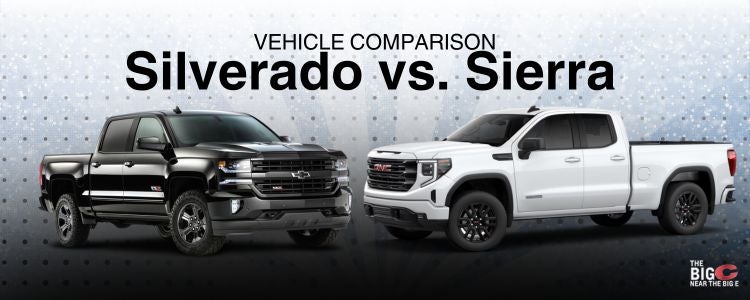
Silverado vs. Sierra

2025 Chevrolet Silverado 1500 vs. 2025 GMC Sierra 1500: Which Full-Size Truck Is Right for You?

Left Card with "Our Pick" Our Pick CHEVROLET SILVERADO VS Circle vs Right Card GMC SIERRA 1500 Pricing and Value One of the most immediate considerations when choosing between two vehicles is their price. The 2025 Chevrolet Silverado 1500 starts at an MSRP of $37,000, making it a competitive option for buyers seeking a full-size truck that delivers excellent performance and features without stretching the budget. On the other hand, the 2025 GMC Sierra 1500 starts slightly higher, with an MSRP of $38,300. While the price difference may seem minor, it becomes more pronounced as you move up through the trim levels. The Silverado offers a robust set of standard features even at the base level, ensuring great value for money. Its higher trims, like the High Country, deliver premium amenities without exceeding the cost of similarly equipped Sierra models. For budget-conscious buyers or those looking to maximize features per dollar, the Silverado stands out as a clear winner. Performance and Engine Options When it comes to performance, both the 2025 Chevrolet Silverado 1500 and the GMC Sierra 1500 are built on the same powerful platform, offering an impressive range of engine options. Whether you’re looking for efficiency, power, or a balance of both, these trucks have you covered. Each model offers multiple engines, starting with a turbocharged four-cylinder for solid fuel efficiency and moving up to V6, V8, and diesel options for heavier-duty tasks. Both trucks boast a maximum towing capacity of 9,100 pounds, making them ideal choices for hauling trailers, boats, or equipment. Where the Silverado edges out is in its balance of power and cost. With similar performance across the board, the Silverado delivers the same capabilities at a slightly lower starting price, making it the more economical choice for drivers who prioritize value alongside performance. Interior Design and Features The interiors of these two trucks reveal a distinct difference in focus. The Chevrolet Silverado 1500 leans toward practicality and functionality, while the GMC Sierra 1500 aims to deliver a more aesthetic experience. The Silverado comes standard with a 13.4-inch touchscreen infotainment system that supports wireless Apple CarPlay and Android Auto, ensuring seamless connectivity. Higher trims like the High Country enhance the cabin with premium materials, larger displays, and advanced driver aids, offering excellent comfort without excessive costs. The Sierra, particularly in its Denali and Denali Ultimate trims, features more luxurious touches, such as high-quality leather upholstery, open-pore wood accents, and massaging seats. While these features are impressive, they come at a significantly higher price point. For most buyers, the Silverado strikes a better balance, offering modern technology and comfort without the luxury markup. Exterior and Design Both trucks share a bold and commanding presence, but their design philosophies diverge to cater to different tastes. The Silverado’s rugged and robust appearance emphasizes functionality. It’s available in various trims that cater to drivers seeking anything from a hardworking fleet vehicle to an adventurous off-roader or a stylish daily driver. The Sierra, on the other hand, leans into refinement, particularly in its upper trims. The Denali Ultimate trim features chrome accents, a unique grille, and other premium design cues that appeal to those prioritizing luxury aesthetics. While the Sierra’s premium design is appealing, the Silverado’s versatility ensures there’s a model for every lifestyle, all while maintaining affordability. Off-Road Capabilities For drivers seeking adventure, both trucks offer dedicated off-road trims, but the Chevrolet Silverado 1500 stands out with its ZR2 trim. The Silverado ZR2 comes equipped with a lifted suspension, specialized shock absorbers, underbody skid plates, and all-terrain tires. These features make it a formidable choice for tackling rugged trails and challenging terrain. It delivers serious off-road capability without pricing itself out of reach. The Sierra offers the AT4 and AT4X trims, which include similar features such as a suspension lift, skid plates, and off-road-tuned components. However, these trims typically come at a higher price compared to the ZR2, making the Silverado the more cost-effective option for off-road enthusiasts. Technology and Safety Features Both the Silverado and Sierra are equipped with cutting-edge technology and safety features, making them highly competitive in the full-size truck market. Standard safety features on both models include forward collision warning, automatic emergency braking, and lane-keeping assist. For those seeking more advanced driving aids, higher trims offer GM’s Super Cruise semi-autonomous driving system, which allows for hands-free driving on compatible highways. The Silverado offers these features at a slightly lower price point, ensuring drivers get top-notch technology without breaking the bank. Versatility and Customization The Silverado’s wide range of trims ensures there’s a model for every driver. Whether you need a reliable work truck, a family-friendly vehicle, or an off-road adventure machine, the Silverado delivers. Its competitive pricing also allows for more flexibility in customization without exceeding your budget. The Sierra, while offering similar trim options, focuses more heavily on luxury in its upper tiers. For buyers seeking upscale features, it’s an excellent choice, but for those wanting a truck that balances utility and affordability, the Silverado is the better pick. Fuel Efficiency and Sustainability Both trucks offer comparable fuel efficiency across their engine options. For those prioritizing long-haul efficiency, the available diesel engine in both models provides excellent mileage. Once again, the Silverado edges out slightly due to its lower starting price, making it more accessible for budget-conscious buyers. Target Audience The 2025 Chevrolet Silverado 1500 appeals to practical buyers looking for a dependable, cost-effective truck that doesn’t compromise on modern features. It’s ideal for families, workers, and adventurers alike. The GMC Sierra 1500, with its luxury-oriented trims, targets buyers who want a more premium driving experience and are willing to pay for it. Conclusion While the 2025 Chevrolet Silverado 1500 and GMC Sierra 1500 share many similarities, the Silverado shines as the more versatile, cost-effective option. It delivers exceptional performance, cutting-edge technology, and modern comfort without the premium price tag associated with the Sierra. For buyers seeking a truck that balances utility and affordability, the Silverado is the clear winner. Ready to experience the 2025 Chevrolet Silverado 1500? Visit Central Chevrolet today to explore our lineup and find the perfect truck for your needs. View Silverado Inventory FAQs Which truck has better off-road capabilities? Both offer great off-road features, but the Silverado ZR2 is more cost-effective and equally capable compared to the Sierra AT4X. Are the engines the same in both trucks? Yes, both models share engine options, including turbocharged four-cylinder, V6, V8, and diesel variants. What’s the price difference between the Silverado and Sierra? The Silverado starts at $37,000, while the Sierra starts at $38,300, with the gap widening at higher trims. Does the Silverado offer luxury features? Absolutely! The High Country trim offers premium materials and advanced features comparable to Sierra’s Denali trims. Which truck is better for towing? Both have a maximum towing capacity of 9,100 lbs, but the Silverado offers similar capability at a more affordable price.

Silverado vs. Tundra

2025 Chevrolet Colorado vs. 2025 Toyota Tundra: Which Pickup Truck is Right for You?

Left Card with "Our Pick" Our Pick CHEVROLET COLORADO VS Circle vs Right Card TOYOTA TUNDRA Introduction The 2025 Chevrolet Colorado and 2025 Toyota Tundra are two standout pickup trucks designed to meet diverse needs. While the Chevrolet Colorado offers a compact and versatile midsize truck experience, the Toyota Tundra caters to those who need the power and capability of a full-size truck. At Central Chevrolet, we’re here to help you navigate the differences and decide which vehicle fits your lifestyle and budget best. Pricing: Chevrolet Colorado Delivers More for Less For buyers looking for affordability without sacrificing quality, the 2025 Chevrolet Colorado starts at $31,900 for the 2WD Crew Cab WT trim. This price point is significantly lower than the Toyota Tundra, which begins at $40,090 for the SR Double Cab 6.5' Bed trim. The Colorado’s pricing makes it an attractive choice for those who want capability and performance at a budget-friendly cost. Performance and Capability The Chevrolet Colorado comes equipped with a turbocharged 2.7-liter inline-4 engine, producing 310 horsepower and an impressive 430 lb-ft of torque. This setup is paired with an 8-speed automatic transmission, delivering smooth performance and a towing capacity of up to 7,700 lbs. Fuel economy is rated at 19 mpg city and 24 mpg highway, striking a good balance between power and efficiency. The Toyota Tundra, on the other hand, features a 3.5-liter twin-turbo V6 engine that delivers 389 horsepower and 479 lb-ft of torque. With a 10-speed automatic transmission, the Tundra offers a robust towing capacity of up to 12,000 lbs. It achieves 18 mpg in the city and 24 mpg on the highway, making it a strong contender for those needing heavy-duty towing and hauling capabilities. Dimensions and Design The Chevrolet Colorado is compact and versatile, with a bed length of approximately 62 inches and an overall length of 213 inches. Its width of 75 inches and height of 79 inches make it easier to maneuver in urban environments and tight spaces. The Toyota Tundra, as a full-size truck, is larger in every dimension. It offers bed lengths ranging from 5.5 feet to 8.1 feet, with an overall length between 233.6 inches and 252.5 inches, depending on the configuration. At 80.2 inches wide and 78 inches tall, the Tundra provides more cargo space but may be less convenient for everyday urban use compared to the Colorado. Interior and Features Inside, the Chevrolet Colorado impresses with a modern and user-friendly setup. A standard 11.3-inch touchscreen infotainment system supports Apple CarPlay and Android Auto, making connectivity seamless. The truck seats up to five passengers and includes safety features like forward collision warning, lane departure warning, and adaptive cruise control. The Toyota Tundra also seats up to five passengers and comes equipped with an 8-inch touchscreen as standard, with a 14-inch display available on higher trims. Toyota Safety Sense 2.5 includes advanced features such as a pre-collision system, lane departure alert, and dynamic radar cruise control. While both trucks offer robust safety and infotainment, the Colorado’s larger standard touchscreen is a notable advantage. Off-Road Capabilities The Chevrolet Colorado’s ZR2 trim is tailored for off-road adventures, featuring advanced suspension, underbody protection, and specialized tires. Its compact size enhances maneuverability in challenging terrains, making it a go-to choice for outdoor enthusiasts. The Toyota Tundra’s TRD Pro trim delivers exceptional off-road performance with features like Multi-Terrain Select, Crawl Control, and an upgraded suspension. While the Tundra excels in rugged conditions, its larger size may pose challenges in tight off-road trails compared to the nimble Colorado ZR2. Why Choose the 2025 Chevrolet Colorado? The 2025 Chevrolet Colorado is an excellent choice for buyers seeking a versatile and budget-friendly midsize truck. Its strong engine, advanced infotainment system, and capable off-road performance make it a well-rounded option for both work and play. While the Toyota Tundra offers more power and towing capacity, its higher price and larger size may not suit every driver’s needs. At Central Chevrolet, we’re committed to helping you find the perfect vehicle. Visit us today to explore the 2025 Chevrolet Colorado and experience its unique blend of affordability, performance, and versatility. View Silverado Inventory FAQ Section Q1: What is the starting price of the 2025 Chevrolet Colorado? The 2025 Chevrolet Colorado starts at $31,900 for the 2WD Crew Cab WT trim. Q2: How does the towing capacity of the Chevrolet Colorado compare to the Toyota Tundra? The Chevrolet Colorado can tow up to 7,700 lbs, while the Toyota Tundra’s towing capacity reaches 12,000 lbs. Q3: What off-road features are available on the Chevrolet Colorado? The ZR2 trim includes advanced suspension, underbody protection, and specialized tires, making it a top choice for off-road enthusiasts. Q4: Does the Chevrolet Colorado have modern infotainment features? Yes, the Colorado features a standard 11.3-inch touchscreen with Apple CarPlay and Android Auto integration. Q5: Why should I consider Central Chevrolet for my next truck purchase? At Central Chevrolet, we provide expert advice, competitive pricing, and a wide selection of vehicles to meet your needs.

Colorado vs. 2025 RAM 1500 (1)

2025 Chevrolet Colorado vs. 2025 RAM 1500: A Detailed Pickup Truck Comparison

Left Card with "Our Pick" Our Pick CHEVROLET COLORADO VS Circle vs Right Card RAM 1500 Introduction The 2025 Chevrolet Colorado and 2025 RAM 1500 are standout models in the pickup truck segment, each catering to specific preferences and needs. The Chevrolet Colorado offers a compact and versatile midsize truck experience, while the RAM 1500 focuses on full-size truck power and comfort. At Central Chevrolet, we’ve analyzed the key features of these two vehicles to help you make an informed choice. Pricing: Chevrolet Colorado’s Competitive Advantage The 2025 Chevrolet Colorado starts at $31,900 for the 2WD Crew Cab WT trim, presenting an affordable entry point for buyers seeking performance and capability. In contrast, the RAM 1500 begins at $40,275 for the Tradesman 4x2 Quad Cab 6'4" Box trim, making it significantly more expensive than the Colorado. For those who value budget-friendly options without sacrificing quality, the Chevrolet Colorado stands out. Performance Comparison The Chevrolet Colorado’s turbocharged 2.7-liter inline-4 engine delivers 310 horsepower and an impressive 430 lb-ft of torque, paired with an 8-speed automatic transmission. This combination ensures strong towing performance, capable of hauling up to 7,700 lbs. With fuel economy ratings of 19 mpg city and 24 mpg highway, the Colorado balances power and efficiency. The RAM 1500 comes equipped with a 3.6-liter V6 engine, producing 305 horsepower and 269 lb-ft of torque. It also features an 8-speed automatic transmission and achieves slightly better fuel economy at 20 mpg city and 25 mpg highway. While its towing capacity peaks at 7,760 lbs, the RAM 1500 falls short of the Colorado’s torque output, which can make a difference in demanding towing scenarios. Dimensions and Design The Chevrolet Colorado is designed with compact versatility in mind, featuring a bed length of approximately 62 inches and an overall length of 213 inches. Its width of 75 inches and height of 79 inches make it easy to maneuver in urban and off-road environments alike. On the other hand, the RAM 1500’s larger dimensions cater to drivers seeking a full-size truck. It offers a 76-inch bed, overall length of 229 inches, width of 82 inches, and height of 78 inches. While its extended size provides more cargo space and passenger room, it may pose challenges in tighter spaces. Interior and Features Inside, the Chevrolet Colorado offers modern amenities, including a standard 11.3-inch touchscreen with Apple CarPlay and Android Auto integration. Safety features like forward collision warning, lane departure warning, and adaptive cruise control ensure a secure driving experience. With seating for up to five passengers, the Colorado strikes a balance between comfort and utility. The RAM 1500, known for its upscale interior, features a standard 8.4-inch touchscreen and optional 12-inch display on higher trims. Its seating capacity accommodates up to six passengers, making it ideal for larger groups. Safety features include blind-spot monitoring, rear cross-traffic alert, and adaptive cruise control. While the RAM 1500’s cabin is spacious and feature-rich, the Colorado’s infotainment system offers a more advanced standard setup. Off-Road Capabilities The Chevrolet Colorado’s ZR2 trim is purpose-built for off-road enthusiasts, equipped with advanced suspension, underbody protection, and specialized tires to handle challenging terrains. Its compact size and robust engineering make it a standout option for adventure seekers. The RAM 1500 Rebel trim caters to off-road needs with its enhanced suspension, skid plates, and all-terrain tires. While it delivers a rugged performance, its larger size can limit maneuverability in certain off-road conditions compared to the Colorado ZR2. Why Choose the 2025 Chevrolet Colorado? The 2025 Chevrolet Colorado emerges as a versatile and affordable choice for those seeking a capable midsize truck. Its powerful engine, superior torque, and advanced infotainment system make it a strong contender in its segment. While the RAM 1500 offers the advantages of larger size and higher seating capacity, its higher starting price may deter budget-conscious buyers. At Central Chevrolet, we are committed to helping you find the perfect truck. Visit us today to explore the 2025 Chevrolet Colorado and experience its exceptional value and performance firsthand. View Silverado Inventory FAQ Section Q1: What is the starting price of the 2025 Chevrolet Colorado? The 2025 Chevrolet Colorado starts at $31,900 for the 2WD Crew Cab WT trim, making it an affordable option in the midsize truck market. Q2: How does the towing capacity of the Chevrolet Colorado compare to the RAM 1500? The Chevrolet Colorado can tow up to 7,700 lbs, slightly less than the RAM 1500’s 7,760 lbs. However, the Colorado’s higher torque ensures robust towing performance. Q3: What off-road features are available on the Chevrolet Colorado? The ZR2 trim includes advanced off-road suspension, underbody protection, and specialized tires, making it an excellent choice for off-road enthusiasts. Q4: Does the Chevrolet Colorado offer modern infotainment features? Yes, the Colorado comes standard with an 11.3-inch touchscreen featuring Apple CarPlay and Android Auto integration. Q5: Why should I choose Central Chevrolet for my truck purchase? At Central Chevrolet, we provide expert guidance, competitive pricing, and a wide selection of vehicles to meet your needs.

Contact Us

Fill out this form below and we'll contact you shortly
*Required Fields