



Blog / Sales

Blog

All Sales About Us Makes and Models Features Dealership Local Review Company Culture SUV Vehicle Review Community Vehicles Blog Vehicle Comparison News News and Events Directions EV Service and Maintenance Industry Trends Financing Truck Big C Near the Big E Charitable Participation Electric Vehicles Service Tips Buying customer service Leasing 811 Detailing Opinion Parts Safety Tips How-to Bodyshop Corvette Club of Western Mass Finance Departments Equinox Silverado Testimonials Trax MobileService+ Sedan
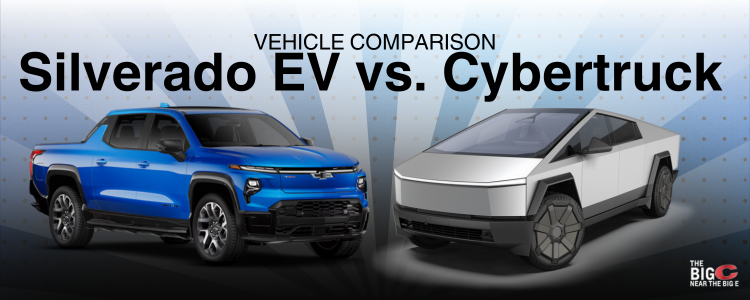
Silverado EV vs. Cybertruck

2025 Chevrolet Silverado EV vs. 2025 Tesla Cybertruck: An In-Depth Comparison

Left Card with "Our Pick" Our Pick CHEVROLET SILVERADO EV VS Circle vs Right Card TESLA CYBERTRUCK The electric pickup truck market is heating up, and two of the most anticipated vehicles in this segment are the 2025 Chevrolet Silverado EV and the 2025 Tesla Cybertruck. Each truck brings its own strengths to the table, appealing to different types of buyers. Whether you prioritize range and practicality or bold design and performance, this comparison will help you make an informed decision. Pricing For budget-conscious buyers, the 2025 Chevrolet Silverado EV offers a clear advantage. Starting at an MSRP of $55,000, it provides a more accessible entry point into the electric truck market. Even its top-tier trims, which can reach up to $74,900, remain competitively priced. In contrast, the Tesla Cybertruck starts at a significantly higher MSRP of $79,990, with premium models like the Cyberbeast AWD climbing to $101,985. This price difference makes the Silverado EV a more appealing option for those looking to maximize value without sacrificing performance. Performance Both trucks deliver impressive performance, but they cater to different needs. The Silverado EV offers up to 754 horsepower and 785 lb-ft of torque, enabling it to accelerate from 0 to 60 mph in approximately 4.5 seconds. With a towing capacity of up to 12,500 pounds and a payload capacity of 1,440 pounds, the Silverado EV is designed to handle demanding workloads with ease. The Cybertruck, on the other hand, takes performance to another level, particularly in its higher-end configurations. With horsepower ranging from 600 hp to 845 hp and acceleration as quick as 2.6 seconds from 0 to 60 mph, the Cybertruck is a powerhouse on the road. However, its towing capacity peaks at 11,000 pounds, falling short of the Silverado EV. The Cybertruck’s payload capacity of 2,500 pounds is higher, making it a strong choice for carrying heavier loads. Range and Charging When it comes to range, the Silverado EV takes the lead with an estimated 460 miles on a full charge, thanks to its 205-244 kWh battery capacity. Charging is also convenient, with Level 2 charging taking approximately 11 to 12 hours, and DC fast charging providing a significant range boost in just 35 minutes. The Cybertruck, while capable, offers a shorter range of 318 to 340 miles, depending on the configuration. Its 123 kWh battery supports Tesla’s Supercharging network, but charging times vary depending on the available infrastructure. For drivers who prioritize long-distance driving with fewer stops, the Silverado EV is the more practical choice. Dimensions and Design The Silverado EV embraces a modern yet familiar design, appealing to traditional truck buyers. It measures 233.1 inches in length and 83.8 inches in width, offering a spacious cabin and a versatile bed that extends from 5 feet 11 inches to 10 feet 10 inches with the Multi-Flex Midgate and Tailgate. The truck also includes a generous 10.7 cubic feet of front trunk (eTrunk) space. The Cybertruck, with its futuristic and polarizing design, is slightly smaller at 223.7 inches in length and 80 inches in width. Its bed measures 6 feet, and the front trunk provides 7.1 cubic feet of storage. While its bold aesthetic will undoubtedly turn heads, it may not suit those who prefer a more conventional truck appearance. Interior and Technology The Silverado EV combines cutting-edge technology with user-friendly functionality. It features a 17.7-inch touchscreen display and an 11-inch digital instrument cluster, along with premium options like a Bose seven-speaker audio system, 14-inch head-up display, and Google built-in integration. For added convenience, the Silverado EV includes wireless charging and a Wi-Fi hotspot. The Cybertruck focuses on a tech-heavy interior, highlighted by an 18.5-inch touchscreen and an additional 9.4-inch rear touchscreen for passengers. While it offers features like satellite radio and a Wi-Fi hotspot, it lacks some of the Silverado’s practical amenities, such as the head-up display. Off-Road Capability Both trucks have off-road capabilities, but they are designed with different priorities in mind. The Silverado EV comes equipped with adaptive air suspension and all-wheel drive, providing stability and comfort on uneven terrain. However, its 24-inch wheels and road-oriented tires suggest it’s more suited for on-road driving. The Cybertruck, with its rugged features like 17 inches of ground clearance, 35-inch mud tires, and locking differentials, is built for more aggressive off-road adventures. That said, its large size and unconventional design may limit maneuverability in tight spaces. Conclusion The 2025 Chevrolet Silverado EV and the 2025 Tesla Cybertruck cater to distinct audiences. The Silverado EV is the ideal choice for buyers who value practicality, longer driving range, and greater towing capacity. Its traditional design and competitive pricing make it a strong contender for those who need a reliable and versatile electric truck. The Cybertruck, on the other hand, is perfect for those who prioritize unique design, unparalleled acceleration, and off-road performance. Its futuristic aesthetic and high-tech features appeal to drivers looking for something truly distinctive. Ultimately, the decision between these two trucks will depend on your specific needs. If range, practicality, and affordability are your priorities, the 2025 Chevrolet Silverado EV is the clear winner. View Silverado EV Inventory FAQ Section 1. Which truck has a longer range, the Silverado EV or the Cybertruck? The Chevrolet Silverado EV offers up to 460 miles of range, significantly more than the Tesla Cybertruck’s maximum range of 340 miles. 2. Which truck is more affordable? The Silverado EV starts at $55,000, making it more budget-friendly than the Cybertruck, which begins at $79,990. 3. What are the towing capacities of these trucks? The Silverado EV can tow up to 12,500 pounds, while the Cybertruck has a maximum towing capacity of 11,000 pounds. 4. Which truck has better off-road capabilities? The Tesla Cybertruck offers better off-road features, including 17 inches of ground clearance, locking differentials, and mud tires. However, the Silverado EV provides solid on-road performance with optional off-road enhancements. 5. What interior technology do these trucks offer? The Silverado EV includes a 17.7-inch touchscreen, wireless charging, and a head-up display, while the Cybertruck features an 18.5-inch touchscreen and a rear passenger display. Both offer Wi-Fi hotspots and premium sound systems. 6. Who should buy the Chevrolet Silverado EV? The Silverado EV is perfect for buyers looking for a practical, affordable, and long-range electric truck with high towing capacity and a traditional design.

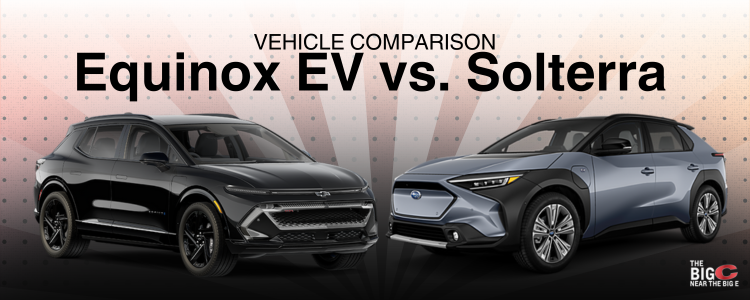
Equinox EV vs. Solterra

2025 Chevrolet Equinox EV vs. 2025 Subaru Solterra: A Detailed Comparison for EV Buyers

Left Card with "Our Pick" Our Pick CHEVROLET EQUINOX EV VS Circle vs Right Card SUBARU SOLTERRA As the electric SUV market continues to grow, buyers are presented with more choices than ever. Among the most compelling options for 2025 are the Chevrolet Equinox EV and the Subaru Solterra. While both vehicles bring unique strengths to the table, the Chevrolet Equinox EV stands out as the superior choice for buyers seeking a blend of affordability, advanced technology, and exceptional range. Here’s a deep dive into how these two EVs compare across key metrics. Performance and Range The 2025 Chevrolet Equinox EV sets a strong benchmark in terms of performance and efficiency. With its 220-horsepower electric motor and 243 lb-ft of torque, this SUV delivers smooth, responsive acceleration while maintaining an efficient drive. Front-Wheel Drive (FWD) is standard, but Chevrolet also offers an optional All-Wheel Drive (AWD) system for those who need enhanced traction and capability. What truly sets the Equinox EV apart is its driving range of up to 319 miles (FWD) on a full charge—far superior to the Solterra’s 228-mile range. Charging is another area where the Equinox EV excels. With Level 2 charging, the Equinox can achieve a full charge in about 7 hours, while DC fast charging allows for a 10-80% charge in just 36 to 45 minutes. In contrast, the Solterra’s 11-hour Level 2 charging time and slower DC fast charging times (up to 60 minutes) make it less convenient for on-the-go drivers. For those who value efficiency and range, the Equinox EV clearly leads the way. The 2025 Subaru Solterra, while offering 215 horsepower and 249 lb-ft of torque, emphasizes its standard AWD system, making it ideal for rugged conditions and off-road adventures. However, its range of 222 to 228 miles falls significantly behind the Equinox EV, which makes the Chevrolet model a better choice for long-distance commuters or drivers looking to minimize charging stops. Dimensions and Cargo Space When it comes to size and space, the Equinox EV provides a more versatile and comfortable experience. Measuring 190.55 inches in length and 76.94 inches in width, it offers a spacious interior that comfortably seats five passengers. Cargo capacity is also generous, with 26 cubic feet of space behind the rear seats and 57 cubic feet when the seats are folded flat. The Subaru Solterra, while slightly more compact at 184.6 inches in length, makes good use of its space, providing 24 cubic feet of cargo room behind the seats and 64 cubic feet with the seats folded. However, the extra storage capacity comes at the expense of overall passenger comfort, particularly in terms of legroom and cabin width. For families or road trippers, the Equinox EV’s larger footprint and thoughtful design offer greater practicality. Interior and Technology The 2025 Chevrolet Equinox EV boasts a modern and tech-forward interior. The standard 11-inch infotainment touchscreen is easy to use and supports wireless Apple CarPlay and Android Auto. Higher trims offer additional features such as a panoramic sunroof and advanced driver-assistance systems. One of the Equinox EV’s standout features is Super Cruise, GM’s hands-free driving technology, which enables drivers to navigate compatible highways with ease. The Subaru Solterra, on the other hand, emphasizes sustainability and eco-friendly materials in its cabin design. While the base models feature an 8-inch touchscreen, higher trims upgrade to a 12.3-inch display. The Solterra also includes a fixed panoramic roof, wireless charging, and premium audio options in its upper trims. However, it lacks the cutting-edge hands-free technology of the Equinox EV, making it a less advanced option for tech-savvy buyers. Safety Features Both vehicles prioritize safety, but the Equinox EV once again takes the lead with Chevy Safety Assist as standard, which includes features like Automatic Emergency Braking, Lane Keep Assist, and Forward Collision Alert. Additionally, the availability of Super Cruise enhances driver confidence and reduces fatigue during long trips. The 2025 Subaru Solterra is equipped with Subaru’s EyeSight Driver Assist Technology, offering Pre-Collision Braking, Adaptive Cruise Control, and Lane Departure Warning. It also includes a 360-degree Surround View Monitor for added visibility, but these features are more focused on traditional driver-assist functions rather than innovative systems like Super Cruise. Pricing and Value One of the most compelling advantages of the 2025 Chevrolet Equinox EV is its affordability. Starting at just $33,600, it is significantly less expensive than the Solterra, which begins at $38,495. Even higher trims of the Equinox EV, such as the 3RS AWD at approximately $44,000, remain competitive against the Solterra’s top-tier Touring trim, which can cost upwards of $45,000. For buyers looking to maximize value without sacrificing performance or features, the Equinox EV offers a clear edge. Conclusion The 2025 Chevrolet Equinox EV emerges as the superior choice for a wide range of drivers. Its longer driving range, faster charging times, lower starting price, and advanced technology features like Super Cruise make it an exceptional option for those seeking a modern and practical electric SUV. While the 2025 Subaru Solterra shines with its standard AWD and rugged styling, it falls short in critical areas such as range, efficiency, and affordability. For budget-conscious buyers who value cutting-edge technology, longer trips without frequent charging, and a comfortable interior, the Chevrolet Equinox EV is the ultimate winner in this comparison. View Equinox EV Inventory FAQ Section 1. What is the range difference between the Chevrolet Equinox EV and the Subaru Solterra? The Chevrolet Equinox EV offers a range of up to 319 miles, significantly outperforming the Subaru Solterra’s maximum range of 228 miles. 2. Which vehicle is more affordable? The Equinox EV starts at $33,600, making it more budget-friendly than the Solterra, which begins at $38,495. 3. Does the Equinox EV offer AWD? Yes, the Chevrolet Equinox EV offers an optional All-Wheel Drive system for enhanced traction and performance, while AWD is standard on the Subaru Solterra. 4. How do the charging times compare? The Equinox EV charges faster, with DC fast charging recovering 10-80% of the battery in just 36 to 45 minutes, compared to the Solterra’s 35 to 60 minutes. 5. Which vehicle has more cargo space? The Equinox EV offers 26 cubic feet of cargo space behind the rear seats and 57 cubic feet with the seats folded. The Solterra provides slightly more with 24 cubic feet behind the seats and 64 cubic feet when folded. 6. What makes the Chevrolet Equinox EV stand out? The Equinox EV stands out with its superior range, faster charging times, advanced Super Cruise technology, and competitive pricing, making it an excellent choice for modern EV buyers.

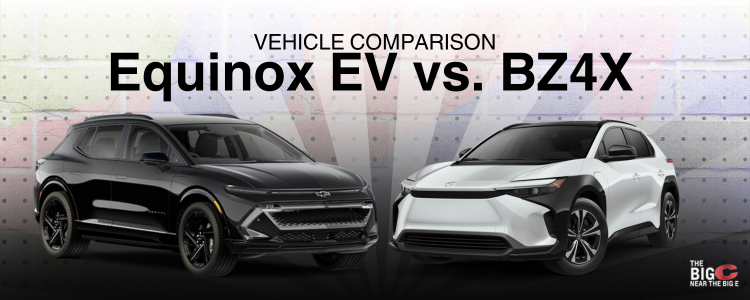
Equinox EV vs. BZ4X

2025 Chevrolet Equinox EV vs. 2024 Toyota bZ4X: A Comprehensive Comparison

Left Card with "Our Pick" Our Pick CHEVROLET EQUINOX EV VS Circle vs Right Card TOYOTA BZ4X The electric vehicle (EV) market is expanding rapidly, offering consumers a growing selection of cutting-edge models to suit their needs. Among the most anticipated entries in this space are the 2025 Chevrolet Equinox EV and the 2024 Toyota bZ4X, two electric SUVs that appeal to environmentally conscious buyers. While both vehicles boast impressive credentials, the Equinox EV emerges as the superior choice with its combination of affordability, range, performance, and advanced technology. Let’s dive into a detailed comparison to understand why the Equinox EV is the standout option. Performance and Power The Chevrolet Equinox EV offers a choice of two powertrains to suit a variety of driving preferences. The Front-Wheel Drive (FWD) model delivers an impressive 220 horsepower and 242 lb-ft of torque, while the All-Wheel Drive (AWD) variant ups the ante with 300 horsepower and 348 lb-ft of torque. This robust performance ensures that the Equinox EV can handle everything from daily commutes to weekend adventures with confidence. Though Chevrolet has not officially disclosed 0-60 mph times, the higher output of the AWD model suggests a quicker acceleration compared to its FWD counterpart. In contrast, the Toyota bZ4X falls short in this category. Its FWD model provides 201 horsepower and 196 lb-ft of torque, while the AWD version manages a combined 214 horsepower and 248 lb-ft of torque. Although its AWD variant achieves respectable acceleration, with a 0-60 mph time of about 6.5 seconds, the power disparity between the bZ4X and the Equinox EV is clear. For drivers seeking a more dynamic and responsive driving experience, the Equinox EV offers a noticeable advantage. Battery, Range, and Efficiency One of the most critical aspects of any EV is its range, and the Chevrolet Equinox EV sets a high standard. Powered by GM’s revolutionary Ultium battery platform, the FWD model achieves an impressive EPA-estimated range of 326 miles, while the AWD version offers a range of 307 miles. These figures make the Equinox EV a more practical choice for long-distance driving and reduce the need for frequent charging stops. Additionally, the Equinox EV delivers excellent efficiency, with up to 117 MPGe city / 108 MPGe combined for the FWD model. The Toyota bZ4X, while respectable, falls behind in this category. Its FWD model offers an EPA-estimated range of 252 miles, and the AWD version provides only 228 miles. Although sufficient for daily use, these ranges pale in comparison to the Equinox EV’s capabilities. Furthermore, the bZ4X’s efficiency ratings of 119 MPGe combined for FWD and 104 MPGe combined for AWD are slightly less competitive when considering the overall package. Charging Capabilities Charging is another area where the Equinox EV shines. With DC fast charging capabilities of up to 150 kW, it can recover significant range in a short period—ideal for road trips or busy schedules. The Equinox EV also supports 11.5 kW Level 2 charging as standard, with an available 19.2 kW charger on the RS trim for even faster home charging. In comparison, the bZ4X offers DC fast charging that can reach 80% capacity in approximately 30 minutes under optimal conditions, but it doesn’t match the flexibility and speed offered by the Equinox EV. Interior Space and Features Inside, the Chevrolet Equinox EV offers a spacious and modern cabin with premium features that elevate the driving experience. With 41.6 inches of front legroom, 38.0 inches of rear legroom, and a cargo capacity of 57.2 cubic feet with the rear seats folded, the Equinox EV is perfect for families and adventurers alike. The technology is equally impressive, highlighted by a 17.7-inch diagonal infotainment display that supports wireless Apple CarPlay and Android Auto. Additionally, Chevrolet’s Super Cruise technology enables hands-free driving on compatible highways, making long trips more convenient and less stressful. While the Toyota bZ4X offers a futuristic and minimalist interior design, it doesn’t quite match the Equinox EV in practicality or innovation. The bZ4X’s cargo space maxes out at 56.9 cubic feet, slightly less than the Equinox EV. Its smaller 12.3-inch touchscreen, while functional, lacks the bold presence of Chevrolet’s infotainment system. Toyota’s Safety Sense 3.0 suite is robust, but it doesn’t include the same advanced hands-free capabilities as Super Cruise. Pricing and Value Perhaps the most compelling argument for the Chevrolet Equinox EV is its affordability. Starting at just $33,600, it undercuts the bZ4X significantly, whose base model starts at $42,000. Even with the AWD upgrade, which adds $3,300 to the Equinox EV, it remains a more budget-friendly option compared to the bZ4X AWD at $44,500. Chevrolet also offers a range of packages, such as the Comfort Package ($1,455) and Illumination Package ($995), allowing buyers to customize their vehicle without breaking the bank. Toyota’s bZ4X, while well-equipped, comes with a higher price tag that may deter budget-conscious shoppers. Conclusion The 2025 Chevrolet Equinox EV excels in every major category, from performance and range to interior features and value. Its superior power output, class-leading range, advanced technology, and accessible pricing make it the clear winner in this comparison. While the 2024 Toyota bZ4X is a capable competitor, it doesn’t quite match the Equinox EV’s blend of practicality, innovation, and affordability. For drivers seeking a reliable and feature-rich electric SUV, the Chevrolet Equinox EV is the smarter choice. View Equinox EV Inventory FAQ Section 1. What is the range difference between the Chevrolet Equinox EV and the Toyota bZ4X? The Chevrolet Equinox EV offers an EPA-estimated range of 326 miles (FWD) and 307 miles (AWD), while the Toyota bZ4X provides a range of 252 miles (FWD) and 228 miles (AWD). The Equinox EV offers significantly more range in both configurations. 2. Which vehicle has better charging capabilities? The Chevrolet Equinox EV supports DC fast charging up to 150 kW, allowing for rapid range recovery. It also offers 11.5 kW Level 2 charging as standard, with an optional 19.2 kW charger. The Toyota bZ4X supports DC fast charging that can reach 80% charge in approximately 30 minutes but doesn’t match the flexibility and speed of the Equinox EV. 3. How does the pricing compare between the two models? The Chevrolet Equinox EV starts at $33,600, significantly lower than the Toyota bZ4X, which begins at $42,000. Even with upgrades, the Equinox EV remains the more affordable choice. 4. Which vehicle offers more interior space? The Chevrolet Equinox EV provides 57.2 cubic feet of cargo space with the rear seats folded, slightly more than the Toyota bZ4X’s 56.9 cubic feet. Additionally, the Equinox EV boasts more legroom in both the front and rear seats. 5. What makes the Equinox EV a better choice overall? The Equinox EV stands out with its superior range, performance, advanced technology like Super Cruise, and lower pricing, making it a more practical and feature-rich option compared to the Toyota bZ4X.

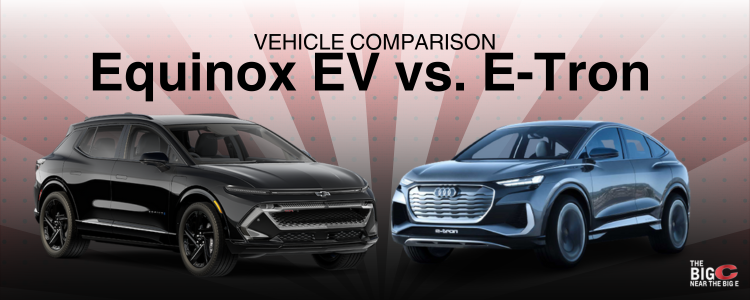
Equinox EV vs. E-Tron

Why the 2025 Chevrolet Equinox EV Is a Better Value Than the 2025 Audi Q4 e-tron

Left Card with "Our Pick" Our Pick CHEVROLET EQUINOX EV VS Circle vs Right Card AUDI E-TRON The electric SUV market has become increasingly competitive, with vehicles catering to a wide range of drivers. The 2025 Chevrolet Equinox EV and the 2025 Audi Q4 e-tron are standout options, each appealing to different priorities—affordability and practicality versus luxury and performance. Here, we explore the differences between these two models and why the Equinox EV emerges as the better value for drivers seeking an accessible yet high-performing electric SUV. Pricing and Value For many buyers, price is one of the first considerations when shopping for a new electric vehicle. The Chevrolet Equinox EV starts at an accessible $33,600, making it one of the most budget-friendly electric SUVs on the market. Meanwhile, the Audi Q4 e-tron begins at $50,995, emphasizing its luxury branding with premium features but at a significantly higher price point. For those prioritizing cost without sacrificing range or features, the Equinox EV delivers exceptional value and makes EV ownership more attainable for the average consumer. Performance The Chevrolet Equinox EV provides a well-rounded performance experience. Its front-wheel-drive (FWD) model offers 213 horsepower and 236 lb-ft of torque, while the all-wheel-drive (AWD) version boosts output to 288 horsepower and 333 lb-ft of torque. This ensures a smooth and responsive drive for both city commutes and highway cruising. In contrast, the Audi Q4 e-tron emphasizes performance with its dual-motor AWD variant, delivering up to 335 horsepower for drivers seeking a sportier feel. However, the Equinox EV’s powertrain strikes a balance between efficiency and capability, ensuring reliable performance across various driving conditions without the premium price tag. Range and Charging Capabilities One of the most critical factors for any electric vehicle is its range. The Equinox EV outshines the Q4 e-tron with an EPA-estimated range of up to 319 miles, making it an excellent choice for longer commutes and road trips. The Audi Q4 e-tron, on the other hand, delivers an EPA-estimated range of 265 miles, which falls short for those seeking maximum flexibility. Both vehicles are equipped with DC fast-charging capabilities. The Equinox EV charges from 10% to 80% in 36 to 45 minutes, while the Q4 e-tron achieves a similar charge in approximately 30 minutes. Although the Q4 e-tron offers a slightly faster charging time, the Equinox EV’s longer range reduces the need for frequent charging stops, making it the more convenient option overall. Interior Comfort and Space Inside, the Chevrolet Equinox EV is designed with practicality and comfort in mind. It features a spacious cabin with a modern aesthetic, highlighted by an available 17.7-inch infotainment display and ample legroom—41.7 inches in the front and 38 inches in the rear. Additionally, its versatile cargo space offers 26.4 cubic feet behind the rear seats, expanding to 57.2 cubic feet when folded down. While the Audi Q4 e-tron delivers a luxurious interior with high-end materials and Audi’s signature minimalist design, it’s slightly less spacious. Its rear legroom measures 38.3 inches, and cargo space maxes out at 53.1 cubic feet. While the Q4 e-tron caters to those seeking luxury, the Equinox EV provides more practicality and comfort for families and everyday use. Technology and Safety Chevrolet has equipped the Equinox EV with advanced technology that enhances convenience and safety. Its standout feature is GM’s Super Cruise, which allows hands-free driving on thousands of miles of compatible highways. Standard safety features include automatic emergency braking, lane-keeping assist, and a surround-view camera system. The Audi Q4 e-tron also offers cutting-edge features, including Audi’s Pre Sense suite, adaptive cruise control, and optional augmented reality head-up display. However, it lacks the hands-free capabilities of Super Cruise, which gives the Equinox EV a significant advantage in terms of innovation and ease of use. Styling and Design The Equinox EV features sleek, contemporary styling that balances sporty and practical elements. The RS trim adds bold accents like larger wheels and distinctive design touches, appealing to drivers who want an SUV with personality. LED lighting and a futuristic front grille complete its modern look. The Audi Q4 e-tron leans into its luxury branding with aerodynamic lines, a bold front grille, and premium finishes. Optional features like matrix LED headlights and contrasting roof colors enhance its upscale appeal. While the Q4 e-tron’s design is undeniably luxurious, the Equinox EV offers a stylish yet approachable aesthetic that aligns with its value-driven mission. Final Verdict The 2025 Chevrolet Equinox EV and the 2025 Audi Q4 e-tron cater to distinct audiences. The Audi Q4 e-tron excels in luxury and performance, making it a compelling choice for buyers seeking a high-end electric vehicle. However, the Chevrolet Equinox EV’s affordability, impressive range, spacious interior, and advanced technology make it the smarter option for most drivers. For those looking to embrace electric mobility without compromising on practicality or innovation, the Equinox EV delivers unmatched value. View Equinox EV Inventory FAQ 1. How does the Chevrolet Equinox EV compare to the Audi Q4 e-tron in terms of price? The Equinox EV starts at $33,600, making it significantly more affordable than the Q4 e-tron, which begins at $50,995. 2. Which vehicle offers a better range? The Equinox EV offers an EPA-estimated range of up to 319 miles, compared to the Q4 e-tron’s range of 265 miles. 3. Does the Equinox EV have hands-free driving capabilities? Yes, the Equinox EV features GM’s Super Cruise, a hands-free driving system compatible with thousands of miles of highways. 4. Which SUV has more cargo space? The Equinox EV offers up to 57.2 cubic feet of cargo space with the rear seats folded, slightly more than the Q4 e-tron’s 53.1 cubic feet. 5. What sets the Equinox EV apart from the Q4 e-tron? The Equinox EV stands out for its affordability, longer range, spacious interior, and advanced driver-assistance technology like Super Cruise. Visit Central Chevrolet in West Springfield, MA, to learn more about the 2025 Chevrolet Equinox EV and experience its incredible features firsthand. Schedule a test drive today and see why it’s the perfect electric SUV for you!

Equinox EV vs. ID.4

2025 Chevrolet Equinox EV vs. 2024 Volkswagen ID.4: Who's The Clear Winner.

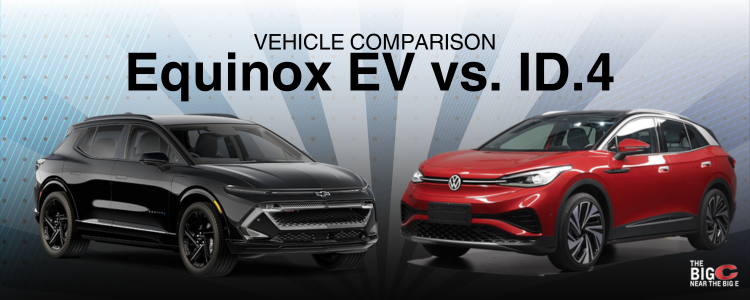
Left Card with "Our Pick" Our Pick CHEVROLET EQUINOX EV VS Circle vs Right Card VOLKSWAGEN ID.4 The electric SUV market is heating up, and two strong contenders in this space are the 2025 Chevrolet Equinox EV and the 2024 Volkswagen ID.4. While both vehicles cater to the growing demand for eco-friendly and versatile transportation, the Equinox EV stands out as a superior option in several key areas. Let’s dive into a detailed comparison of these two electric SUVs to help you understand why the Equinox EV is the better choice for drivers seeking an exceptional blend of value, performance, and technology. Pricing and Value One of the most striking differences between the Equinox EV and the ID.4 is their starting prices. The Chevrolet Equinox EV begins at an incredibly competitive $33,600, making it one of the most affordable options in its class. In contrast, the Volkswagen ID.4 starts at $39,735, which reflects its established position but puts it out of reach for more budget-conscious buyers. For drivers entering the electric market for the first time, the Equinox EV’s lower price point provides an excellent opportunity to embrace electric mobility without breaking the bank. Performance and Driving Dynamics Both the Equinox EV and the ID.4 offer impressive powertrain options, but their execution differs. The Equinox EV’s front-wheel-drive model delivers 220 horsepower and 243 lb-ft of torque, while its all-wheel-drive variant ups the ante with 288 horsepower and 333 lb-ft of torque. These numbers translate to a smooth, comfortable ride that’s ideal for daily commutes and long road trips alike. Meanwhile, the ID.4’s rear-wheel-drive base model produces 201 horsepower and 229 lb-ft of torque, with its all-wheel-drive configuration pushing up to 335 horsepower. While the ID.4’s AWD trim offers slightly more power, the Equinox EV delivers a balanced approach that prioritizes both efficiency and practicality—key factors for most SUV buyers. Range and Charging Capabilities Range anxiety remains a concern for many electric vehicle buyers, and here the Equinox EV shines. Depending on the trim, it offers an EPA-estimated range of 285 to 319 miles on a single charge, making it a class leader. The ID.4, in comparison, has an EPA-estimated range of 206 to 275 miles, depending on the configuration. The longer range of the Equinox EV makes it a more practical choice for drivers who frequently travel longer distances. When it comes to charging, the Equinox EV and ID.4 are closely matched. The Equinox EV’s DC fast-charging capabilities allow it to go from 10% to 80% in about 36 to 45 minutes, while the ID.4 achieves the same feat in approximately 30 minutes. Although the ID.4 has a slight edge in charging speed, the Equinox EV’s longer range ensures fewer charging stops overall. Interior Comfort and Technology Step inside the Chevrolet Equinox EV, and you’ll be greeted by a modern, spacious interior. With an available 17.7-inch infotainment display and generous legroom—42 inches in the front and 39 inches in the rear—the Equinox EV prioritizes comfort and connectivity. Features like wireless Apple CarPlay and Android Auto, heated and ventilated seats, and ambient lighting elevate the driving experience to a new level. The Volkswagen ID.4, while stylish, falls short in some areas. Its 12.9-inch infotainment screen, although functional, feels less cutting-edge compared to the Equinox EV. Additionally, rear legroom in the ID.4 measures 37.6 inches, making it slightly less accommodating for taller passengers. For families or those who frequently travel with passengers, the Equinox EV offers a more comfortable and versatile cabin. Advanced Driver Assistance and Safety Features Safety is a top priority for any vehicle, and both the Equinox EV and ID.4 come equipped with advanced driver-assistance systems. However, the Equinox EV takes it a step further with the availability of GM’s Super Cruise technology. This hands-free driving system is compatible with thousands of miles of highways, providing unmatched convenience and safety. The ID.4 features Volkswagen’s IQ.Drive system, which includes adaptive cruise control and lane-keeping assist but lacks the hands-free capability of Super Cruise. Final Thoughts The 2025 Chevrolet Equinox EV emerges as the clear winner when compared to the 2024 Volkswagen ID.4. From its lower starting price to its longer range, advanced technology, and spacious interior, the Equinox EV offers an unbeatable combination of value and innovation. Whether you’re new to the world of electric vehicles or looking to upgrade your current ride, the Equinox EV delivers on all fronts. View Equinox EV Inventory FAQ 1. How does the Chevrolet Equinox EV compare to the Volkswagen ID.4 in terms of price? The Equinox EV starts at $33,600, making it significantly more affordable than the ID.4, which starts at $39,735. 2. Which vehicle has a better range? The Equinox EV offers an EPA-estimated range of up to 319 miles, while the ID.4’s range tops out at 275 miles. 3. Does the Equinox EV have hands-free driving capabilities? Yes, the Equinox EV offers GM’s Super Cruise technology for hands-free driving on compatible highways, a feature not available in the ID.4. 4. Which SUV has more interior space? The Equinox EV provides more rear legroom and a spacious cabin overall, making it the better choice for passenger comfort. 5. What about cargo space? While the ID.4 offers slightly more cargo space at 64 cubic feet compared to the Equinox EV’s 57 cubic feet, the Equinox EV’s versatile interior layout ensures ample storage for most needs. Experience the future of driving with the 2025 Chevrolet Equinox EV. Visit Central Chevrolet in West Springfield, MA, to learn more and schedule a test drive today!

Equinox EV vs. EV6

2025 Chevrolet Equinox EV vs. 2024 Kia EV6: A Comprehensive Comparison

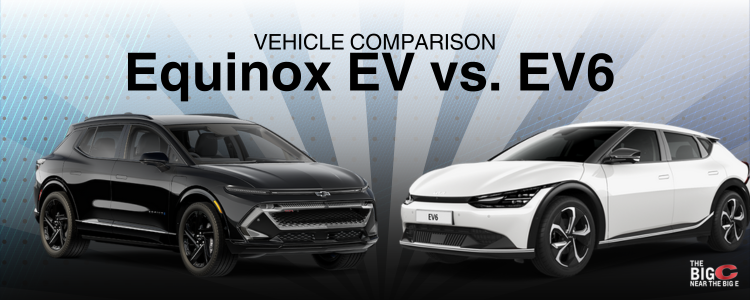
Left Card with "Our Pick" Our Pick CHEVROLET EQUINOX EV VS Circle vs Right Card KIA EV6 Introduction The electric vehicle (EV) market continues to evolve, offering a wide range of options for eco-conscious buyers. Two standout contenders in the electric SUV segment are the 2025 Chevrolet Equinox EV and the 2024 Kia EV6. Both vehicles bring unique strengths to the table, catering to different buyer preferences. In this detailed comparison, we’ll explore key aspects such as pricing, performance, range, charging, and more to help you decide which EV suits your needs best. Pricing and Value Chevrolet Equinox EV The 2025 Chevrolet Equinox EV sets itself apart with an accessible starting price of $33,600, making it one of the most affordable options in the electric SUV category. This pricing strategy makes it particularly appealing to first-time EV buyers or budget-conscious families. For those seeking more premium features, trims like the RS and 3LT offer advanced technology and upgraded interiors without breaking the bank. Kia EV6 In contrast, the 2024 Kia EV6 starts at $42,600, positioning itself as a more premium offering. While it boasts advanced features and a more luxurious feel, the higher price point may deter budget-conscious buyers. The EV6 targets those who prioritize performance and upscale amenities over affordability. Key Takeaway The Chevrolet Equinox EV’s competitive pricing makes it a standout choice for buyers seeking value without compromising on essential features. Performance Chevrolet Equinox EV The E quinox EV delivers dependable performance tailored to daily driving needs. The base front-wheel-drive (FWD) model offers 210 horsepower and 243 lb-ft of torque, providing smooth and predictable driving dynamics. For those needing enhanced traction and power, the all-wheel-drive (AWD) version boosts output to 290 horsepower, making it an excellent choice for small families and urban commuters alike. Kia EV6 The Kia EV6, on the other hand, emphasizes sportier performance. Its base model delivers 167 horsepower and 258 lb-ft of torque with rear-wheel drive (RWD). For those seeking more excitement, higher trims feature a dual-motor AWD setup producing up to 320 horsepower. This configuration ensures a sharper, more dynamic driving experience, catering to enthusiasts who prioritize performance. Key Takeaway While the Kia EV6 offers more power and sporty handling, the Chevrolet Equinox EV provides sufficient performance for everyday use at a lower cost. Battery, Range, and Efficiency Chevrolet Equinox EV The Equinox EV offers impressive range options, depending on the trim and configuration. Buyers can expect between 285 and 319 miles of range on a full charge. With an efficiency rating of 96–108 MPGe combined, the Equinox EV ensures economical operation without sacrificing range. Kia EV6 The Kia EV6 also delivers competitive range options, ranging from 232 to 310 miles depending on battery size and drivetrain configuration. Its efficiency is slightly higher, rated at 109–117 MPGe combined. These figures make the EV6 a viable option for long-distance travelers. Key Takeaway While both vehicles offer strong range capabilities, the Equinox EV’s extended range in its higher trims provides better affordability per mile. Charging Capabilities Chevrolet Equinox EV The Equinox EV offers practical and efficient charging options. With a Level 2 (240V) charger, it can fully recharge in approximately 7 hours. For those on the go, DC fast charging adds up to 70 miles of range in just 10 minutes and can charge the battery from 10–80% in 36–45 minutes. Kia EV6 The Kia EV6 excels in fast-charging capabilities. It can charge from 10–80% in just 18–25 minutes with DC fast charging, making it one of the fastest-charging EVs in its class. Level 2 charging takes 6 to 8 hours for a full charge. Key Takeaway The Kia EV6 leads in fast charging, making it a better option for frequent long-distance drivers. However, the Equinox EV’s charging times remain competitive for most everyday scenarios. Interior and Comfort Chevrolet Equinox EV Inside the Equinox EV, you’ll find a modern and tech-focused cabin designed for practicality and comfort. A standard 11-inch infotainment screen provides an intuitive user experience, while higher trims feature an expansive 17.7-inch display. Other highlights include heated front seats, an optional panoramic sunroof, and premium materials in the sporty RS trim. Kia EV6 The Kia EV6 takes a more premium approach to interior design, featuring high-quality materials such as vegan leather seating. Its curved dual-screen layout emphasizes a driver-centric aesthetic, and higher trims include ventilated seats and a Meridian premium sound system. While luxurious, these features contribute to the EV6’s higher price. Key Takeaway The Kia EV6 offers a more upscale interior, but the Equinox EV focuses on practicality and user-friendly technology at a more accessible price. Technology and Safety Chevrolet Equinox EV The Equinox EV is equipped with GM’s cutting-edge Super Cruise technology, a hands-free driver-assistance system available on select trims. Standard safety features include automatic emergency braking, lane-keeping assist, and adaptive cruise control, ensuring a secure driving experience. Kia EV6 The EV6 features Kia’s Drive Wise suite, which includes highway driving assist, blind-spot monitoring, and smart cruise control. For tech enthusiasts, higher trims offer an optional augmented reality (AR) head-up display. Key Takeaway While both vehicles provide advanced safety and technology, the Equinox EV’s Super Cruise system gives it an edge in driver assistance innovation. Warranty and Reliability Chevrolet Equinox EV Chevrolet offers a basic warranty of 3 years/36,000 miles and an 8-year/100,000-mile battery warranty. These terms ensure peace of mind for buyers entering the EV market. Kia EV6 Kia’s warranty coverage is slightly more generous, with a 5-year/60,000-mile basic warranty and a 10-year/100,000-mile battery warranty, appealing to buyers focused on long-term reliability. Key Takeaway Kia’s longer basic warranty is a strong selling point, but the Equinox EV’s competitive pricing balances the equation for budget-minded buyers. Styling and Design Chevrolet Equinox EV The Equinox EV boasts a sleek, modern design with athletic lines and LED lighting. The RS trim adds sporty accents, creating a visually appealing yet practical aesthetic. Kia EV6 The Kia EV6 adopts a bold, futuristic design with a coupe-like silhouette and an aggressive front fascia. Its styling is ideal for those seeking a standout look. Key Takeaway The Equinox EV’s design strikes a balance between modernity and practicality, while the EV6’s bold styling appeals to buyers with a taste for the unconventional. Verdict Both the 2025 Chevrolet Equinox EV and the 2024 Kia EV6 are excellent choices in the electric SUV market, but they cater to different audiences: Choose the Chevrolet Equinox EV if you value affordability, long range, and practicality. It’s a perfect fit for families and first-time EV buyers. Choose the Kia EV6 if you prioritize performance, luxury, and fast charging, despite the higher price. The 2025 Chevrolet Equinox EV ultimately stands out as a value-packed, family-friendly option, offering a compelling combination of features, range, and affordability. View Equinox EV Inventory FAQs 1. What is the starting price of the 2025 Chevrolet Equinox EV? The Equinox EV starts at $33,600, making it one of the most affordable electric SUVs on the market. 2. Which SUV has a better driving range? The Chevrolet Equinox EV offers a higher range of up to 319 miles in select trims, compared to the Kia EV6’s maximum of 310 miles. 3. How does the charging time compare between these two EVs? While the Kia EV6 has faster DC fast-charging times, the Equinox EV’s charging performance is competitive and sufficient for most drivers. 4. Which EV is better for families? The Chevrolet Equinox EV is more practical and budget-friendly, making it a better option for families. 5. What sets the Equinox EV apart from the Kia EV6? The Equinox EV’s affordability, extended range, and advanced Super Cruise technology make it a standout choice for buyers seeking value and innovation.

Equinox EV vs. Ioniq 5

2025 Chevrolet Equinox EV vs. Hyundai Ioniq 5: Which Electric SUV Is Right for You?

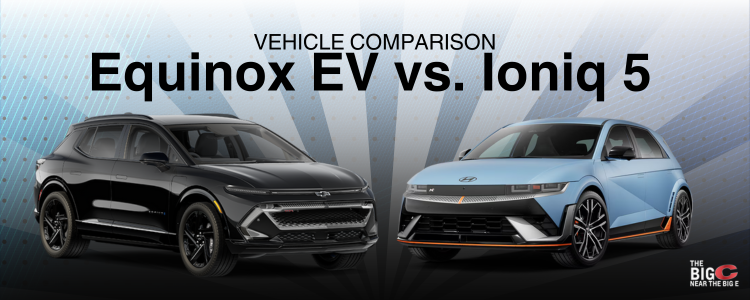
Left Card with "Our Pick" Our Pick CHEVROLET EQUINOX EV VS Circle vs Right Card HYUNDAI IONIQ-5 The electric SUV market is heating up, and two standout contenders in 2025 are the Chevrolet Equinox EV and the Hyundai Ioniq 5. Both offer forward-thinking design, impressive performance, and cutting-edge technology. However, the Equinox EV shines with its affordability, range, and family-friendly features, making it a strong choice for drivers seeking value without compromising on innovation. Let’s explore how these two SUVs compare and why the Equinox EV may be the perfect fit for you. Pricing and Value Chevrolet Equinox EV: With a starting price of $30,000, the Equinox EV is one of the most affordable electric SUVs in its class. Even the higher trims, like the 2RS eAWD, come in well under many competitors, delivering exceptional value for the price. Hyundai Ioniq 5: Starting at $41,800, the Ioniq 5 is significantly more expensive at its base level, with the top Limited AWD trim reaching a steep $59,400. For budget-conscious buyers or families looking to transition to an EV without breaking the bank, the Chevrolet Equinox EV offers unmatched value in the electric SUV segment. Performance: Power Meets Efficiency Chevrolet Equinox EV: Equipped with GM’s Ultium battery technology, the Equinox EV provides up to 290 horsepower in dual-motor eAWD configurations. Offers smooth acceleration and a refined driving experience, making it perfect for urban commutes and highway cruising alike. Hyundai Ioniq 5: Delivers up to 320 horsepower in its dual-motor AWD models, achieving 0-60 mph in 5.2 seconds. While powerful, its performance may feel sportier but lacks the overall refinement and efficiency balance found in the Equinox EV. The Equinox EV is designed for drivers who prioritize efficiency, comfort, and a smooth ride while still delivering ample power when needed. Range and Charging: Equinox EV Leads in Usability Chevrolet Equinox EV: Offers up to 300 miles of range on the FWD 2LT trim, making it a reliable choice for daily drives and longer trips. Features DC fast charging capabilities, adding up to 70 miles of range in just 10 minutes. Hyundai Ioniq 5: The Long Range RWD trim achieves up to 303 miles, but AWD versions drop significantly to 256 miles. While it supports ultra-fast 350 kW charging, its real-world range often varies across trims. With consistent range across its lineup and competitive charging speeds, the Equinox EV is better suited for both everyday use and weekend getaways. Interior Space and Comfort Chevrolet Equinox EV: A roomy cabin with 57 cubic feet of maximum cargo space and a flat floor design, perfect for family road trips or carrying gear. Features a 17-inch infotainment screen paired with an 11-inch driver display, ensuring an intuitive and modern tech experience. Hyundai Ioniq 5: Offers slightly more cargo capacity at 59.3 cubic feet, but its compact dimensions make the interior feel less spacious overall. Dual 12.3-inch displays provide good tech integration but fall short of the immersive experience offered by the Equinox EV’s larger screen. For families and tech enthusiasts alike, the Equinox EV provides the perfect balance of space and cutting-edge features. Safety and Technology: Advanced Assistance Chevrolet Equinox EV: Comes standard with Chevy Safety Assist, which includes features like Automatic Emergency Braking, Lane Keep Assist, and a following distance indicator. Offers GM’s revolutionary Super Cruise hands-free driving system, providing unparalleled convenience on select highways. Hyundai Ioniq 5: Includes Highway Driving Assist II, a strong driver-assistance system but without the hands-free capability of Super Cruise. For drivers who prioritize safety and innovation, the Equinox EV’s advanced driver-assist features set a new benchmark. Towing and Versatility Chevrolet Equinox EV: Offers a towing capacity of 1,500 lbs, making it suitable for light recreational use. Hyundai Ioniq 5: Matches the Equinox EV’s towing capacity but lacks the practicality and affordability for families seeking an all-in-one solution. Why Choose the 2025 Chevrolet Equinox EV? The 2025 Chevrolet Equinox EV is a game-changer in the electric SUV market. With its combination of affordability, cutting-edge technology, family-friendly design, and exceptional range, it outshines the Hyundai Ioniq 5 for modern drivers looking to make the switch to electric. The Equinox EV proves that you don’t have to compromise on quality or features to enjoy the benefits of an electric vehicle. Explore the Chevrolet Equinox EV at Central Chevrolet Ready to experience the 2025 Chevrolet Equinox EV for yourself? Visit Central Chevrolet in West Springfield, MA, to see it in person, take a test drive, and discover why it’s the electric SUV that’s perfect for your lifestyle. Schedule your test drive today and embrace the future of driving! View Equinox EV Inventory FAQ: 2025 Chevrolet Equinox EV vs. 2025 Hyundai Ioniq 5 1. Which vehicle is more affordable? The Chevrolet Equinox EV starts at $30,000, making it significantly more budget-friendly than the Hyundai Ioniq 5, which starts at $41,800. 2. Which vehicle offers better range? Both vehicles offer competitive ranges, but the Equinox EV provides up to 300 miles on select trims with consistent performance across the lineup. 3. What’s the key difference in technology? The Equinox EV features GM’s Super Cruise for hands-free highway driving, while the Ioniq 5 offers robust but less advanced driver-assist features. 4. Which is better for families? The Equinox EV’s spacious interior, flat floor design, and intuitive technology make it the better choice for family-friendly versatility. 5. Where can I test drive the Equinox EV? Visit Central Chevrolet in West Springfield, MA, to test drive the 2025 Chevrolet Equinox EV and explore its innovative features today!

Blazer EV vs. Q4 e-tron

Chevrolet Blazer EV vs. Audi Q4 e-tron: A Comprehensive Comparison

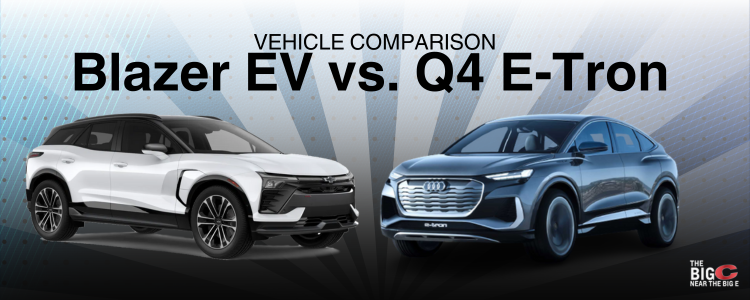
Left Card with "Our Pick" Our Pick CHEVROLET BLAZER EV VS Circle vs Right Card AUDI Q4 E-TRON The electric vehicle (EV) market continues to expand with innovative options, and two contenders making waves are the Chevrolet Blazer EV and the Audi Q4 e-tron. While both vehicles offer excellent features, the Chevrolet Blazer EV stands out for its affordability, performance versatility, and cutting-edge technology. Let’s explore how these two EVs compare across key categories to help you make an informed choice. Pricing Chevrolet Blazer EV: Starts at $44,600. Audi Q4 e-tron: Starts at $49,800. The Blazer EV is significantly more budget-friendly, providing an excellent entry point into the electric SUV segment without compromising on performance or features. Performance Chevrolet Blazer EV Drivetrain Options: Available in FWD, RWD, and AWD. Horsepower: 288 horsepower in the LT FWD trim. Torque: 333 lb-ft of torque in the LT FWD trim. Towing Capacity: Up to 3,500 lbs (RS RWD variant) and 1,500 lbs for other trims. Audi Q4 e-tron Drivetrain Options: Available in RWD and AWD. Horsepower: Up to 335 horsepower (55 Prestige trim). Torque: Up to 339 lb-ft (AWD models). Towing Capacity: Up to 2,646 lbs (AWD models) and 2,204 lbs (RWD models). The Blazer EV offers greater drivetrain flexibility and a higher towing capacity in its RS RWD variant, making it a better option for drivers seeking both versatility and utility. Battery and Range Chevrolet Blazer EV Battery Technology: Utilizes GM’s advanced Ultium battery system. Range: Up to 334 miles on a full charge. Audi Q4 e-tron Battery Capacity: Features a 77 kWh battery. Range: Up to 288 miles (45 Premium Plus trim). With its superior range and cutting-edge Ultium battery technology, the Chevrolet Blazer EV ensures fewer stops on long journeys, making it ideal for road trips and daily commutes alike. Charging Chevrolet Blazer EV Level 2 Charging: Full charge in approximately 9 to 12 hours. DC Fast Charging: Replenishes up to 80% in about 36 minutes. Audi Q4 e-tron Level 2 Charging: Similar charging times to the Blazer EV. DC Fast Charging: Reaches 80% charge in approximately 36 minutes. Both vehicles offer competitive charging times, but the Blazer EV’s affordability and range give it a slight edge. Interior and Cargo Space Chevrolet Blazer EV Seating: Comfortably accommodates five passengers. Cargo Capacity: 25.5 cubic feet behind the rear seats and up to 59.1 cubic feet with the seats folded. Audi Q4 e-tron Seating: Seats five passengers with luxurious touches. Cargo Capacity: 24.8 cubic feet behind the rear seats and 53.1 cubic feet with the seats folded. While the Audi offers a slightly more premium interior, the Blazer EV provides more cargo space, making it the practical choice for families and adventurers. Dimensions Chevrolet Blazer EV: 192.2" L x 78.0" W x 65.0" H, with 7.9" ground clearance. Audi Q4 e-tron: 180.7" L x 73.4" W x 64.7" H, with a 108.7" wheelbase. The larger dimensions of the Blazer EV translate to a more commanding road presence and additional interior space. Warranty Chevrolet Blazer EV: 3-year/36,000-mile basic warranty and 8-year/100,000-mile battery warranty. Audi Q4 e-tron: 4-year/50,000-mile basic warranty and 8-year/100,000-mile battery warranty. Audi provides a longer basic warranty, but the Blazer EV’s coverage aligns with industry standards and is complemented by its competitive pricing. Safety and Driver Assistance Chevrolet Blazer EV Standard Features: Automatic emergency braking, lane-keeping assist, forward collision warning. Available Features: Super Cruise hands-free driving technology. Audi Q4 e-tron Standard Features: Audi pre sense® front, adaptive cruise assist, lane guidance. Optional Features: Traffic sign recognition, 360-degree camera system. Both vehicles excel in safety, but the Blazer EV’s Super Cruise technology offers a unique advantage for hands-free driving on compatible highways. Conclusion: Why Choose the Chevrolet Blazer EV? The Chevrolet Blazer EV shines with its affordability, impressive range, versatile performance, and cutting-edge features like Super Cruise. While the Audi Q4 e-tron offers premium touches and slightly higher performance in its top trims, the Blazer EV delivers exceptional value, making it the smarter choice for budget-conscious buyers seeking a practical yet powerful electric SUV. FAQs 1. Which EV has a better range, the Chevrolet Blazer EV or Audi Q4 e-tron? The Chevrolet Blazer EV offers a maximum range of up to 334 miles, outperforming the Audi Q4 e-tron’s 288 miles. 2. Which vehicle charges faster? Both the Blazer EV and Q4 e-tron achieve 80% charge in about 36 minutes with DC fast charging. 3. Which is more affordable, the Blazer EV or the Q4 e-tron? The Chevrolet Blazer EV starts at $44,600, significantly lower than the Audi Q4 e-tron’s $49,800 starting price. 4. What’s the towing capacity of the Blazer EV compared to the Q4 e-tron? The Blazer EV’s RS RWD trim can tow up to 3,500 lbs, surpassing the Q4 e-tron’s maximum towing capacity of 2,646 lbs. 5. Where can I test drive the Chevrolet Blazer EV? Visit Central Chevrolet in West Springfield, MA, to explore and test drive the Chevrolet Blazer EV today.

Blazer EV vs. ID.4

Chevrolet Blazer EV vs. Volkswagen ID.4: A Comprehensive Comparison

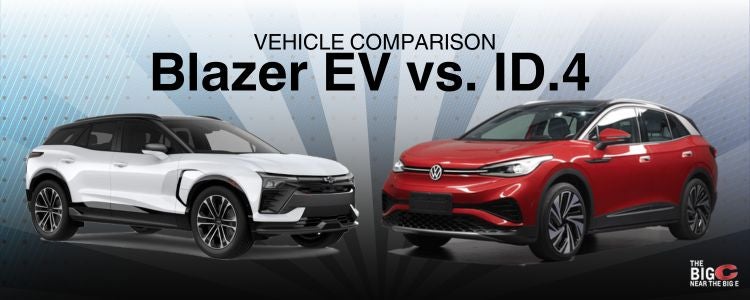
Left Card with "Our Pick" Our Pick CHEVROLET BLAZER EV VS Circle vs Right Card VOLKSWAGEN ID.4 When it comes to electric vehicles (EVs), the Chevrolet Blazer EV and Volkswagen ID.4 are two standout options. Both vehicles bring their own strengths to the table, but when looking closely at the details, the Chevrolet Blazer EV emerges as the more well-rounded choice for drivers seeking performance, range, and innovative features. Let’s dive into a detailed comparison of these two electric SUVs to help you make an informed decision. Pricing Chevrolet Blazer EV: Starting at $44,600. Volkswagen ID.4: Starting at $39,735. While the Volkswagen ID.4 has a lower starting price, the additional performance and features of the Chevrolet Blazer EV make it a compelling choice, especially for those who prioritize advanced technology and power. Performance Chevrolet Blazer EV Configurations: Available in front-wheel drive (FWD), rear-wheel drive (RWD), and all-wheel drive (AWD). Power Output: The LT FWD trim boasts 288 horsepower and 333 lb-ft of torque. Performance Features: The AWD variant ensures superior traction and enhanced performance. Volkswagen ID.4 Configurations: Offers Standard RWD and Pro S Plus AWD. Power Output: The Standard model generates 201 horsepower and 229 lb-ft of torque. Acceleration: The Pro S Plus AWD trim delivers 295 horsepower, achieving 0-60 mph in approximately 5.8 seconds. While the ID.4’s acceleration figures are respectable, the Chevrolet Blazer EV’s flexibility in drivetrain configurations and its robust power output make it the better option for drivers who value versatility and performance. Battery and Range Chevrolet Blazer EV Battery Technology: Utilizes GM's Ultium battery system. Range: Offers an impressive range of up to 334 miles on a full charge, depending on the trim and configuration. Volkswagen ID.4 Battery Options: Equipped with a 62 kWh battery in the Standard model. Range: The Standard model delivers approximately 209 miles, while higher trims can achieve up to 291 miles. With its cutting-edge Ultium battery technology and superior range, the Chevrolet Blazer EV outpaces the ID.4, making it ideal for longer journeys and reducing range anxiety. Charging Chevrolet Blazer EV Fast Charging: Supports DC fast charging, adding approximately 78 miles of range in just 10 minutes. Level 2 Charging: Compatible with AC chargers, with charging times varying based on the charger’s capacity. Volkswagen ID.4 Fast Charging: The Standard model supports DC fast charging up to 140 kW, enabling a 10-80% charge in about 29 minutes. Level 2 Charging: At 11 kW, it achieves a full charge in approximately 7.5 hours. The Chevrolet Blazer EV’s fast-charging capability offers a significant advantage, saving time during quick stops and providing more range for less waiting. Towing Capacity Chevrolet Blazer EV: The AWD variant offers a towing capacity of up to 1,500 lbs, suitable for light trailers or small boats. Volkswagen ID.4: Provides a higher towing capacity of up to 2,200 lbs when properly equipped. While the ID.4 edges ahead in towing capacity, the Blazer EV’s towing capability is sufficient for most everyday needs. Interior and Cargo Space Chevrolet Blazer EV Cargo Space: Offers 25.5 cubic feet behind the rear seats and up to 59.1 cubic feet with the seats folded down. Seating: Seats five passengers comfortably with ample legroom and headroom. Volkswagen ID.4 Cargo Space: Features 30.3 cubic feet behind the second row and up to 64.2 cubic feet with seats folded. Seating: Designed for five passengers, prioritizing comfort and space efficiency. While the ID.4 provides slightly more cargo space, the Chevrolet Blazer EV’s interior design and passenger comfort ensure a premium driving experience. Warranty Chevrolet Blazer EV: Includes a 3-year/36,000-mile basic warranty and an 8-year/100,000-mile battery warranty. Volkswagen ID.4: Comes with a 4-year/50,000-mile basic warranty and the same 8-year/100,000-mile battery coverage. Although the ID.4 offers a longer basic warranty, the Chevrolet Blazer EV matches its battery coverage and compensates with advanced features and performance. Conclusion: Why Choose the Chevrolet Blazer EV? The Chevrolet Blazer EV stands out as a dynamic and versatile electric SUV, blending robust performance, cutting-edge technology, and impressive range. While the Volkswagen ID.4 offers notable features at a slightly lower starting price, the Blazer EV’s superior powertrain options, innovative battery technology, and fast-charging capability make it the clear winner for drivers seeking a premium EV experience. View Blazer EV Inventory FAQs 1. Which vehicle has a better range, the Chevrolet Blazer EV or Volkswagen ID.4? The Chevrolet Blazer EV offers a maximum range of up to 334 miles, significantly outpacing the ID.4’s maximum range of 291 miles. 2. Is the Chevrolet Blazer EV more powerful than the Volkswagen ID.4? Yes, the Blazer EV’s LT FWD trim delivers 288 horsepower and 333 lb-ft of torque, compared to the ID.4’s Standard model at 201 horsepower and 229 lb-ft of torque. 3. Which vehicle charges faster? The Chevrolet Blazer EV supports DC fast charging that adds 78 miles of range in just 10 minutes, making it faster than the ID.4’s charging capabilities. 4. Which is better for towing, the Blazer EV or the ID.4? The Volkswagen ID.4 offers a higher towing capacity (2,200 lbs vs. 1,500 lbs), but the Blazer EV’s capability meets most light towing needs. 5. Where can I test drive the Chevrolet Blazer EV? Visit Central Chevrolet in West Springfield, MA, to experience the Chevrolet Blazer EV firsthand and explore its features in detail.

Blazer EV vs. Kia EV9

2025 Chevrolet Blazer EV vs. 2025 Kia EV9: Why the Blazer EV is a Superior Choice

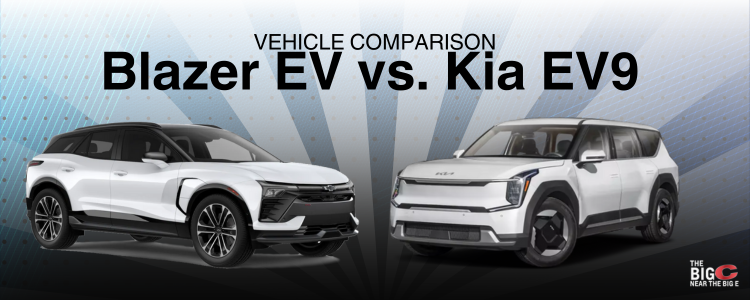
Left Card with "Our Pick" Our Pick CHEVROLET BLAZER EV VS Circle vs Right Card KIA EV9 The 2025 Chevrolet Blazer EV and Kia EV9 represent two powerhouse electric SUVs, but the Blazer EV stands out with its innovative technology, competitive pricing, and versatile performance. Here's a breakdown to help you decide why the Blazer EV might be the better choice for you. Pricing and Value Chevrolet Blazer EV: Starting at $44,600, the Blazer EV delivers high-end features without the steep price tag of the EV9. The RS AWD trim at $52,900 offers superior value for performance and range. Kia EV9: While its base price is $54,900, higher trims like the GT-Line AWD climb to $73,900, making it a pricier option. If affordability is key, the Blazer EV offers more bang for your buck. Performance: Power Meets Precision Chevrolet Blazer EV: Performance peaks with the SS trim, delivering a jaw-dropping 0-60 mph time of under 4 seconds thanks to its "Wide Open Watts" (WOW) mode. The RS AWD trim provides a balanced dual-motor setup for both power and efficiency. Kia EV9: The GT-Line AWD offers 379 horsepower but achieves a slower 0-60 mph time of 5.0 seconds compared to the Blazer EV's SS trim. For performance enthusiasts, the Blazer EV takes the lead with its dynamic driving capabilities. Range and Charging Chevrolet Blazer EV: Offers up to 320 miles on the RS RWD trim, ensuring peace of mind for longer drives. DC fast charging capability adds 78 miles in just 10 minutes at up to 195 kW. Kia EV9: Its Light Long Range RWD variant achieves 300 miles, falling slightly short of the Blazer EV's maximum range. While its 350 kW charging is faster, the Blazer EV balances competitive charging times with a broader range. For drivers who value range consistency, the Blazer EV delivers exceptional reliability. Towing and Utility Chevrolet Blazer EV: Offers up to 3,500 lbs of towing capacity with the Trailering Provisions package. Kia EV9: Tows up to 2,000 lbs, which is significantly lower than the Blazer EV's capacity. The Blazer EV is a better choice for those needing a versatile vehicle for towing. Interior and Technology Chevrolet Blazer EV: Features a modern 17.7-inch infotainment touchscreen and an 11-inch digital cluster for a cutting-edge cabin experience. Provides ample passenger comfort and cargo space with up to 59.1 cubic feet. Kia EV9: While it offers a larger cargo space with rows folded, its smaller screens and higher price detract from its overall value. The Blazer EV strikes a perfect balance of comfort, functionality, and futuristic design. Safety and Advanced Features Chevrolet Blazer EV: Super Cruise hands-free driver assistance makes long-distance driving easier and safer. Kia EV9: Offers similar features, such as Highway Driving Assist II, but lacks hands-free highway driving capability. For those prioritizing safety innovation, the Blazer EV's Super Cruise leads the pack. Conclusion: Chevrolet Blazer EV—The Smarter Choice While the Kia EV9 offers extra seating and a few luxury features, the 2025 Chevrolet Blazer EV excels with its competitive pricing, superior performance, advanced driver assistance technology, and versatile towing capabilities. It’s a forward-thinking SUV designed to meet the demands of modern drivers. Visit Central Chevrolet in West Springfield, MA, to experience the 2025 Chevrolet Blazer EV firsthand. Schedule your test drive today and see why the Blazer EV is setting new standards for electric SUVs. View Blazer EV Inventory FAQ: 2025 Chevrolet Blazer EV vs. 2025 Kia EV9 1. Which vehicle is more affordable? The 2025 Chevrolet Blazer EV starts at $44,600, making it significantly more affordable than the Kia EV9, which begins at $54,900. Higher trims of the EV9 go up to $73,900, while the Blazer EV’s top trim is $52,900. 2. Which SUV has better performance? The Chevrolet Blazer EV SS trim delivers unparalleled acceleration, achieving 0-60 mph in under 4 seconds with its WOW mode. The Kia EV9 GT-Line AWD, by comparison, reaches 0-60 mph in about 5.0 seconds. 3. Which electric SUV offers more range? The Blazer EV RS RWD trim offers up to 320 miles of EPA-estimated range, whereas the Kia EV9 Light Long Range RWD provides up to 300 miles. 4. Which SUV is better for towing? The Chevrolet Blazer EV can tow up to 3,500 lbs with the Trailering Provisions package, outshining the Kia EV9, which maxes out at 2,000 lbs. 5. Which has better charging capabilities? The Kia EV9 supports DC fast charging at 350 kW, allowing a 10%-80% charge in 25 minutes. The Blazer EV, while slightly slower at 195 kW, adds 78 miles of range in just 10 minutes and compensates with longer overall range. 6. Which SUV offers more cargo space? The Kia EV9 has a maximum cargo space of 87 cubic feet with all rear seats folded. The Blazer EV provides up to 59.1 cubic feet but focuses more on passenger comfort. 7. Which has better safety features? Both SUVs include advanced safety systems, but the Chevrolet Blazer EV stands out with its Super Cruise hands-free driving assistance, offering unmatched highway convenience. 8. Where can I test drive the Chevrolet Blazer EV? Visit Central Chevrolet in West Springfield, MA, to explore the 2025 Chevrolet Blazer EV and schedule your test drive today.

Blazer EV vs. Ioniq 5

2025 Chevrolet Blazer EV vs. 2025 Hyundai Ioniq 5: Why the Blazer EV Stands Out

Left Card with "Our Pick" Our Pick CHEVROLET BLAZER EV VS Circle vs Right Card HYUNDAI IONIQ 5 The electric SUV market is brimming with options, but the 2025 Chevrolet Blazer EV emerges as a standout, blending bold design, impressive performance, and cutting-edge technology. While the Hyundai Ioniq 5 brings innovation to the table, the Blazer EV offers key advantages that make it a superior choice for discerning drivers. Pricing and Value Chevrolet Blazer EV: Starting at $44,600 for the base LT FWD trim, the Blazer EV balances affordability and premium features. The mid-range RS AWD trim, priced at $52,900, delivers excellent value with its dual-motor performance and enhanced range. Hyundai Ioniq 5: Though its base SE Standard Range trim starts lower at $41,800, the top Limited AWD trim stretches to $59,400. The Blazer EV offers competitive pricing while delivering features that rival higher trims of the Ioniq 5. For those seeking a performance-driven EV without overextending their budget, the Blazer EV’s strategic pricing is compelling. Performance Excellence Chevrolet Blazer EV: The LT FWD model generates a robust 288 horsepower and 333 lb-ft of torque. The RS AWD trim’s dual-motor setup, coupled with the high-performance SS variant, pushes acceleration to sports car levels, achieving 0-60 mph in under 4 seconds with its “Wide Open Watts” (WOW) mode. Hyundai Ioniq 5: While offering up to 320 horsepower in AWD trims, the Ioniq 5’s acceleration caps at 5.2 seconds for 0-60 mph. For thrill-seekers, the Blazer EV outshines with its exhilarating performance and advanced driving dynamics. Range and Charging: The Practical Edge Chevrolet Blazer EV: Up to 320 miles of range on the RS RWD trim, thanks to GM’s innovative Ultium battery technology. DC fast charging adds 78 miles in just 10 minutes at up to 195 kW. Hyundai Ioniq 5: The Long Range RWD variant offers 303 miles, but AWD models fall short at 256 miles. Although its 350 kW fast charging speed is quicker, the Blazer EV compensates with its broader range across trims. Drivers prioritizing range consistency and real-world usability will appreciate the Blazer EV’s reliability. Towing and Versatility Chevrolet Blazer EV: With the Trailering Provisions package, it can tow up to 3,500 lbs—perfect for recreational use or light hauling. Hyundai Ioniq 5: Limited to 2,300 lbs towing capacity. The Blazer EV proves its versatility for active lifestyles and road trips. Interior and Technology: A Spacious Step Ahead Chevrolet Blazer EV: With up to 59.1 cubic feet of cargo space and larger overall dimensions, the Blazer EV ensures more room for passengers and gear. Features an 11-inch digital instrument cluster and a massive 17.7-inch infotainment touchscreen. Hyundai Ioniq 5: Cargo space maxes out at 59.3 cubic feet, but overall dimensions are more compact. Dual 12.3-inch displays provide seamless tech integration, but the Blazer EV’s larger infotainment screen enhances the user experience. The Blazer EV’s interior blends style, comfort, and cutting-edge technology to elevate every drive. Safety and Driver Assistance Chevrolet Blazer EV: Comes with advanced features like Lane Keep Assist, Automatic Emergency Braking, and the highly regarded Super Cruise hands-free driving system. Hyundai Ioniq 5: Offers robust safety features like Highway Driving Assist II but lacks the hands-free convenience of Super Cruise. For long road trips or daily commutes, the Blazer EV’s driver assistance technology offers unparalleled peace of mind. Warranty and Longevity While Hyundai edges out Chevrolet in basic and powertrain warranties, the Blazer EV’s competitive 8-year/100,000-mile electric component warranty underscores GM’s confidence in its cutting-edge battery technology. Why Choose the 2025 Chevrolet Blazer EV? The 2025 Chevrolet Blazer EV delivers a winning combination of performance, range, towing capacity, and cutting-edge technology. While the Hyundai Ioniq 5 has its merits, the Blazer EV’s bold styling, powerful drivetrain options, and innovative features like Super Cruise set it apart as a leader in the electric SUV market. Visit Central Chevrolet in West Springfield, MA, to explore the 2025 Chevrolet Blazer EV and experience the future of electric driving firsthand. Schedule a test drive today and discover why the Blazer EV is the electric SUV that checks all the boxes for modern drivers. View Blazer EV Inventory FAQ: 2025 Chevrolet Blazer EV vs. 2025 Hyundai Ioniq 5 1. Which vehicle has a better range? The 2025 Chevrolet Blazer EV offers an impressive range of up to 320 miles on the RS RWD trim, while the Hyundai Ioniq 5 provides up to 303 miles on its Long Range RWD variant. However, the Blazer EV maintains a strong range across all trims, making it a more consistent option for drivers. 2. Which SUV charges faster? The Hyundai Ioniq 5 has an edge in charging speed with its 800-volt architecture, allowing DC fast charging at up to 350 kW, charging from 10% to 80% in about 18 minutes. The Chevrolet Blazer EV supports up to 195 kW DC fast charging, adding approximately 78 miles of range in just 10 minutes. While the Ioniq 5 is faster in peak charging, the Blazer EV balances speed with consistent real-world range. 3. Which vehicle offers better towing capacity? The Chevrolet Blazer EV outshines with a towing capacity of up to 3,500 lbs when equipped with the Trailering Provisions package. In comparison, the Hyundai Ioniq 5 can tow up to 2,300 lbs when properly equipped. 4. Which SUV is more spacious? The Chevrolet Blazer EV has larger dimensions overall, providing more passenger room and offering up to 59.1 cubic feet of cargo space with the rear seats folded. The Hyundai Ioniq 5 closely matches with 59.3 cubic feet of cargo space but has a more compact cabin. 5. Which vehicle has better performance? The Chevrolet Blazer EV impresses with trims like the SS, which accelerates from 0 to 60 mph in under 4 seconds, thanks to its "Wide Open Watts" (WOW) mode. The Hyundai Ioniq 5 reaches 0 to 60 mph in 5.2 seconds in its dual-motor AWD trims, making it quick but less performance-oriented compared to the Blazer EV. 6. What makes the Chevrolet Blazer EV stand out? The Blazer EV stands out with its Super Cruise hands-free driving technology, superior towing capacity, spacious interior, and sporty performance capabilities. Its bold design and competitive pricing add to its appeal. 7. How do the safety features compare? Both vehicles offer advanced safety features, but the Chevrolet Blazer EV includes the option for Super Cruise, a hands-free driving system for certain highways, setting it apart from the Ioniq 5. 8. Which vehicle is better for long trips? The Chevrolet Blazer EV is better suited for long trips due to its consistent range, spacious cabin, and availability of Super Cruise, which enhances comfort and convenience on highways. 9. How do the prices compare? The Chevrolet Blazer EV starts at $44,600 and goes up to $52,900 for the RS AWD trim, offering excellent value. The Hyundai Ioniq 5 starts at $41,800 but can reach $59,400 for the top Limited AWD trim, making the Blazer EV a more budget-friendly option for comparable features. 10. Where can I see and test drive the Chevrolet Blazer EV? Visit Central Chevrolet in West Springfield, MA, to see the 2025 Chevrolet Blazer EV in person. Schedule a test drive today and experience its innovative features, stunning performance, and exceptional comfort firsthand!

Blazer EV vs. Model Y

2025 Chevrolet Blazer EV vs. Tesla Model Y: A Comprehensive Comparison

Left Card with "Our Pick" Our Pick CHEVROLET BLAZER EV VS Circle vs Right Card TESLA MODEL Y As the electric vehicle (EV) market continues to expand in 2025, buyers face a tough choice between cutting-edge options like the Chevrolet Blazer EV and the Tesla Model Y. Both vehicles boast impressive features, but the Blazer EV emerges as a strong contender for its affordability, versatility, and innovation. Let’s dive into the details to see how these two EVs compare and why the Chevrolet Blazer EV is an excellent choice for modern drivers. Pricing: Value for Money The Chevrolet Blazer EV starts at $44,600 for its base LT FWD trim and goes up to $52,900 for the AWD RS trim. This pricing structure offers a range of affordable and feature-rich options to suit various budgets. In contrast, the Tesla Model Y Long Range RWD starts at $44,990, with the Performance AWD model priced at $51,490. While competitive, the Model Y's pricing lacks the variety and affordability of the Blazer EV lineup. With its more accessible entry points and better-equipped higher trims, the Blazer EV provides superior value for money. Performance and Powertrain Options The Chevrolet Blazer EV offers diverse powertrain options to cater to different driving needs: LT FWD: A single motor producing 288 horsepower and 333 lb-ft of torque. RS RWD: A more powerful single motor for enhanced performance. RS AWD: Dual motors for added power and traction. Meanwhile, the Tesla Model Y Long Range RWD produces 291 horsepower and reaches 0-60 mph in 6.5 seconds, while its Performance AWD model accelerates in just 3.5 seconds. Chevrolet's "Wide Open Watts" (WOW) mode on the SS trim delivers exhilarating acceleration of under 4 seconds, offering thrills comparable to Tesla's best. The Blazer EV combines versatility and performance, making it a standout choice. Range and Battery Efficiency Powered by GM’s Ultium lithium-ion batteries, the Chevrolet Blazer EV offers an EPA-estimated range of up to 320 miles on the RS RWD trim. These batteries provide excellent capacity and efficiency across trims. The Tesla Model Y also boasts a range of approximately 320 miles for its Long Range models. However, the Performance AWD variant sacrifices range for speed, offering around 303 miles. Both vehicles excel in range, but Chevrolet’s innovative Ultium battery technology sets a strong foundation for reliable and efficient driving. Charging Capabilities The Chevrolet Blazer EV supports AC charging up to 11.5 kW and DC fast charging up to 195 kW. With this capability, drivers can add approximately 78 miles of range in just 10 minutes. Tesla Model Y's Supercharger network allows faster DC charging speeds of up to 250 kW. However, Chevrolet’s growing fast-charging infrastructure ensures convenience for its drivers at a competitive rate. Chevrolet offers practical charging speeds, ensuring that Blazer EV owners are always ready to hit the road. Towing Capacity The Chevrolet Blazer EV shines with a towing capacity of up to 3,500 lbs on the RS RWD trim, making it an excellent option for light towing. Other trims offer 1,500 lbs of towing capability with the right package, while towing is not recommended on the SS AWD trim. The Tesla Model Y matches the Blazer EV’s 3,500 lbs towing capacity when equipped with its Towing Package. However, Chevrolet’s trailering features enhance its practicality for everyday use. Cargo Space and Dimensions The Chevrolet Blazer EV provides 25.5 cubic feet of cargo space behind the second row, expanding to 59.1 cubic feet with the rear seats folded. Its dimensions also reflect a larger, more spacious design: Length: 192.2 inches Width: 78.0 inches Height: 65.0 inches By comparison, the Tesla Model Y offers more cargo room—30.2 cubic feet behind the second row and 76 cubic feet with the seats folded. However, the Model Y's smaller dimensions result in less overall cabin space, while the Blazer EV delivers a roomy and practical interior for families and adventurers alike. Safety Features Chevrolet equips the Blazer EV with advanced safety features like Automatic Emergency Braking, Lane Keep Assist with Lane Departure Warning, and Forward Collision Alert. Buyers can also opt for Super Cruise, Chevrolet’s hands-free driver assistance technology. Tesla Model Y includes similar features like Automatic Emergency Braking and Lane Departure Avoidance, but Full Self-Driving Capability is an expensive add-on. Chevrolet provides robust safety features standard across trims, ensuring peace of mind for all drivers. Conclusion: Why Choose the Chevrolet Blazer EV? While both the 2025 Chevrolet Blazer EV and Tesla Model Y offer excellent performance, range, and technology, the Blazer EV stands out for its affordability, versatility, and thoughtful design. With innovative features like Super Cruise, WOW mode, and GM’s Ultium batteries, the Blazer EV proves to be a practical and exciting choice for EV enthusiasts. Visit Central Chevrolet today to experience the Blazer EV firsthand and discover why it’s the perfect fit for your lifestyle. View Blazer EV Inventory FAQs How does the Chevrolet Blazer EV compare in range to the Tesla Model Y? The Blazer EV matches the Tesla Model Y with an EPA-estimated range of up to 320 miles on select trims. What makes Chevrolet’s Super Cruise different from Tesla’s Autopilot? Super Cruise allows hands-free driving on compatible roads, while Tesla’s Autopilot requires hands on the wheel in most conditions. Can the Chevrolet Blazer EV be charged at Tesla Superchargers? Currently, Chevrolet vehicles use a CCS charging standard, making Tesla Superchargers incompatible without an adapter. Which vehicle offers better cargo space, the Chevrolet Blazer EV or Tesla Model Y? While the Tesla Model Y has more total cargo space, the Blazer EV offers a more spacious and comfortable cabin. Is the Chevrolet Blazer EV a good choice for towing? Yes, the Blazer EV offers up to 3,500 lbs of towing capacity on the RS RWD trim, making it practical for light towing.

Contact Us

Fill out this form below and we'll contact you shortly
*Required Fields